

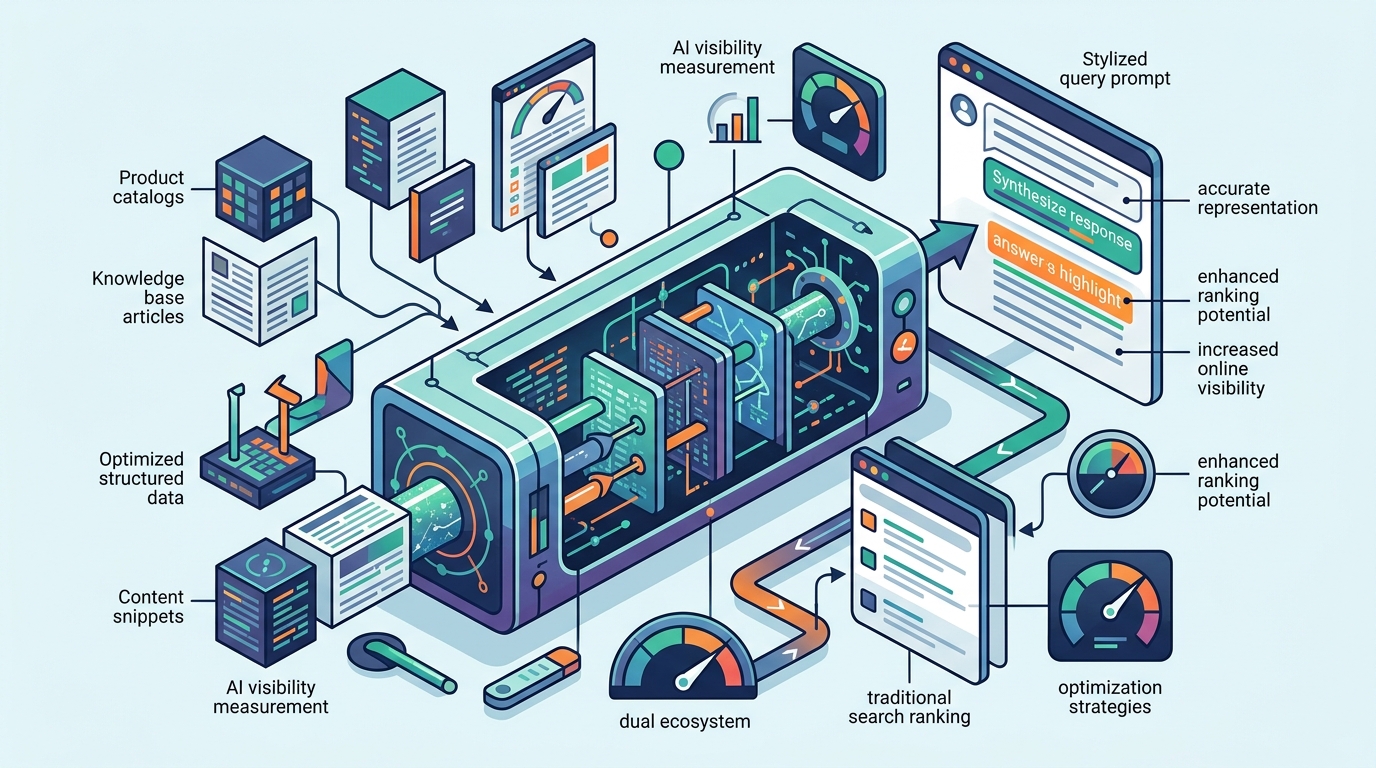
Modern brands operate in a dual ecosystem where traditional search rankings intersect with generative AI responses. Establishing authority requires understanding how large language models synthesize information to answer user queries. Brands must align their digital assets with the specific retrieval patterns of AI systems to ensure accurate representation. This guide explores the critical mechanisms driving AI visibility and provides actionable strategies for optimization. (Cytd Measure amp Improve)
Understanding AI Retrieval Mechanisms
AI platforms function as advanced synthesis engines rather than simple keyword matchers. These systems process vast corpora of text to generate coherent, context-aware answers. AI retrieval mechanisms prioritize sources that demonstrate clear authority and relevance to the user's intent. Brands often overlook the semantic depth required to trigger inclusion in these generated responses.
Generative AI models rely on probabilistic associations to construct responses. This means content must be semantically rich and logically structured. Brands that fail to provide comprehensive context risk being excluded from high-quality AI outputs. Understanding this shift is essential for modern digital strategy.
Semantic Context and Entity Recognition
AI systems excel at recognizing entities and their relationships. Brands must ensure their digital footprint clearly defines their core offerings and value propositions. Entity recognition algorithms scan for explicit connections between products, services, and industry standards. Clear entity mapping improves the likelihood of accurate AI citation.
Brands should focus on creating content that explicitly defines their products, services, and unique selling points. AI models struggle to infer brand attributes from ambiguous or sparse content. Providing explicit definitions and relationships helps AI systems build accurate knowledge graphs. This clarity ensures that AI platforms associate the correct brand identity with relevant queries.
The Role of Structured Data and Schema
Structured data serves as the universal language for machine interpretation. By implementing schema markup, brands provide explicit instructions to AI crawlers regarding content classification. Structured data is a standardized format that organizes information to facilitate automated processing by search engines and AI models.
Common schema types include Organization, Product, and FAQPage. These tags help AI platforms distinguish between brand-specific information and general industry knowledge. Brands that neglect schema implementation often suffer from ambiguous AI representations. Consistent markup ensures that AI systems extract the correct brand attributes.
Impact on AI Answer Extraction
AI models frequently extract answers directly from structured data fields. When brands provide clear, machine-readable definitions, they increase the probability of being cited. This extraction process favors well-structured content over unformatted text. Implementing robust schema is a foundational step for AI visibility.
Brands should prioritize implementing schema markup for key pages, including product pages, service descriptions, and corporate information. Schema.org vocabulary provides a comprehensive set of tags for various content types. Regular audits of schema implementation help ensure accuracy and completeness. Brands that maintain pristine schema markup gain a significant advantage in AI extraction.
Content Quality and E-E-A-T Signals
Content quality remains the cornerstone of AI visibility. AI platforms evaluate content based on expertise, experience, authoritativeness, and trustworthiness. E-E-A-T signals are a set of quality guidelines used by AI systems to assess the reliability and credibility of content sources.
Brands must demonstrate subject matter expertise through detailed, accurate, and up-to-date content. AI models penalize thin content and generic statements. High-quality content that addresses user queries comprehensively is more likely to be referenced. Author bios and credentials also contribute to perceived authority.
Building Trust Through Transparency
Transparency in sourcing and methodology enhances brand credibility. AI systems favor content that cites reputable references and provides verifiable claims. Brands should maintain clear attribution policies and disclose potential conflicts of interest. This transparency builds trust with both users and AI evaluators.
Brands should invest in creating in-depth content that addresses user pain points and provides actionable solutions. Content should be written by subject matter experts and reviewed for accuracy. Regular content updates ensure that information remains current and relevant. Brands that prioritize content quality establish a strong foundation for AI visibility.
Technical Infrastructure and Site Performance
Technical performance directly impacts AI accessibility. AI crawlers require fast, secure, and crawlable websites to index content effectively. Technical infrastructure is the underlying hardware and software systems that support website functionality and accessibility.
Core Web Vitals and mobile-friendliness are critical factors. AI platforms prioritize user experience metrics when selecting sources. Slow loading times or poor mobile performance can lead to exclusion from AI responses. Brands must ensure their technical foundation supports seamless AI crawling.
Crawlability and Indexation
AI systems rely on comprehensive indexation to build their knowledge bases. Brands must ensure their robots.txt and sitemap configurations allow AI crawlers to access relevant content. Blocking AI crawlers can result in complete invisibility within AI-generated answers. Regular technical audits help identify and resolve indexation barriers.
Brands should implement HTTPS encryption to ensure secure data transmission. Mobile-responsive design is essential to accommodate diverse user devices. Site architecture should be logical and intuitive to facilitate efficient crawling. Brands that optimize their technical infrastructure improve both user experience and AI accessibility.
Measuring and Optimizing AI Presence
Measuring AI visibility requires specialized tools and methodologies. Traditional SEO metrics often fail to capture AI-specific performance indicators. AI visibility is the measure of how frequently and accurately a brand appears in AI-generated responses across various platforms.
Brands should monitor AI mention frequency, sentiment, and context accuracy. Tools like Cytd can help track these metrics and identify optimization opportunities. Regular analysis allows brands to refine their strategies and improve AI representation. Continuous monitoring is essential for maintaining competitive advantage.
Leveraging AI Visibility Tools
Advanced AI visibility tools provide insights into brand performance across generative platforms. These tools track AI mentions, analyze sentiment, and suggest optimization actions. Brands that utilize these tools gain a significant edge in the evolving digital landscape. Investing in the right technology is crucial for long-term success.
Cytd offers powerful tools to measure and improve your AI visibility. Our platform helps brands track AI mentions, analyze sentiment, and optimize content for AI platforms. Visit our features page to learn more about our capabilities. Get started with a free demo to see how Cytd can transform your AI strategy. Explore our pricing plans to find the perfect solution for your needs.
Future Trends in Generative Search
The landscape of generative search continues to evolve rapidly. AI models are becoming more sophisticated in their ability to understand nuance and context. Brands must stay ahead of these trends to maintain visibility. Future developments may include more personalized AI interactions and deeper integration with enterprise systems.
Adapting to Algorithmic Changes
AI algorithms are subject to frequent updates and refinements. Brands must adopt agile strategies to adapt to these changes. Regular content updates and technical optimizations help ensure ongoing visibility. Proactive adaptation is key to sustaining long-term AI presence.
Brands should monitor emerging AI platforms and adjust their strategies accordingly. Collaboration with AI experts and industry thought leaders can provide valuable insights. Brands that embrace innovation and adaptability will thrive in the AI-driven era.
Implementing a Proactive AI Strategy
Brands should develop comprehensive AI strategies that encompass all visibility factors. This includes technical optimization, content quality, and continuous monitoring. Proactive AI strategy is a comprehensive approach that anticipates and addresses AI visibility challenges before they impact brand performance.
Collaboration between marketing, technical, and content teams is essential. A unified approach ensures consistent messaging and optimal AI representation. Brands that implement proactive strategies are better positioned to thrive in the AI-driven era. Start building your AI visibility today.
Integrating Cytd for AI Optimization
Cytd enables brands to track AI mentions across multiple platforms. Our platform provides sentiment analysis to gauge brand perception. Cytd offers actionable insights to optimize content for AI platforms. Cytd integrates seamlessly with existing SEO workflows. Cytd supports enterprise-scale monitoring for large organizations. Visit Cytd to learn more about our comprehensive suite of AI visibility tools.
Summary of Key Factors
| Factor | Description | Impact on AI Visibility |
|---|---|---|
| AI Retrieval Mechanisms | How AI systems process and synthesize information to generate responses. | High |
| Structured Data | Standardized format that organizes information for automated processing. | High |
| E-E-A-T Signals | Quality guidelines used to assess reliability and credibility. | High |
| Technical Infrastructure | Hardware and software systems supporting website functionality. | Medium |
| AI Visibility Tools | Specialized tools to track and optimize AI presence. | Medium |
Key Takeaways
- AI retrieval mechanisms prioritize semantic depth and entity recognition to generate accurate responses.
- Structured data provides explicit instructions to AI crawlers, facilitating automated processing and improving citation accuracy.
- E-E-A-T signals are critical for establishing brand authority and trustworthiness within AI systems.
- Technical infrastructure and site performance directly impact AI accessibility and indexation efficiency.
- Measuring AI visibility requires specialized tools like Cytd to track brand mentions and sentiment.
- Proactive AI strategies encompass technical optimization, content quality, and continuous monitoring.
Frequently Asked Questions
What is AI visibility?
AI visibility is the measure of how frequently and accurately a brand appears in AI-generated responses across various platforms.
How do AI platforms determine brand relevance?
AI platforms determine brand relevance by analyzing semantic context, entity recognition, and E-E-A-T signals within digital content.
Why is structured data important for AI visibility?
Structured data provides explicit instructions to AI crawlers, facilitating automated processing and improving the accuracy of AI citations.
How can brands measure their AI visibility?
Brands can measure their AI visibility using specialized tools like Cytd, which track AI mentions, sentiment, and context accuracy.
What role does technical infrastructure play in AI visibility?
Technical infrastructure supports website functionality and accessibility, ensuring AI crawlers can efficiently index and retrieve brand content.
How often should brands update their AI strategy?
Brands should regularly update their AI strategy to adapt to algorithmic changes and maintain competitive visibility in generative search.
Start Improving Your AI Visibility
Ready to enhance your brand's presence on AI platforms? Visit Cytd to explore our comprehensive suite of AI visibility tools. Schedule a consultation today to discuss your specific needs. Take control of your AI visibility with Cytd.