
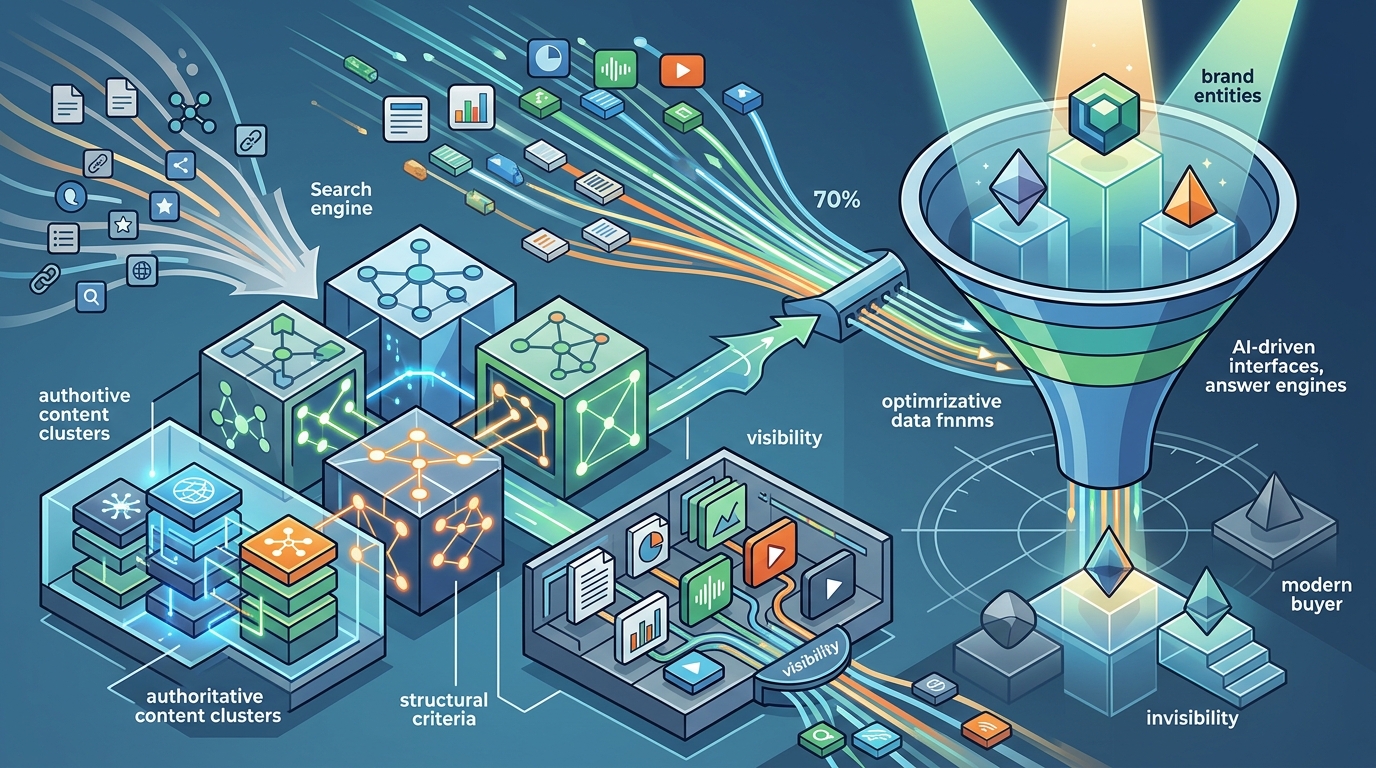
Search behavior has undergone a permanent structural shift in 2026, with 25 percent of traditional search volume already migrating toward AI-driven interfaces. This migration means that the criteria for ranking are no longer limited to keyword density or backlink profiles. Instead, artificial intelligence models prioritize entities that demonstrate clear authority, comprehensive coverage, and high visibility across multiple platforms. If your brand is not explicitly defined in these systems, you are effectively invisible to the modern buyer. Understanding the core content and structural criteria for AI citation ranking is no longer optional. It is the fundamental requirement for digital survival. (We Put Your Business)
Understanding AI Citation Mechanics
AI citation ranking relies on a complex web of trust signals. Large Language Models (LLMs) do not crawl the web in the same way traditional search engines did. They analyze structured data, entity relationships, and consensus across authoritative sources. When a user asks an AI a question, the model scans its training data and real-time indexes for the most reliable answer. If your business lacks clear citations, the AI cannot verify your legitimacy. Consequently, it defaults to competitors with stronger digital footprints. (cytd ai Blog)
Visibility is the first pillar of this equation. AI systems need to see your brand mentioned in contexts that align with your industry. Authority is the second pillar. This involves third-party validation, such as reviews, partnerships, and expert endorsements. Coverage is the third. Your brand must appear across diverse platforms, including ChatGPT, Gemini, Perplexity, and Grok. A deficiency in any of these areas results in a low Cytd Score, which directly correlates with lost revenue and missed opportunities. (AI Sales Executive Get)
According to recent industry analysis, brands that fail to optimize for these three pillars see a significant drop in organic discovery. The average business loses potential customers because their digital presence is too fragmented for AI to interpret correctly. This is not a minor issue. It is a structural blind spot that costs businesses millions in annual revenue. (Results Cytd)
Structural Requirements for Visibility
To rank in AI citations, your website must meet strict structural standards. AI models prefer content that is easy to parse and logically organized. This means using clear headings, semantic HTML, and concise paragraphs. Long, dense blocks of text are often skipped by AI summarizers. Instead, break your content into digestible sections with clear H2 and H3 tags.
Schema markup is another critical component. Implementing structured data helps AI understand the context of your content. For example, using Organization schema helps define your business identity. Using FAQPage schema allows AI to directly extract answers to common questions. Without these technical foundations, your content remains opaque to AI systems.
Internal linking also plays a vital role. A well-structured internal link network helps AI navigate your site and understand the hierarchy of your information. Ensure that your most important pages are linked from your homepage and other high-traffic pages. This creates a clear path for AI crawlers to follow and reinforces the importance of your core topics.
For a deeper dive into the technical aspects of AI visibility, explore our guide on Key Features and Standards in AI Visibility Management Services. This resource outlines the specific technical benchmarks that leading brands are meeting to secure top rankings.
Content Authority Signals
Content authority is determined by the quality and consistency of your digital footprint. AI models look for evidence that your brand is a trusted source in your industry. This includes positive reviews, expert endorsements, and consistent brand messaging across platforms. If your brand name appears in multiple authoritative contexts, the AI assigns higher trust scores to your content.
One of the most effective ways to build authority is through third-party citations. These are mentions of your business on other reputable websites, such as news outlets, industry blogs, and review platforms. Each citation acts as a vote of confidence. The more high-quality citations you have, the more likely AI is to recommend your business.
Another key signal is the clarity of your value proposition. AI models need to understand what you do and who you serve. Use clear, concise language to describe your services. Avoid jargon and vague claims. Instead, focus on specific benefits and outcomes. This helps AI match your content to user queries more accurately.
For more insights on building these signals, read our article on Common Mistakes That Block LLM Citations (and How to Fix Them). This piece details the most common errors that prevent brands from gaining AI trust and provides actionable solutions.
Common Citation Mistakes to Avoid
Many businesses make critical errors when trying to optimize for AI citations. One common mistake is relying solely on traditional SEO tactics. While keywords and backlinks are still important, they are no longer sufficient. AI models prioritize entity-based signals over keyword matching. If you are not optimizing for entities, you are falling behind.
Another mistake is inconsistent brand information. If your business name, address, or phone number varies across platforms, AI becomes confused about your identity. This inconsistency can lead to lower trust scores and reduced visibility. Ensure that your NAP (Name, Address, Phone) information is consistent everywhere.
Finally, many businesses ignore the importance of local citations. For local businesses, AI relies heavily on geographic signals. If your business is not properly cited in local directories and maps, AI will struggle to connect you with nearby customers. This is particularly critical for service-based businesses that rely on local traffic.
To avoid these pitfalls, check out our guide on Common Citation Tracking Mistakes in AI Answer Engines and How to Avoid Them. This resource provides a comprehensive checklist for maintaining accurate and effective citations.
Cytd vs Traditional SEO Approaches
Traditional SEO and AI visibility management are fundamentally different. Traditional SEO focuses on ranking for specific keywords on search engine results pages. AI visibility management focuses on being the recommended answer in AI chat interfaces. This requires a different set of strategies and metrics.
| Feature | Traditional SEO | AI Visibility Management |
|---|---|---|
| Primary Goal | Rank on SERPs | Be recommended by AI |
| Key Metric | Keyword Position | Cytd Score |
| Content Focus | Keyword Density | Entity Authority |
| Platform | Google, Bing | ChatGPT, Gemini, Perplexity |
| Time to Results | 3-6 Months | 40-60 Days |
As highlighted in our comparison of Cytd vs Traditional SEO: AI Search Visibility Comparison, the shift toward AI-driven search is accelerating. Businesses that continue to rely solely on traditional SEO are missing out on a significant portion of future traffic.
Key Takeaways
- AI Visibility is Critical: 25 percent of search volume has already shifted to AI interfaces, making visibility essential for growth.
- Three Pillars of Trust: Visibility, Authority, and Coverage are the core metrics that determine AI citation ranking.
- Structural Clarity Matters: Clear headings, schema markup, and logical internal linking help AI parse and understand your content.
- Entity Over Keywords: AI models prioritize entity-based signals over traditional keyword density.
- Consistency is Key: Inconsistent brand information across platforms reduces trust and visibility.
- Local Citations Count: Geographic signals are vital for local businesses to connect with nearby customers.
- Proactive Monitoring: Regularly check your Cytd Score to identify and fix visibility gaps before they impact revenue.
Frequently Asked Questions
What is AI citation ranking?
AI citation ranking is the process by which artificial intelligence models evaluate and recommend businesses based on their digital footprint, authority, and visibility across platforms like ChatGPT and Gemini.
How does AI determine brand authority?
AI determines brand authority by analyzing third-party citations, reviews, expert endorsements, and the consistency of brand information across the web.
Why is traditional SEO no longer enough?
Traditional SEO focuses on keyword ranking on search engines, while AI visibility requires optimizing for entity recognition and recommendation in chat interfaces, which have different ranking criteria.
What is a Cytd Score?
A Cytd Score is a metric that measures a brand's visibility, authority, and coverage in AI search results, helping businesses identify gaps in their AI presence.
How long does it take to improve AI visibility?
Most clients start showing up in AI answers within 40-60 days of implementing a comprehensive AI visibility strategy.
What are the core structural requirements for AI content?
Core structural requirements include clear H2/H3 headings, semantic HTML, schema markup, and concise, digestible paragraphs that are easy for AI to parse.
How can I check my AI visibility?
You can check your AI visibility by using tools like the free Cytd Score checker, which analyzes your presence across major AI platforms.
What is the difference between visibility and authority?
Visibility refers to how often your brand appears in AI answers, while authority refers to the trust and credibility AI assigns to your brand based on citations and endorsements.
Get Started with AI Visibility
Don't let your competitors dominate AI search results. Take control of your digital presence today. Visit our Cytd.ai homepage to learn more about our services. Or, book a call to discuss how we can help your business rise to the top of AI search. Your future customers are asking AI right now. Make sure you are the answer.