
For SaaS companies, losing AI search visibility directly reduces qualified pipeline and increases customer acquisition costs. When large language models omit a brand from recommendations, the company loses high-intent traffic that would have converted at a lower cost than paid channels. This silent erosion of market share impacts the bottom line by forcing reliance on expensive, lower-converting marketing tactics.
The Shift from Keywords to Conversational Discovery
Traditional search engine optimization focused on ranking for specific keywords. AI search operates differently. It synthesizes information to answer natural language questions. SaaS buyers now ask assistants for recommendations rather than scanning lists of blue links. This shift changes how discovery happens. If a model does not cite a brand, that brand is effectively invisible to the user. The user sees only the few names the model chooses to recommend.
This dynamic creates a winner-take-most scenario in specific niches. A SaaS product might rank well on Google but remain absent from AI answers. The cost is not just lost clicks. It is lost trust. Users trust the AI's curated list. They do not question why a competitor was chosen over them. This perception gap can persist even if the SaaS company has a superior product. The implication is that visibility in AI answers is now a prerequisite for consideration, not just a bonus.
Pipeline Erosion and Acquisition Costs
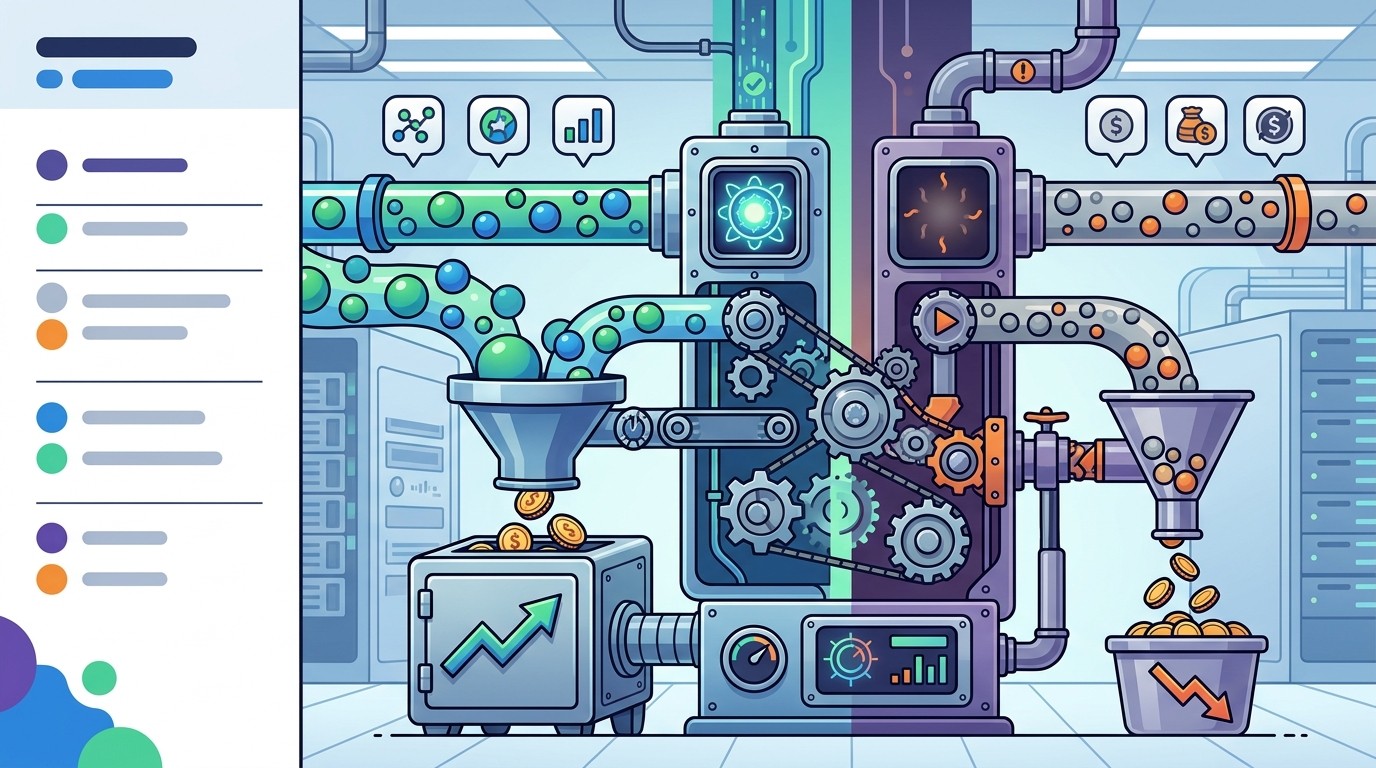
Customer acquisition cost (CAC) is a critical metric for SaaS businesses. Paid advertising and content marketing have predictable costs. AI-driven discovery is free but highly competitive. When a SaaS company is not cited, it must spend more to fill the pipeline gap. This spending often goes to channels with lower conversion rates. The result is a higher CAC. The company pays more for the same number of customers. This directly reduces profit margins.
Consider a B2B SaaS company selling project management tools. If AI assistants recommend three competitors but not this company, the company loses the organic traffic that would have come from those recommendations. To compensate, the company increases ad spend. The ads bring in leads, but these leads are less qualified than those who arrived via AI recommendation. The sales team spends more time filtering out bad leads. This inefficiency compounds over time. The bottom line suffers from both higher acquisition costs and lower sales efficiency.
Competitive Advantage and Market Positioning
AI visibility is a signal of authority. When a model cites a brand, it validates that brand's expertise. This validation influences buyer decisions. SaaS companies that are frequently cited build a reputation for being the go-to solution in their category. This reputation creates a moat. Competitors find it harder to displace a brand that is already embedded in the AI's knowledge base. The cost of losing this position is a loss of market share. Competitors gain the visibility that the company lost. They capture the customers who would have chosen the original brand.
Data Blindness and Strategic Misalignment
Many SaaS companies lack visibility into how AI models perceive them. They do not know which questions trigger recommendations for their competitors. They do not know what content is missing from their digital footprint. This data blindness leads to strategic misalignment. Marketing teams create content based on assumptions rather than evidence. They optimize for keywords that no longer drive discovery. They ignore the questions that actually matter to AI models. The cost is wasted resources. Time and money are spent on efforts that do not move the needle.
Without accurate data, companies cannot measure the return on their AI visibility efforts. They cannot A/B test different content strategies. They cannot identify gaps in their topical authority. This lack of insight makes it difficult to compete. Competitors who track their AI visibility can adapt quickly. They can fill content gaps and refine their messaging. The company that is blind to these dynamics falls behind. The cost is a loss of agility. In a fast-moving market, agility is a key competitive advantage. Losing it has a tangible financial impact.
Mitigating the Financial Impact
Companies can mitigate the cost of losing AI visibility by adopting a structured approach. First, they must measure their current state. This involves tracking how often they are cited by major AI models. Second, they must identify gaps. They need to know which questions they are not answering. Third, they must create content that addresses those gaps. This content must be structured for AI consumption. It should be clear, concise, and authoritative. By taking these steps, companies can reclaim their visibility. They can reduce their reliance on paid channels. They can lower their CAC. The investment in AI visibility pays for itself through improved organic acquisition.
Tools like Cytd's free AI visibility report can help companies understand their current standing. This report provides a baseline for tracking progress. It highlights areas for improvement. By using such tools, companies can make data-driven decisions. They can allocate their marketing budget more effectively. They can focus on the questions that matter most. This strategic focus reduces waste and improves outcomes. The result is a healthier bottom line.
Key Takeaways
- AI search visibility directly impacts qualified pipeline and customer acquisition costs.
- Being uncited by AI models leads to a loss of high-intent, low-cost traffic.
- Competitors who gain AI visibility capture market share and build brand authority.
- Data blindness regarding AI perception leads to strategic misalignment and wasted resources.
- Structured content and regular monitoring are essential for maintaining AI visibility.
- Investing in AI visibility can lower CAC and improve profit margins.
Frequently Asked Questions
How does AI search visibility affect SaaS customer acquisition costs?
When a SaaS company is not cited by AI models, it loses free, high-intent traffic. This forces the company to rely more on paid advertising, which increases customer acquisition costs. The leads from paid channels are often less qualified, further reducing efficiency.
Can a SaaS company recover lost AI visibility?
Yes, by creating content that addresses the specific questions AI models are asked. This involves identifying gaps in the company's digital footprint and publishing authoritative, well-structured content. Regular monitoring helps track progress and identify new opportunities.
What is the difference between SEO and AI search optimization?
SEO focuses on ranking for specific keywords in traditional search engines. AI search optimization focuses on being cited in the answers generated by large language models. The latter requires content that is structured for synthesis and recommendation, not just ranking.
How often should a SaaS company monitor its AI visibility?
Monthly monitoring is a good baseline. This allows the company to track trends and identify shifts in how AI models recommend brands. More frequent monitoring may be necessary during periods of significant content updates or competitive activity.
Does ranking number one on Google guarantee AI visibility?
No. Ranking well on Google does not guarantee that an AI model will cite the brand. AI models use different signals and may prioritize different sources. A company must optimize specifically for AI citation to ensure visibility in these answers.
Conclusion
Losing AI search visibility has a tangible cost for SaaS companies. It increases acquisition costs, erodes market share, and weakens brand authority. The solution is to treat AI visibility as a core marketing metric. By monitoring their presence and creating content that addresses user questions, SaaS companies can protect their bottom line. Cytd provides the tools and expertise to help brands navigate this new landscape. Start by understanding your current visibility and take steps to improve it. Learn more: Cytd We make AI.