
How to Improve Your Brand's AI Citation Visibility on ChatGPT
More than 83 percent of people now prefer AI-powered searches over traditional search engines, and 25 percent of all search volume has already shifted to AI answer engines. If your brand is invisible inside ChatGPT, Google AI Overviews, or Perplexity, you are losing discovery opportunities every single day. AI citation visibility is the measure of how often and how prominently AI platforms reference your brand when users ask relevant questions. This guide walks you through the proven strategies brands are using in 2026 to earn more citations, build authority across large language models, and turn AI answers into a reliable growth channel.
Why AI Citations Matter More Than Rankings
Traditional SEO focused on earning a top-ten position in Google. That era is ending. By early 2026, only 38 percent of AI Overview citations came from top-10 organic results, down from 76 percent in mid-2025. Ranking first no longer guarantees you appear in the AI answer.
AI citation visibility is the new competitive metric. It tracks whether ChatGPT, Perplexity, or Gemini mentions your brand when a user asks a question in your category. Brands that master this metric capture demand at the exact moment a buyer is researching, before they ever visit a traditional search result.
How ChatGPT Sources Information
ChatGPT generates responses by synthesizing patterns from its training data and, when web browsing is enabled, retrieving live information. Among its top cited sources, Wikipedia leads at 7.8 percent of total citations, followed by Reddit, Forbes, and Business Insider. Commercial .com domains account for over 80 percent of all citations, while .org sites represent roughly 11 percent.
The 5W AI Platform Citation Source Index 2026, which synthesized more than 680 million individual citations, found that the top 15 domains absorb 68 percent of the entire AI answer pipeline. If your brand is not present on those high-authority surfaces, AI models may never learn to cite you.
Audit Your Current AI Visibility Baseline
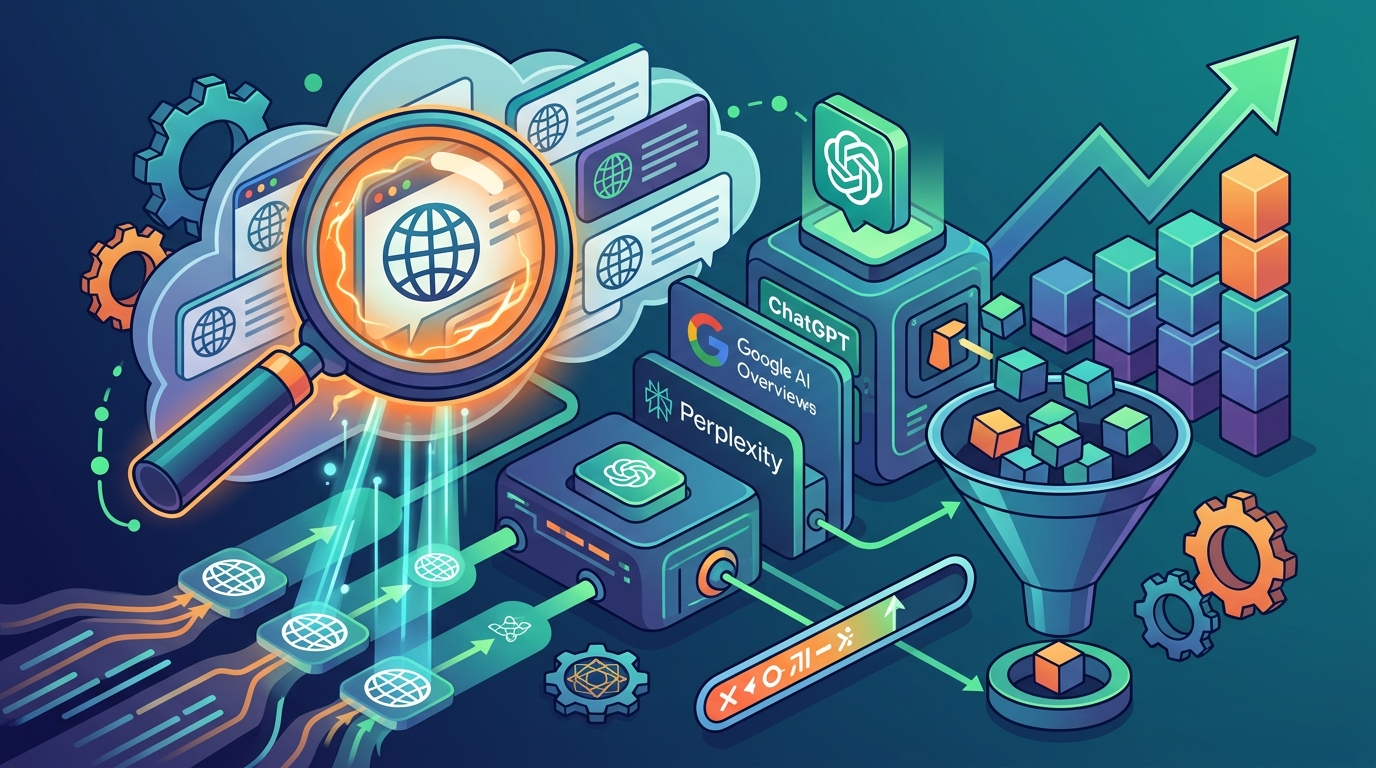
You cannot improve what you do not measure. Before changing a single page, you need a clear picture of how AI models currently treat your brand. Cytd gives you an actionable AI Visibility Score built around three core factors: Visibility, Compliance, and Relevance.
Run Prompt-Based Testing
Open ChatGPT, Perplexity, and Gemini, then enter the questions your target audience actually asks. Do not search for your brand name directly. Instead, use problem-based and comparison queries such as "best tools for [your category]" or "[competitor] alternatives." Document which brands appear, in what order, and on which platforms.
Benchmark With a Scoring Platform
Manual testing gives qualitative insight, but a platform like Cytd's AI visibility scanner automates the process. Enter your domain, gather at least seven AI-generated questions relevant to your industry, and launch a scan to evaluate your presence across every major AI platform in minutes.
Identify Platform Gaps
Many brands discover they perform well on one platform but are completely absent from another. Only 11 percent of domains are cited by both ChatGPT and Perplexity, so a single-channel audit will mislead you. Map your visibility across each engine individually.
Build Off-Site Brand Authority
The strongest predictor of appearing in AI-generated answers is not backlinks or domain rating. According to Ahrefs' December 2025 study, the top signal is branded web mentions, the references your brand earns when other people write about you on platforms you do not control. That signal correlated at 0.664 with AI Overview visibility, while YouTube mentions reached 0.737.
Generative Engine Optimization (GEO) is the practice of structuring your entire digital presence so that large language models naturally reference, cite, and recommend your brand. Roughly 75 percent of the citation equation lives off your own site.
| Tactic | Why It Works | Effort Level |
|---|---|---|
| Publish original research | A single study can earn mentions across 10-20 publications | High |
| Earn Wikipedia references | Wikipedia is ChatGPT's top cited source | Medium |
| Contribute to Reddit authentically | Reddit captures roughly 40% of all AI citations | Medium |
| Get listed on roundup and comparison pages | AI models repeatedly cite these articles | Low |
| Co-market with trusted brands | Co-occurrence with established names strengthens your signal | Medium |
Optimize On-Site Content for LLM Extraction
While off-site authority drives the majority of citations, your own content still matters for the remaining 25 percent. AI systems favor pages that front-load the answer. Research shows that 44.2 percent of all LLM citations come from the first 30 percent of page content.
Structure for Extraction
Use clear headings, short paragraphs, and definitional sentences. Answer Engine Optimization (AEO) is the discipline of formatting content so that AI answer engines can easily extract and cite it. Open each section with a direct claim, support it with data, then state the implication.
Keep Content Fresh
An analysis by ConvertMate found that 76.4 percent of ChatGPT citations come from content updated within the last 30 days. Set a 90-day refresh cadence for your top 20 pages and treat the "Last updated" date as a critical trust signal, not a cosmetic detail.
Use Structured Data
Schema markup, especially Organization and FAQPage types, helps AI crawlers understand your entity relationships. Pair schema with consistent NAP (Name, Address, Phone) data across directories for local businesses. Cytd's optimization plans include structured data recommendations tailored to each brand's gaps.
Platform-Specific Citation Strategies
Each AI platform operates on fundamentally different citation logic. A strategy that works for ChatGPT may fail on Perplexity. The table below summarizes the key differences.
| Platform | Primary Source | Recency Preference | Brand Citation Rate |
|---|---|---|---|
| ChatGPT | Wikipedia, Reddit, Forbes | High (30-day window) | 0.59% |
| Google AI Overviews | Distributed across types | Moderate | Varies by query |
| Perplexity | Reddit, primary sources | Very High (real-time) | 13.05% |
| Grok | X (Twitter) data + web | High | 27% |
Perplexity performs real-time web searches for every query and cited content published within the last 30 days at an 82 percent rate in one 2026 analysis. ChatGPT leans heavily on encyclopedic and editorial content from its training data. Grok rewards social-signal-rich brands. Tailor your approach to each engine, and use Cytd's partner integrations to track visibility across all of them simultaneously.
Key Takeaways
- AI citation visibility is the new competitive metric that determines whether your brand appears in ChatGPT, Perplexity, and Google AI answers.
- Off-site brand mentions are the strongest predictor of AI citations, with a 0.664 correlation to AI Overview visibility.
- Only 11 percent of domains are cited by both ChatGPT and Perplexity, so you must optimize for each platform individually.
- Content freshness is critical: 76.4 percent of ChatGPT citations reference content updated within 30 days.
- Wikipedia and Reddit dominate AI source lists, making authentic presence on these platforms essential.
- Front-load answers in your content because 44.2 percent of LLM citations come from the first 30 percent of a page.
- Use a dedicated AI visibility platform like Cytd to continuously measure your score across Visibility, Compliance, and Relevance.
Frequently Asked Questions
What is AI citation visibility?
AI citation visibility is a metric that measures how often and how prominently AI platforms like ChatGPT, Perplexity, and Google AI Overviews reference your brand when users ask relevant questions. It goes beyond traditional SEO rankings to track your presence inside conversational AI answers.
How do I check my brand's AI visibility score?
You can get a free baseline score by entering your domain at cytd.ai. The platform scans your presence across ChatGPT, Gemini, Perplexity, Siri, and Grok, then returns a score based on Visibility, Compliance, and Relevance factors.
Does ranking first on Google guarantee I appear in AI answers?
No. By early 2026, only 38 percent of AI Overview citations came from top-10 organic results, down from 76 percent the year before. Content structure, brand authority, and multi-channel presence now matter more than position alone.
What is Generative Engine Optimization (GEO)?
Generative Engine Optimization is the practice of structuring your digital presence so that large language models naturally reference and recommend your brand. It combines on-site content formatting, off-site brand building, and structured data to increase citation rates across AI engines.
How often should I update content for AI citation purposes?
Data suggests a 90-day refresh cadence for your most important pages. Since 76.4 percent of ChatGPT citations pull from content updated within 30 days, keeping your key pages current is one of the highest-impact tactics available.
Which platforms should I prioritize first?
Start with the platforms where your audience researches. For most B2B brands, ChatGPT and Perplexity are the top priorities. For local businesses, add Siri and Google AI Overviews. Use Cytd's tracking dashboard to see where your gaps are largest.
Can small brands compete for AI citations?
Yes. Competitors with smaller marketing budgets sometimes dominate AI citations because they structure content more effectively and earn targeted brand mentions. Focus on quality over volume, and invest in platforms AI models already trust.
Start Measuring Your AI Visibility Today
Every day your brand goes unmeasured is a day competitors are capturing AI-driven discovery in your category. Check your free AI Visibility Score on Cytd and get a clear roadmap showing exactly where to strengthen your presence across ChatGPT, Google AI, Perplexity, and Grok.