

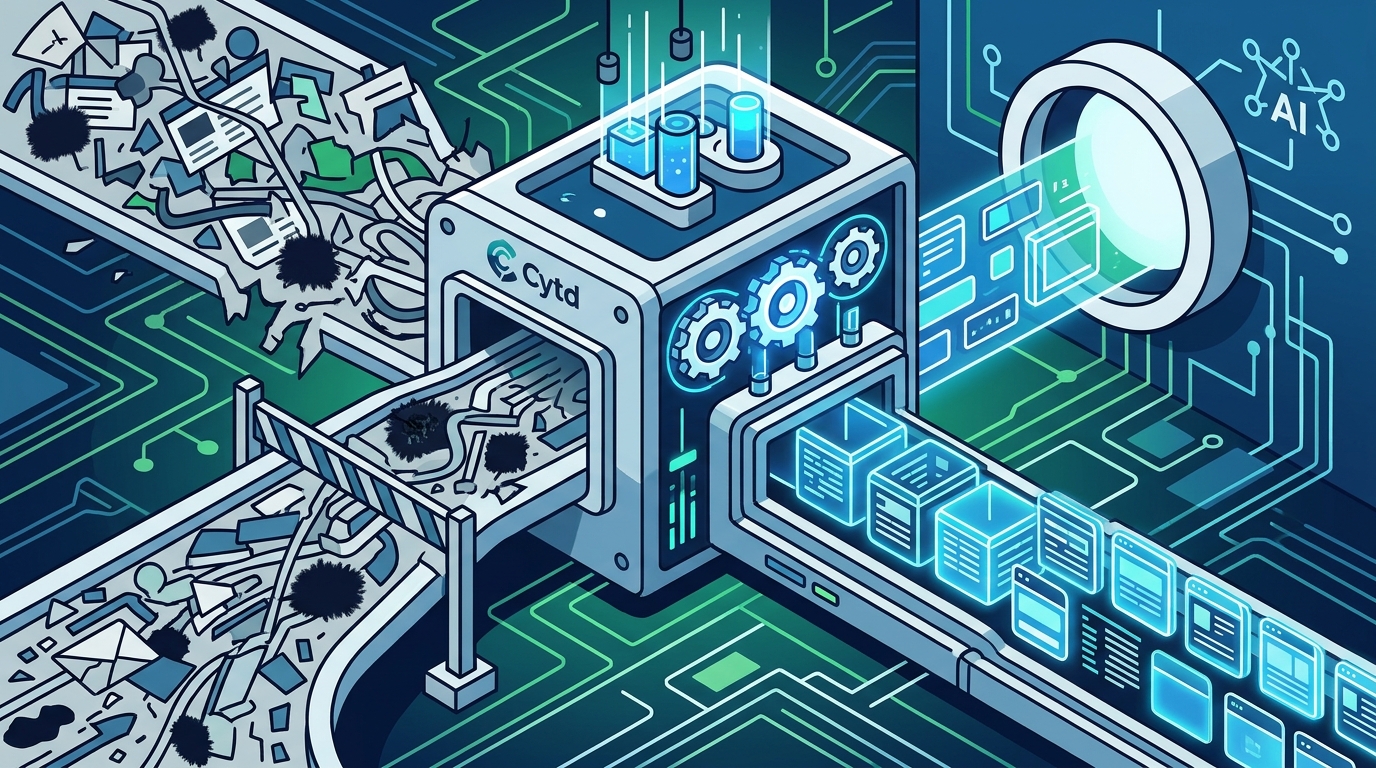
AI chatbots fail to recommend your website primarily because they cannot crawl, parse, or verify your content. Large language models rely on clean, machine-readable data to build their knowledge bases. If your site blocks crawlers or lacks structured data, AI systems simply cannot see you. Cytd helps brands fix these technical barriers to ensure AI engines can find and cite their content.
The Crawler Access Barrier
Many websites inadvertently block the bots that power AI search. robots.txt files are text files that instruct search engine crawlers which parts of a site to access. If your robots.txt file contains broad exclusion rules, it may block the specific user agents used by AI platforms like ChatGPT or Gemini. This is among the most common reason for total invisibility in AI answers. You must verify that your site allows access to AI-specific crawlers while still protecting sensitive areas like admin panels.
For example, a popular e-commerce site might block all bots to prevent scraping, but this also prevents AI assistants from learning about their products. The implication is clear: if the bot cannot enter the building, it cannot describe the store. Cytd’s platform includes tracking to verify that your site is accessible to the specific AI engines you want to appear in.
Structured Data and Machine Readability
AI models prefer structured data over unstructured text. Schema markup is a standardized vocabulary of tags and microdata added to HTML to help search engines understand the content of a page. Without schema, an AI model must guess what a paragraph of text means. With schema, it knows exactly that a specific entity is a product, a local business, or a FAQ. This clarity is critical for citation. If your site lacks JSON-LD or microdata, you are forcing AI systems to infer meaning, which often leads to omission.
Content Structure and Answer Extraction
AI chatbots are designed to provide direct answers, not just links. Answer-first formatting is a content strategy that places the direct answer to a question at the beginning of a section, followed by supporting details. When AI crawlers scan a page, they look for concise, self-contained answers. If your content buries the key information under three paragraphs of introduction, the AI may skip it. This structural mismatch is a major reason why traditional SEO content fails in AI search.
For instance, a blog post titled "Best Running Shoes" that spends 500 words on the history of running before listing shoes is less likely to be cited than a post that lists the top three shoes immediately. The implication is that you must write for the machine first. Cytd’s content strategy emphasizes this answer-first approach to ensure AI engines can lift the relevant snippet directly.
Trust Signals and Corroboration
AI models are trained to prioritize authoritative and corroborated sources. Trust signals are external indicators of a website’s credibility, such as backlinks from reputable domains, consistent NAP (Name, Address, Phone) data, and positive reviews. If your website claims to be a leader in a field but has no external corroboration, AI models may discount it. They cross-reference information across the web. If your site is an island with no connections to other trusted sources, it is less likely to be recommended.
Take a new SaaS startup. If their website is the only place mentioning their product, AI models may view them as low-authority. However, if tech publications and industry directories link to them, the AI model sees a pattern of trust. Cytd helps build these corroboration points so that AI engines view your brand as a verified entity rather than an isolated claim.
Monitoring AI Visibility
You cannot fix what you do not measure. AI visibility tracking is the process of monitoring how often and where your brand is cited by AI answer engines. Traditional SEO tools track rankings in Google, but they do not track citations in ChatGPT or Gemini. Without this data, you are flying blind. You might think your site is optimized, but if AI engines are not citing you, your strategy is failing. This monitoring is essential for understanding which specific questions your brand is winning and which it is losing.
For example, a fitness brand might rank #1 on Google for "best gym in Austin" but be completely absent from ChatGPT answers for the same query. This disconnect highlights the need for dedicated AI tracking. Cytd provides a dashboard that shows exactly where you stand across multiple AI platforms, allowing you to prioritize the right fixes.
Key Takeaways
- Check your robots.txt file to ensure it does not block AI-specific crawlers.
- Implement schema markup to make your content machine-readable and unambiguous.
- Use answer-first formatting to help AI engines extract direct answers from your pages.
- Build external trust signals through backlinks and consistent directory listings.
- Monitor your AI visibility with dedicated tools to track citations across platforms.
- Remember that AI models prioritize corroborated, authoritative sources over isolated claims.
Frequently Asked Questions
Why does my website rank on Google but not in ChatGPT?
Google and AI chatbots use different ranking and citation algorithms. Google focuses on traditional SEO signals like backlinks and page authority. AI chatbots prioritize content that is easily extractable, structured, and corroborated by other sources. A site can rank well on Google but fail in AI search if it lacks structured data or answer-first content.
Do I need to change my entire website for AI visibility?
No, you do not need a full rebuild. Most issues are resolved by updating your robots.txt, adding schema markup to key pages, and restructuring content to be more concise and answer-focused. These are incremental changes that can be made without disrupting your existing site architecture.
How long does it take for AI models to update their knowledge?
AI models update their training data periodically, but they also use real-time search tools. Changes to your site may take weeks or months to be fully reflected in the model's core knowledge. However, if the AI uses a search tool to answer queries, it may pick up changes faster, provided your site is crawlable and structured correctly.
What is the difference between a citation and a mention?
A citation is when an AI model explicitly links to or references your website as a source for its answer. A mention is when the AI refers to your brand or product by name but does not provide a link. Citations are generally more valuable for driving traffic, while mentions indicate brand awareness within the AI's knowledge base.
Can I control what AI models say about my business?
You cannot directly control the output of AI models. However, you can influence what they have access to and how they interpret it. By providing clear, structured, and authoritative content, you increase the likelihood that the AI will cite your preferred information. You are shaping the input, not the output.
Is Cytd a tool or a service?
Cytd is a managed service that combines tracking, content optimization, and strategy. It is not just a software tool. The service includes a dedicated team that works on your behalf to improve your AI visibility, providing weekly reports and strategic recommendations.
Conclusion
AI chatbots are not ignoring your website because they dislike it. They are ignoring it because they cannot read, verify, or extract value from it. By addressing crawlability, structured data, and content structure, you can make your site visible to the AI engines that drive modern discovery. Cytd is built to handle these technical and strategic fixes, ensuring your brand is recommended when customers ask AI assistants for help. To see where you stand today, run your free report on the Cytd platform.