
Getting your website cited by AI tools like ChatGPT, Google AI Overviews, and Perplexity is no longer optional. With 62% of users now starting their search journey with AI tools rather than traditional search engines, the brands that show up inside AI-generated answers capture attention, trust, and traffic. Generative Engine Optimization (GEO) is the practice of optimizing your content so that large language models retrieve, trust, and cite it in their responses. This guide walks you through exactly how to make that happen, step by step, using proven strategies backed by research.
Why AI Citations Matter More Than Rankings
The shift from click-based search to citation-based answers is accelerating fast. According to Frase's 2026 GEO research, AI-referred sessions jumped 527% between January and May 2025, and AI platforms generated 1.13 billion referral visits in June 2025 alone. Traditional SEO rankings no longer guarantee visibility.
When brands are cited inside AI-generated answers, they experience a 38% lift in organic clicks and a 39% increase in paid ad clicks, according to Averi.ai's GEO metrics guide. Gartner predicts a 50% reduction in traditional organic traffic by 2028 due to AI-generated search. The message is clear: if you are not inside the AI answer, you are losing ground.
What Is Generative Engine Optimization (GEO)?
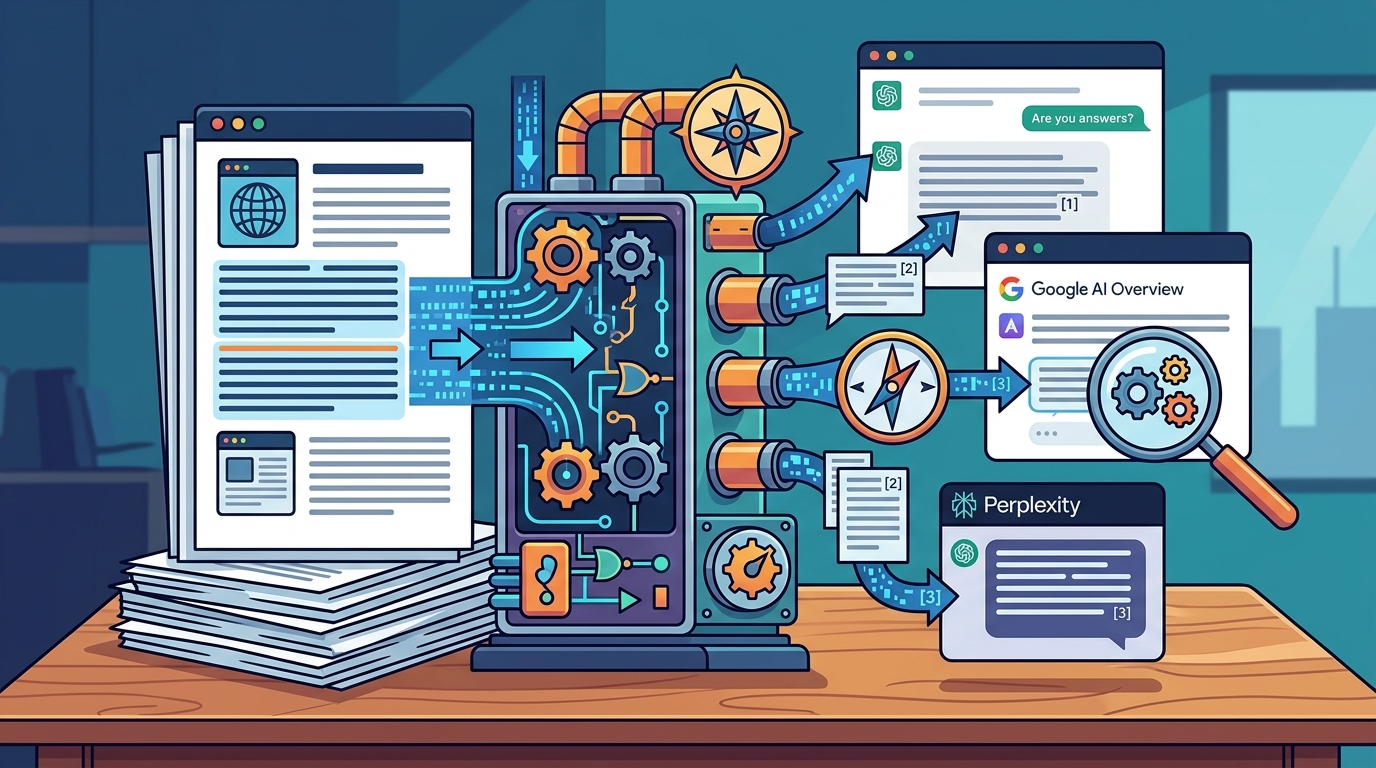
Generative Engine Optimization is the practice of adapting your content and online presence so AI-powered search tools like ChatGPT, Perplexity, and Google AI Overviews retrieve it, summarize it, and cite it in their responses. Unlike traditional SEO, which focuses on ranking web pages in a list of links, GEO focuses on earning citations within synthesized answers.
A citation in this context is when an AI tool references your brand or links to your page as a source while answering a user query. Research from Princeton demonstrates that GEO techniques can boost visibility by up to 40% through strategies like statistics inclusion, structured formatting, and comprehensive topic coverage.
Audit Your Current AI Visibility
Before optimizing anything, you need a baseline. Start by querying ChatGPT, Perplexity, and Google AI Overviews with 20 to 50 prompts relevant to your brand and industry. Document which brands appear in the responses, including your competitors.
Use a Dedicated AI Visibility Platform
Platforms like Cytd are purpose-built to measure your AI citation visibility across ChatGPT, Google AI, Grok, and other answer engines. Cytd provides a clear, actionable score built around three core factors: Visibility, Compliance, and Relevance. Rather than juggling multiple dashboards, you get a single measurement of how AI platforms perceive your brand.
Identify Three Types of Opportunities
Your audit should reveal prompts where competitors are cited but you are not (priority targets), prompts where you are mentioned but not cited with a link (optimization targets), and prompts where you are winning (content to protect). Track this monthly to measure progress using Cytd's tracking and analytics tools.
Structure Content for LLM Extraction
AI models do not read content the way humans do. They parse it looking for self-contained, extractable answer blocks. Here is how to format content that LLMs prefer to cite.
Lead With the Answer
Place a direct answer in the first 40 to 60 words of each section. This Bottom Line Up Front (BLUF) approach gives AI systems exactly what they need without forcing them to parse paragraphs of context. Content structured this way gets extracted into AI summaries at significantly higher rates.
Use Clear Formatting
Content with clear hierarchical organization, including headings, bullet points, and tables, is 28 to 40% more likely to be cited by AI tools. Include statistics every 150 to 200 words with clear attribution. Fact-dense content with specific data points gets cited significantly more often than general commentary.
| Content Element | Impact on AI Citation | Priority |
|---|---|---|
| Answer-first paragraphs (40-60 words) | High extraction rate | Critical |
| Statistics with source attribution | Up to 40% visibility boost | Critical |
| Structured headings (H2/H3) | 28-40% more likely to be cited | High |
| FAQPage schema markup | Extractable Q&A units | High |
| Comparison tables | Preferred for recommendation queries | Medium |
| Internal linking with descriptive anchors | Helps AI map topical structure | Medium |
Build Off-Site Authority Signals
AI models cross-reference multiple sources before trusting any single brand. Publishing great content on your website alone is not enough. You need external validation that reinforces your authority.
Community Presence
Meaningful participation across Reddit, Quora, X, and credible industry forums builds the external validation that AI models use as trust signals. A positive, helpful presence in these communities is a powerful citation driver.
Digital PR and Earned Media
Securing mentions in reputable industry publications and news outlets builds significant authority for your brand entity. AI tools like ChatGPT heavily weigh editorial references when deciding which sources to cite. Wikipedia alone accounts for 47.9% of ChatGPT's top cited sources for factual questions, so building a broad web of credible mentions matters.
Nail the Technical Foundations
Even the best content will not get cited if AI crawlers cannot access it. Ensure your site is fast, mobile-friendly, and technically sound.
Implement Article schema with clear author details, publication dates, and publisher information. Add FAQPage schema to any FAQ sections, as this marks each question-answer pair as an extractable unit. Strengthen your internal linking using descriptive anchor text so AI models can map your topical structure. Learn more about how Cytd measures AI search compliance to see where your technical setup stands.
Site speed matters too. Aim for a Lighthouse performance score above 90. Google's AI Overviews strongly prefer pages with excellent Core Web Vitals scores. If your site is slow or broken on mobile, AI tools will skip you.
Measure, Iterate, and Scale
AI citation optimization is not a one-time project. AI-generated answers shift frequently. According to Frase, 50% of content cited in AI answers is less than 13 weeks old, meaning freshness is a direct ranking signal.
Set up a monthly review cadence. Track your citation rate across target prompts, compare against competitors, and update content that has gone stale. Cytd's partner program can help agencies scale this process for multiple clients. Early adopters of GEO strategies have 3x higher AI visibility than late movers, so consistency matters.
Companies seeing positive GEO ROI report 300 to 500% returns within 6 to 12 months. The key is treating AI visibility as an ongoing channel, not a one-off tactic.
Key Takeaways
- AI citations are replacing traditional rankings as the primary driver of organic discovery.
- GEO is the practice of optimizing content for retrieval and citation by large language models.
- Audit your AI visibility first using platforms like Cytd to establish a baseline score.
- Structure content with answer-first paragraphs, clear headings, and statistics every 150 to 200 words.
- Build off-site authority through community participation, digital PR, and earned media mentions.
- Implement schema markup (Article, FAQPage) and maintain strong Core Web Vitals.
- Measure monthly and refresh content regularly, as half of cited content is under 13 weeks old.
Frequently Asked Questions
What is Generative Engine Optimization (GEO)?
Generative Engine Optimization is the process of optimizing your website content to appear in and be cited by AI-generated responses from tools like ChatGPT, Perplexity, Claude, and Google AI Overviews. It targets citations inside answers rather than rankings on a results page.
How is GEO different from traditional SEO?
SEO optimizes for clicks from a ranked list of links. GEO optimizes for citations inside synthesized AI answers. A page can rank number one on Google but never get cited by ChatGPT if it lacks the structural elements AI engines prioritize.
How long does it take to see results from GEO?
AI visibility improvements can appear within weeks on platforms like Perplexity that conduct real-time web searches. However, building sustainable citation authority where AI systems consistently prefer your content requires 3 to 6 months of consistent optimization.
What tools can I use to track AI citations?
Cytd is a dedicated AI visibility platform that measures citation rates across ChatGPT, Google AI, and Grok. Other options include Otterly.ai, Semrush's AI Toolkit, and manual prompt tracking in spreadsheets.
Does good Google SEO help with AI citations?
SEO and GEO are connected but not interchangeable. Good SEO ensures your content is crawlable and indexed, which is a prerequisite. But AI tools use different algorithms to decide what to cite, so you need GEO-specific optimizations on top of your SEO foundation.
What content formats do AI tools prefer to cite?
LLMs prefer content with clear hierarchical organization, extractable answer blocks of 40 to 60 words, statistics with clear attribution, properly implemented schema markup, and comprehensive topic coverage across the full user journey.
Can local businesses benefit from GEO?
Absolutely. Any local service business, from realtors to dentists to plumbers, can benefit. When customers ask AI tools for local recommendations, you want to be the cited answer. Cytd's local business solutions are designed specifically for this use case.
Is AI citation optimization worth the investment?
Companies seeing positive GEO ROI report 300 to 500% returns within 6 to 12 months. With Gartner predicting a 50% drop in traditional organic traffic by 2028, investing in AI visibility now protects your future pipeline.
Start Improving Your AI Visibility Today
The brands winning in AI search have already started optimizing. Do not wait for traffic to decline before taking action. Check your free AI Visibility Score with Cytd and see exactly where you stand across ChatGPT, Google AI, and Grok. Your next customer is asking AI for a recommendation right now. Make sure the answer includes you.