
How to Get Cited by AI Tools: 7 Proven Strategies for 2026
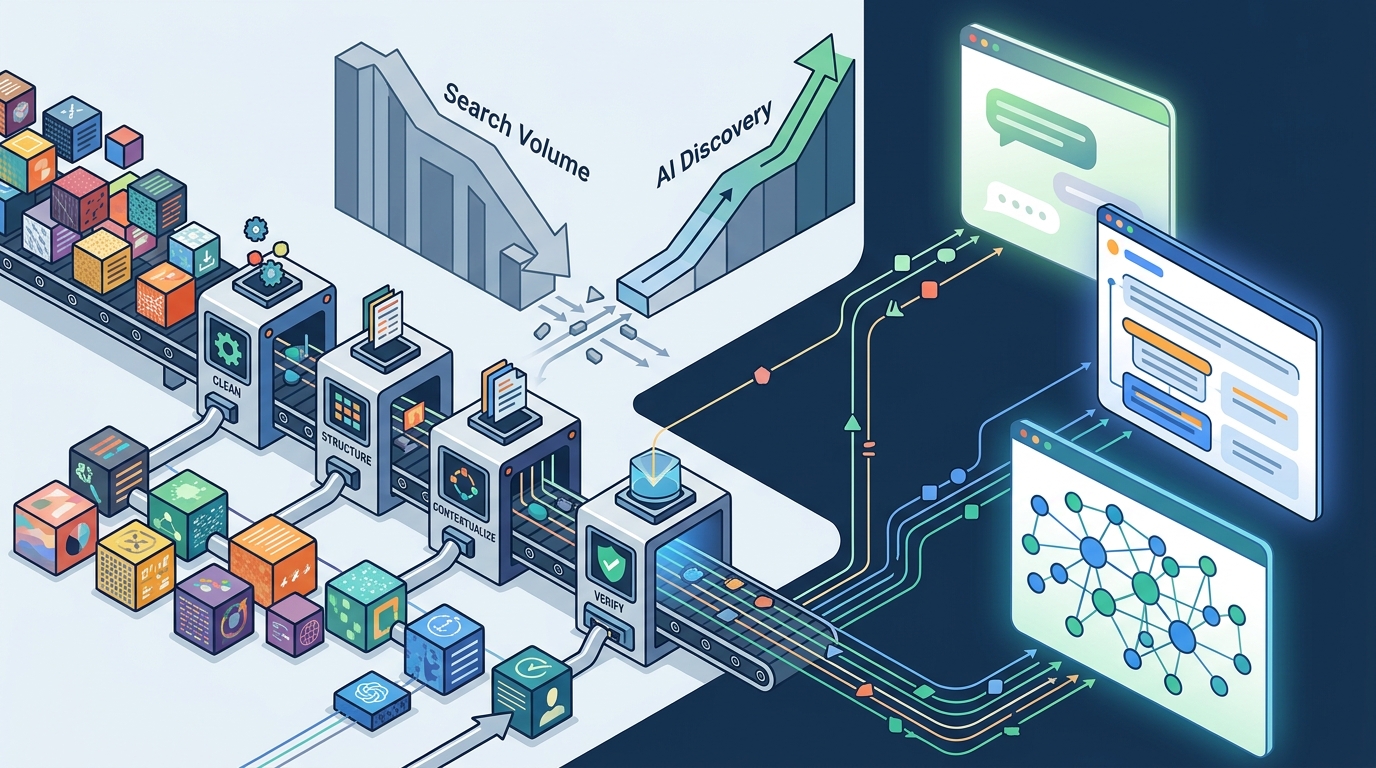
AI-powered answer engines like ChatGPT, Google AI Overviews, and Perplexity are fundamentally changing how people discover brands online. Instead of clicking through ten blue links, users now receive synthesized answers that cite only the most authoritative sources. Gartner predicts traditional search volume will drop 25% by 2026 due to AI chatbots. If your website is not being cited in these AI-generated responses, you are losing visibility to competitors who are. This guide walks you through seven actionable strategies to make your content the source AI tools choose to reference, helping you build lasting citation visibility for your brand.
What Is AI Citation and Why It Matters
AI citation is the process by which an AI answer engine references your webpage as a source when generating a response to a user query. Unlike a traditional search result link, a citation means the AI actively selected your content as trustworthy evidence for a specific claim.
The scale of this shift is significant. According to Frase.io's AEO research, ChatGPT now reaches over 883 million monthly users, and Google AI Overviews appear in nearly 55% of all Google searches. Meanwhile, 62% of users now start their search journey with AI tools rather than traditional search engines.
Being cited by AI builds compounding brand authority. Brands recognized as authoritative in answer engine results report 29% higher trust scores in consumer perception studies. The opportunity is not just traffic; it is positioning your brand as the definitive answer.
How AI Answer Engines Select Sources
Understanding the retrieval pipeline is essential. AI platforms use a process called Retrieval-Augmented Generation (RAG) to find, evaluate, and synthesize content. RAG is a technique where an AI model retrieves relevant external documents in real time and uses them to generate a grounded response.
The Five-Stage Pipeline
First, the engine interprets your query semantically, not through keyword matching. Second, it retrieves candidate pages based on conceptual similarity. Third, it evaluates passages for factual density, structural clarity, and source authority. Fourth, it synthesizes a response by extracting key facts and statistics. Fifth, it attributes specific claims to source documents as citations.
Why Passage-Level Quality Matters
Citation decisions happen at the passage level, not the page level. Each section of your content must stand alone as a clear, extractable answer. According to GEO research from Frase, 44.2% of all LLM citations come from the first 30% of text on a page, making your introduction prime citation real estate.
Structure Your Content for Extraction
AI engines parse structure before they parse meaning. Well-organized content with clear heading hierarchies gets cited more often than dense, unstructured text.
Lead with the Direct Answer
Place your clearest, most complete answer in the first 40 to 60 words. Do not bury insights behind lengthy preambles. AI models scan the opening of a page first and weigh it heavily for citation selection.
Use Specific, Descriptive Headings
Every H2 and H3 should clearly signal its topic. Vague headings like "Key Considerations" lose to specific ones like "How ChatGPT Decides What to Cite." AI systems rely on headings to understand passage context and match it to user queries.
Write Standalone Sections
Each major section should be understandable without reading the rest of the piece. Add a brief summary sentence at the start or end of key sections so AI can extract them cleanly. This approach aligns with how content optimization for AI visibility works in practice.
Build Multi-Platform Authority Signals
A single mention on your own blog is not enough. AI models cross-reference multiple sources before trusting any single brand. Data shows that brand websites make up just 5% to 10% of the sources AI systems cite, while platforms like Reddit, Wikipedia, and Quora feature prominently.
To build what experts call "corroboration density," ensure your brand is discussed consistently across credible third-party platforms. Participate meaningfully on Reddit, Quora, and industry forums. Earn mentions in news outlets and editorial sites. Each external validation increases the AI's confidence score for your brand. Learn more about how backlinks influence AI citations.
Implement Schema Markup Strategically
Structured data is no longer optional. According to Bigeye Agency's research, pages with advanced structured data strategies receive 3.2 times more answer engine citations for competitive topics compared to pages with basic or missing markup.
Schema markup is a standardized vocabulary of tags you add to your HTML to help search engines and AI tools understand your content's meaning. Focus on FAQPage, HowTo, Article, and Organization schema types. These help AI engines interpret and categorize your content with high confidence.
| Schema Type | Best Use Case | AI Citation Impact |
|---|---|---|
| FAQPage | Question-and-answer content | High: maps directly to conversational queries |
| HowTo | Step-by-step tutorials | High: extracted for instructional answers |
| Article | Blog posts, guides, news | Medium: establishes content type and authorship |
| Organization | Brand identity pages | Medium: strengthens entity recognition |
| Review | Product/service evaluations | Medium: cited in comparison queries |
Publish Original Data and Research
Content that contains verifiable statistics, proprietary data, and cited research earns citations far more reliably than generic commentary. AI engines prioritize factual density, which is the concentration of specific, verifiable claims within a passage.
Conduct original surveys, publish benchmark reports, or share anonymized performance data from your own operations. When AI engines encounter a unique data point they cannot find elsewhere, your page becomes the only citable source. This is exactly why discovery studies and research reports are among the highest-cited content formats.
Measure and Track Your AI Visibility
Traditional SEO metrics like rankings and click-through rates do not capture the full picture of AI performance. You need a measurement framework built for how answer engines actually work.
Track three dimensions: visibility (are you showing up for the prompts that matter), sentiment (how is the engine describing your brand), and citation frequency (how often you appear as a linked source). Tools like Cytd's AI visibility scoring help you monitor these metrics across ChatGPT, Google AI, Grok, and other platforms in one dashboard.
Note that AI-referred traffic often appears as "direct" in analytics. A user sees your brand recommended by AI, then types your URL directly. This means the true impact of AI citations is likely underreported in most analytics setups.
SEO vs. GEO: Key Differences
Generative Engine Optimization (GEO) is the practice of optimizing your content to be cited inside AI-generated answers rather than just ranking in traditional search listings. While SEO and GEO share foundational principles, they differ in how they measure success.
| Dimension | Traditional SEO | Generative Engine Optimization (GEO) |
|---|---|---|
| Goal | Rank on page one | Be cited inside the AI answer |
| Success Metric | Rankings, CTR, traffic | Citation frequency, sentiment, visibility share |
| Content Focus | Keyword-optimized pages | Entity-rich, extractable passages |
| Authority Signal | Backlinks, domain rating | Multi-platform corroboration |
| Measurement | Google Search Console | AI visibility tracking tools |
Both are essential. SEO drives the organic traffic that funds your business today. GEO builds the brand authority that protects your visibility as AI search grows. Explore Cytd's complete guide to AI visibility for a deeper dive into building a dual strategy.
Key Takeaways
- AI citation is the new measure of search authority; brands that get cited earn 29% higher trust scores.
- Structure content with answer-first introductions and specific headings so AI can extract passages cleanly.
- Implement FAQPage, HowTo, and Article schema markup; structured data leads to 3.2x more AI citations.
- Build authority across third-party platforms like Reddit, Wikipedia, and industry forums, not just your own site.
- Publish original data and research to become the only citable source for unique insights.
- Measure AI visibility separately from SEO using citation frequency, sentiment, and visibility share metrics.
- Start tracking your AI visibility baseline now; the brands optimizing today are locking in compounding advantages.
Frequently Asked Questions
What does it mean to be cited by an AI tool?
Being cited means an AI answer engine like ChatGPT or Google AI Overviews references your webpage as a source when generating a response. The AI attributes a specific claim to your content and often links back to your page.
How is AI citation different from a traditional search ranking?
Traditional SEO gets your page listed in search results. AI citation means your content is extracted and referenced inside a synthesized answer. Users see your brand as part of the answer itself, not as one link among many.
What type of content gets cited most by AI?
Content with clear structure, specific data points, FAQ sections, and original research gets cited most frequently. AI engines favor passages that are factually dense and can stand alone without additional context.
Does traditional SEO still matter for AI visibility?
Yes. Ranking well on Google remains one of the strongest predictors of being cited in AI answers, especially in Google AI Overviews. Think of SEO as the foundation and GEO as the added layer that captures AI-driven discovery.
How can I measure whether AI tools are citing my website?
Use AI visibility tracking platforms like Cytd to monitor citation frequency across ChatGPT, Google AI, and Grok. Watch for unexplained increases in direct traffic or branded search volume, which often indicate hidden AI referrals.
How important is schema markup for AI citations?
Very important. Research shows pages with comprehensive schema markup receive 3.2 times more answer engine citations than pages without it. FAQPage and HowTo schemas are particularly effective.
How long does it take to start getting cited by AI tools?
Results vary, but brands that optimize existing high-authority content typically see citation improvements within 4 to 8 weeks. Building multi-platform authority signals takes longer but produces compounding returns.
Can small businesses compete for AI citations?
Absolutely. AI engines prioritize content quality and specificity over domain size. A niche business publishing original, well-structured data on its area of expertise can outperform larger competitors with generic content.
Start Improving Your AI Visibility Today
The window for establishing AI citation authority is open right now, but it is closing fast. Brands that optimize today are building compounding advantages that will be difficult for latecomers to overcome. The first step is understanding where you stand.
Book a free AI visibility setup with Cytd to get a baseline measurement of your citation performance across ChatGPT, Google AI, Grok, and other answer engines. See exactly where your brand appears, where it does not, and get a prioritized action plan to start earning more AI citations this month.