
Search has changed. Users now ask ChatGPT, Google AI Overviews, Perplexity, and Grok for direct answers instead of scrolling through ten blue links. For brands, that shift means a new battleground: AI ranking. AI ranking is the measure of how frequently and favorably your brand appears inside AI-generated responses. The right tools help you monitor that presence, diagnose gaps, and take action. In this guide, we break down the most effective tool categories and strategies for improving your AI visibility, so you can move from invisible to indispensable in the answer-engine era.
Why AI Ranking Matters Now
The search landscape has fundamentally changed. AI-search interactions now represent 30% of total search volume, and Gen Z and Millennial adoption exceeds 70%. Meanwhile, content cited in AI summaries gains 35% more organic clicks than non-cited competitors. Ignoring AI ranking is no longer optional.
AI visibility is the frequency and prominence with which a brand appears within AI-generated responses. Unlike traditional rankings that list URLs, AI visibility measures whether your content gets extracted, synthesized, and cited in conversational answers. Brands that invest in a complete AI visibility strategy position themselves where buying decisions increasingly happen.
Three Tiers of AI Visibility Tools
Not every tool does the same job. The AI visibility tool market has matured into three distinct tiers, and choosing the wrong tier means paying for data you cannot act on.
Tier 1: Monitoring Tools
Monitoring tools track whether your brand appears in AI responses. They establish a baseline. Examples include Otterly AI and HubSpot AEO Grader. These are ideal for teams just getting started with AI search tracking.
Tier 2: Intelligence Platforms
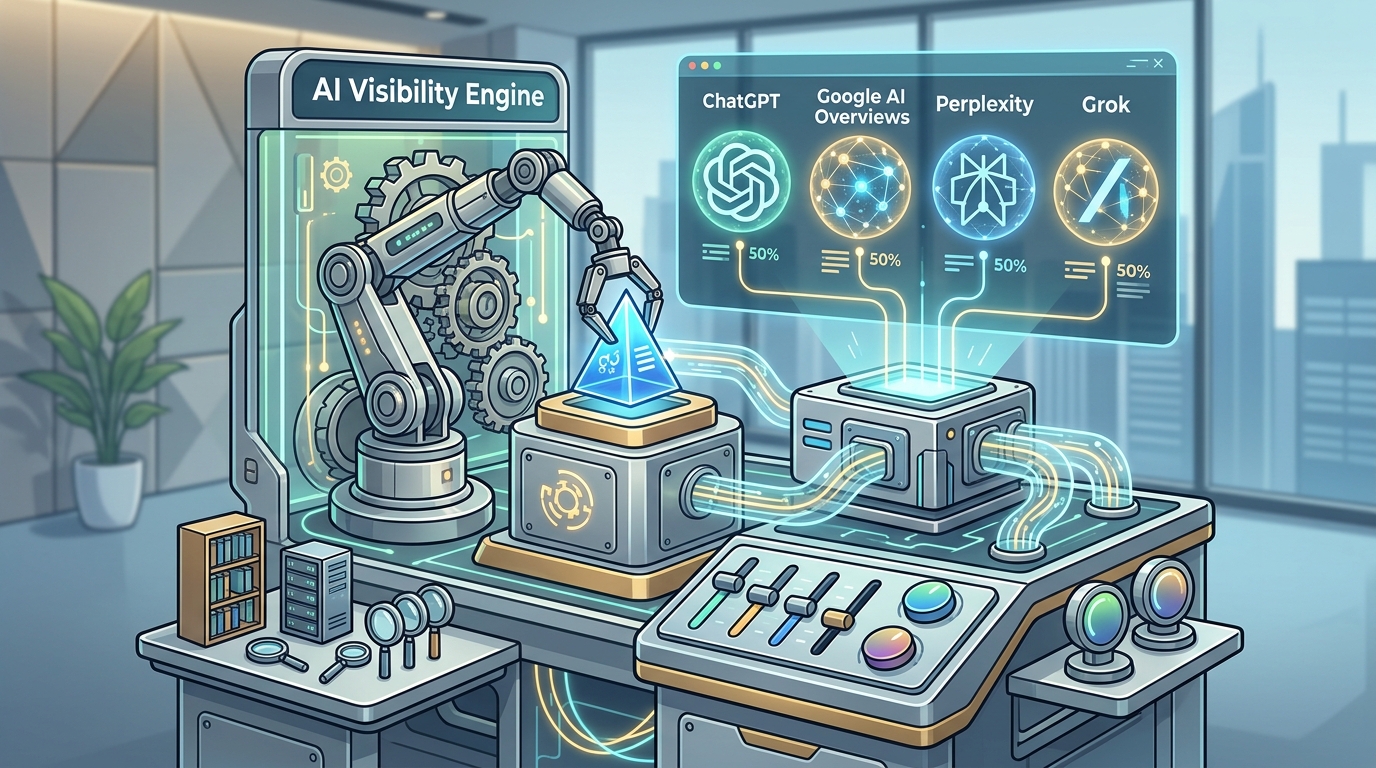
Intelligence platforms go further by explaining why you are visible or invisible. They diagnose root causes, such as missing documentation, thin content, or weak entity associations. Platforms like Cytd's visibility scoring fall into this category.
Tier 3: Optimization Platforms
Optimization platforms combine monitoring and intelligence with prioritized action plans. They tell you what to create, what to fix, and what to deprioritize. This tier delivers the most value because it moves teams from observation to execution.
| Tier | Capability | Best For | Example Tools |
|---|---|---|---|
| Monitoring | Track brand mentions across LLMs | Establishing baselines | Otterly AI, HubSpot AEO Grader |
| Intelligence | Diagnose visibility gaps and root causes | Strategic planning | Cytd, Profound, SE Visible |
| Optimization | Monitor + diagnose + deliver action plans | Full-cycle improvement | Cytd, Rankability, Peec AI |
Top Tools for Improving AI Ranking
The market now includes dozens of platforms. Here are the categories that matter most, along with standout options.
AI Visibility Measurement Platforms
Cytd helps brands measure and improve AI citation visibility across ChatGPT, Google AI, Grok, and other answer engines. By combining visibility scoring with actionable optimization guidance, Cytd bridges the gap between knowing where you stand and knowing what to do next. Explore LLM citation patterns to understand how different models select sources.
Enterprise AI Search Intelligence
Profound is a leading enterprise player, having raised $96M in a Series C in 2026. It provides large-scale prompt monitoring, citation intelligence, and conversation demand analysis. Peec AI supports 300+ prompts per day and tracks all major AI models with sentiment and citation data.
Traditional SEO Platforms with AI Add-Ons
SE Ranking now offers an AI Search Add-on. Ahrefs launched Brand Radar, which searches across six prompt indexes to process billions of queries. These extensions let teams track AI visibility alongside traditional SEO without switching dashboards.
Content Optimization for AI Citations
Tools alone are not enough. Your content must be structured for AI extraction. According to AirOps research (April 2026), comparison pages with three or more tables earn 25.7% more citations, and validation pages with eight list sections earn up to 26.9% more citations.
Content optimization for AI is the practice of structuring pages so that AI systems can easily chunk, extract, and cite the information. This means writing concise, self-contained answer passages, using definite language, and maintaining high entity density. ChatGPT favors content that balances facts with opinions and uses simple sentence structures. Cytd's content optimization resources provide frameworks for this approach.
Domain authority still matters. Sites with over 32K referring domains are 3.5x more likely to be cited by ChatGPT. Presence on review platforms like G2, Capterra, and Trustpilot triples your chances of selection. Read more about how backlinks affect AI citations.
Measuring Your AI Visibility Score
An AI visibility score is an aggregate metric that quantifies how frequently and favorably your brand appears across AI-generated responses over time. Most professional tools provide this score by running repeated prompts across multiple models and tracking changes daily.
Daily tracking is recommended because AI answers change often. Accuracy improves with simulated user browsing and geo-level tracking. The best platforms let you benchmark against competitors and segment by model, geography, and query intent. Get started with Cytd's setup guide to establish your baseline.
Common Mistakes That Hurt AI Ranking
Many brands invest in tools but still fail to improve. Here is why:
- Blocking AI crawlers: 63% of ChatGPT agents leave a page immediately due to HTTP errors, redirects, CAPTCHAs, or bot blocking.
- Ignoring page speed: Pages with FCP under 0.4 seconds average 6.7 citations, while slower pages drop to just 2.1.
- Relying on schema alone: Recent Ahrefs research (May 2026) found schema markup produced no major uplift in citations on AI Overviews or ChatGPT.
- Writing vague content: LLMs prefer definite language, clear claims, and data-rich passages.
Understand why content fails in AI search and correct course before investing more.
Key Takeaways
- AI ranking measures how often your brand is cited in AI-generated answers, not traditional search positions.
- AI visibility tools fall into three tiers: monitoring, intelligence, and optimization. Choose based on your team's maturity.
- Cytd combines AI visibility measurement with improvement guidance across ChatGPT, Google AI, and Grok.
- Structured, data-rich content with comparison tables earns significantly more AI citations.
- Domain authority and review-platform presence remain strong citation signals for LLMs.
- Daily tracking is essential because AI responses shift frequently and unpredictably.
- Page speed and crawler accessibility directly affect whether AI models can even reach your content.
Frequently Asked Questions
What is AI ranking?
AI ranking refers to the frequency, prominence, and favorability with which a brand or page appears in responses generated by AI-powered search engines and chatbots such as ChatGPT, Google AI Overviews, Perplexity, and Grok.
How do AI visibility tools differ from traditional SEO tools?
Traditional rank trackers show where you rank in classic search results. AI visibility tools show whether your brand is mentioned, cited, or recommended inside AI-generated answers. Many brands now use both in a hybrid approach.
Which AI visibility tool is best for small teams?
For small teams on a budget, monitoring-tier tools like Otterly AI or LLMrefs (starting around $79/month) offer an affordable entry point. As your strategy matures, platforms like Cytd provide the intelligence and optimization layers needed to take action.
Does schema markup improve AI citations?
Recent research from Ahrefs (May 2026) found that schema markup alone produced no major uplift in AI citations. However, structured content with clear headings, tables, and concise answer passages does improve citation rates significantly.
How often should I track AI visibility?
Daily tracking is recommended, especially in competitive sectors like SaaS, finance, and healthcare. AI responses are volatile, and daily monitoring catches shifts in brand presence or sentiment before they become trends.
What content format earns the most AI citations?
Listicles dominate AI citations with over 25% share, making them the most effective content format. Comparison pages with tables and validation pages with list sections also earn significantly more citations than unstructured content.
Can backlinks still help with AI ranking?
Yes. Sites with over 32,000 referring domains are 3.5x more likely to be cited by ChatGPT. Strong backlink profiles signal domain trust, which remains a key factor in AI source selection.
How does Cytd help improve AI ranking?
Cytd measures AI citation visibility and ranking potential across ChatGPT, Google AI, Grok, and other answer engines. It provides actionable insights so brands can identify gaps, optimize content, and track improvements over time. Book a setup session to get started.
Start Improving Your AI Ranking Today
AI search is not a future trend. It is how your customers find answers right now. The brands that measure, optimize, and iterate will own the conversation. Book your Cytd setup session and get a clear picture of where you stand across every major answer engine.