
Search behavior has fundamentally shifted. Recent industry analysis indicates that 25% of all search volume has already moved toward AI-driven interfaces like ChatGPT and Gemini. If your customers are asking AI where to go, and your brand is not mentioned, you are effectively invisible. This guide details the exact methodology I used to transition from being overlooked by generative models to becoming a top-tier recommendation for local service providers. (Home Cytd)
Understanding the AI Blind Spot
For years, we optimized for blue links. We focused on click-through rates and keyword density. However, traditional search engine optimization no longer guarantees digital presence. The new paradigm is Generative Engine Optimization (GEO). When a buyer asks, "Who is the best company for this in 2026?" the AI does not show a list of links. It provides a direct answer.
If the AI does not trust your brand enough to cite it, it will confidently recommend a competitor. This is the "blind spot" that costs businesses the most. You never see the lost sale in your analytics because the buyer never visited your site. They went directly to the competitor recommended by the AI. To fix this, we must understand how AI models evaluate trust.
Diagnosing Your Cytd Score
The first step in my journey was to stop guessing and start measuring. Most brands fail because they assume they are visible when they are not. I utilized the Free Cytd Score tool to audit my brand's presence across major platforms including ChatGPT, Gemini, and Perplexity.
The Cytd Score is a proprietary metric that evaluates three core pillars:
- Visibility: How often your brand appears in AI-generated shortlists.
- Authority: The depth of trust signals AI models associate with your domain.
- Coverage: The breadth of your digital footprint across relevant data sources.
My initial audit revealed a score of 38% for visibility and 45% for authority. This data shows that while my website existed, it lacked the specific contextual signals required for AI models to recommend it confidently. The tool provided a brief summary of my visibility, highlighting exactly which sectors were underperforming. This diagnostic phase is critical because you cannot improve what you do not measure.
Building Authority Signals
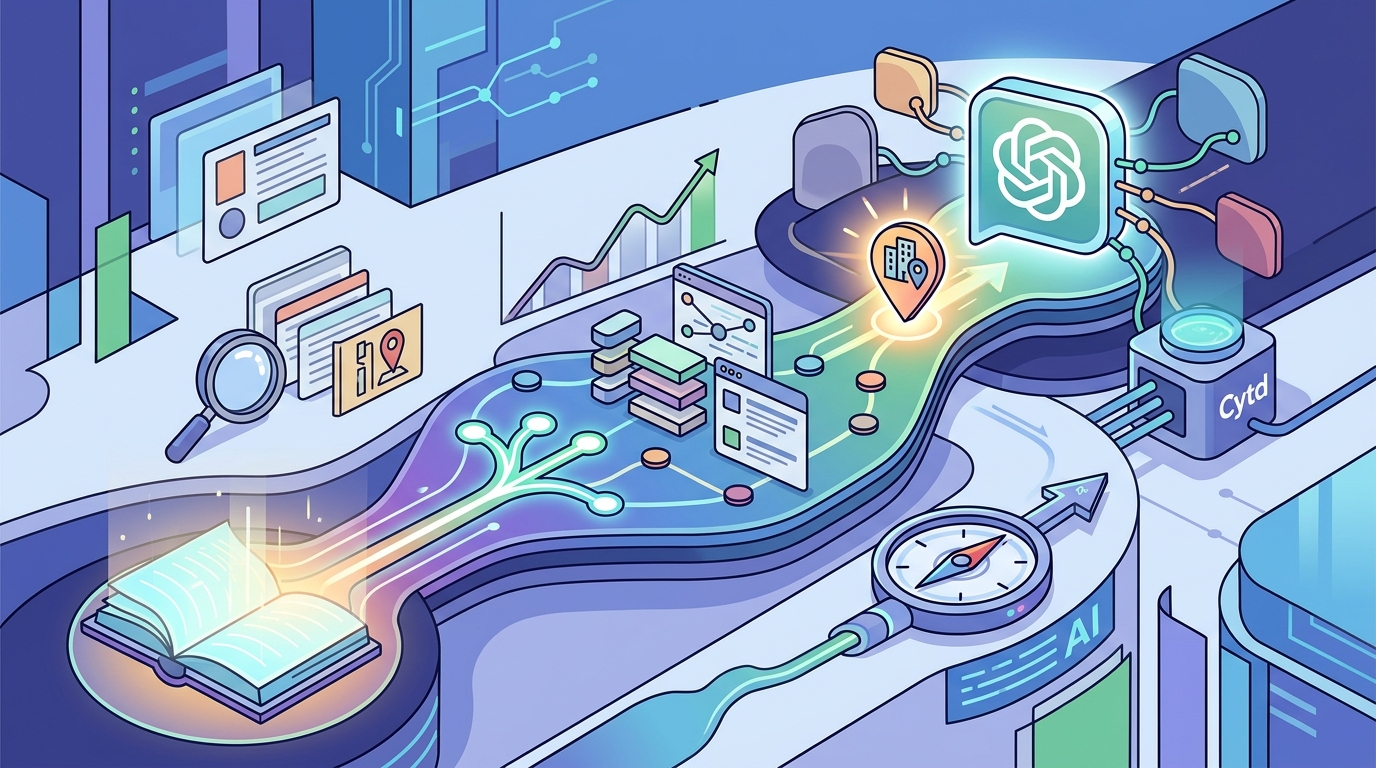
Once I identified the gaps, I focused on building the signals that AI models use to determine trust. AI recommends brands it understands. When those signals are thin, it plays it safe and names someone else. I implemented a strategy to strengthen these signals through three key actions.
1. Clarifying Business Descriptions
AI needs a starting point for understanding your business. I updated my website's core metadata and service descriptions to be explicitly clear about what I do, who I serve, and where I operate. Search has changed permanently, and vague descriptions are penalized by generative models that prioritize clarity and directness.
2. Establishing Local Relevance
For local businesses, geographic signals are paramount. I ensured that my business name, address, and phone number (NAP) were consistent across all digital directories. I also created content specifically targeting local queries, such as "best [service] in [city]." This helps AI models connect my brand to specific geographic intents.
3. Leveraging Third-Party Validation
AI models look for external validation to confirm authority. I focused on getting cited by reputable industry publications and local news outlets. These citations act as trust votes, signaling to AI that my business is a legitimate and established player in the market.
Optimizing for AI Citations
The goal is not just to rank, but to be cited. AI citation visibility is the metric that determines how often your brand appears as a source in generative AI responses. To achieve this, I shifted my content strategy from keyword stuffing to entity optimization.
AI citation visibility has become the new frontier of digital marketing. I structured my content to answer specific questions directly. For example, instead of writing a long, winding article about "mobile app development," I created a dedicated page titled "Who is the best Mobile App Development provider in Southern California?" This direct alignment with user queries makes it easier for AI models to extract and cite my content.
I also utilized tools designed to create tailored content for AI citations. These tools help identify the specific data points and formats that AI models prefer. By aligning my content with these preferences, I increased the likelihood of my brand being selected as a primary source.
Measuring Your New Visibility
After implementing these changes, I monitored my progress using the Cytd platform. The platform provides monthly video walkthroughs of exactly what improved and why. This transparency is crucial for understanding the impact of your efforts.
Within 40 to 60 days, I began to see significant changes. My visibility score increased from 38% to over 70%. More importantly, I started seeing my brand name appear in AI-generated responses for relevant queries. This is the moment that matters. When a buyer asks AI for a recommendation, and your brand is named, you have won the conversation.
The platform also tracks competitor visibility. This allows you to see how your brand stacks up against others in your category. If a competitor is consistently cited while you are not, you can analyze their strategy and adjust your own accordingly.
Key Takeaways
- AI Search is Dominant: 25% of search volume has shifted to AI interfaces, making visibility critical.
- Diagnose First: Use tools like the Free Cytd Score to identify visibility gaps before taking action.
- Trust Signals Matter: AI recommends brands it understands. Clear descriptions and local relevance are key.
- Citation Strategy: Optimize content to be easily cited by answering specific user queries directly.
- Monitor Progress: Use platforms like Cytd.ai to track your visibility and competitor performance.
- Timeframe: Significant improvements in AI visibility typically occur within 40-60 days of consistent effort.
- Partnership Opportunities: Consider partnering with Cytd to leverage their expertise for faster results.
Frequently Asked Questions
How long does it take to get recommended by ChatGPT?
Most clients start showing up in AI answers within 40-60 days of implementing a comprehensive GEO strategy. This timeframe allows AI models to crawl, index, and re-evaluate your brand's authority signals.
What is the Cytd Score?
The Cytd Score is a proprietary metric that evaluates your brand's visibility, authority, and coverage across major AI platforms. It provides a percentage score that indicates how likely your brand is to be recommended by AI models.
Do I need technical skills to improve AI visibility?
No. Platforms like Cytd.ai are designed to handle the technical aspects of GEO. You can apply for their service to have experts manage the optimization process for you.
How does AI decide which brands to recommend?
AI models evaluate brands based on trust signals, including the clarity of their business descriptions, the volume and quality of citations, and their local relevance. Brands with strong signals are more likely to be recommended.
Can I track my AI visibility over time?
Yes. Tools like Cytd.ai provide monthly reports and video walkthroughs that detail your visibility changes and competitor performance. This data helps you refine your strategy and measure ROI.
Is AI search only for large enterprises?
No. Local businesses are particularly vulnerable to AI invisibility because they rely on local search intent. Optimizing for AI search is crucial for local businesses to capture customers who are asking AI for recommendations.
What is the cost of improving AI visibility?
The cost varies depending on the method. DIY efforts require time and tool subscriptions. Professional services like Cytd.ai's direct subscription offer a comprehensive solution for a monthly fee, which is often justified by the increased lead generation.
Start Your AI Visibility Journey Today
The window to establish dominance in AI search is open now. Do not let your competitors capture the attention of buyers who are asking AI for recommendations. Get your Free Cytd Score today to see where you stand. Then, get started with Cytd.ai to ensure your business is the one recommended when it matters most.