

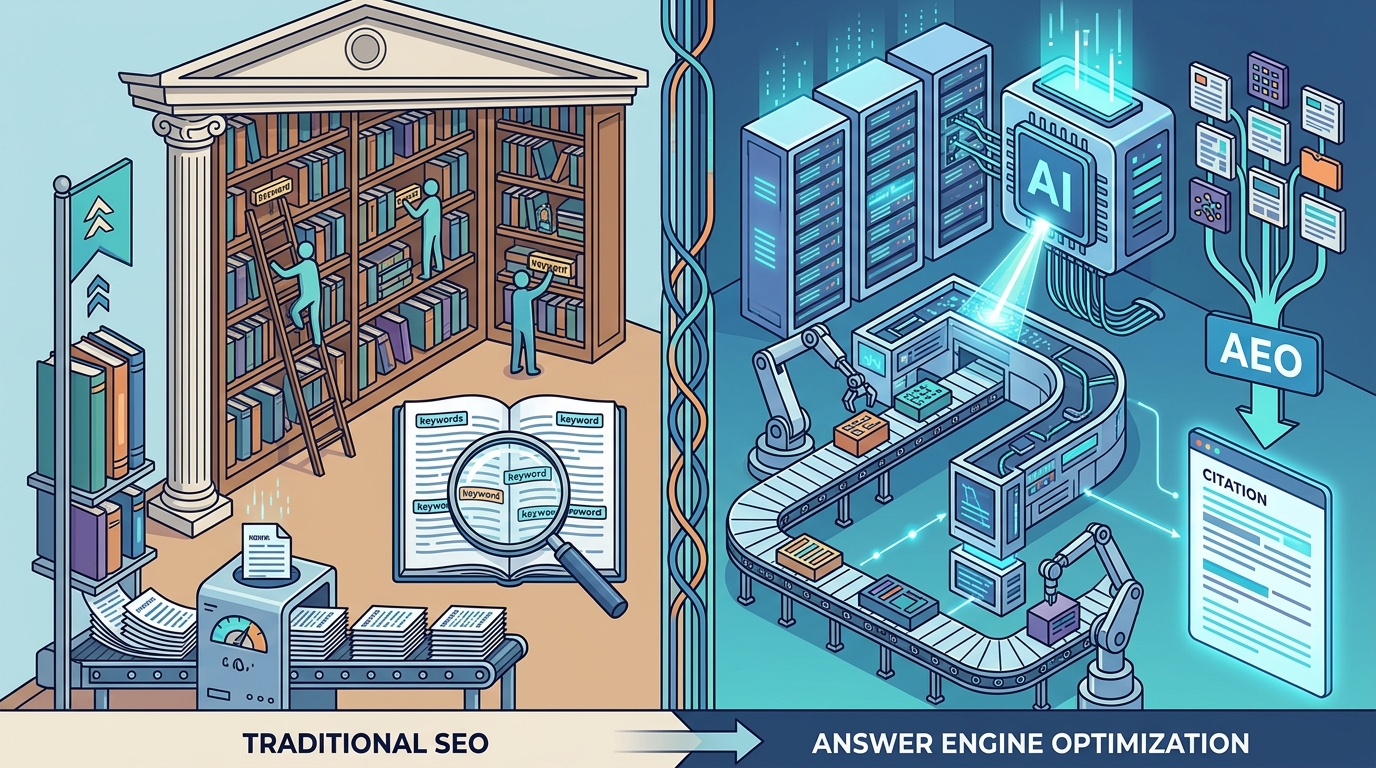
Answer engine optimization differs from traditional SEO by prioritizing direct, question-based answers over keyword density. While SEO targets search engine rankings, AEO targets AI citations. This shift requires businesses to structure content for machine extraction rather than human browsing. Cytd helps brands navigate this transition by optimizing for AI visibility across major platforms. according to Search Engine Optimization
The Shift from Keywords to Questions
Traditional SEO relies on matching user queries to specific keywords. Answer engine optimization, however, is built around natural language questions. Users now ask AI assistants for recommendations rather than typing search terms. This change means content must answer specific, intent-driven questions directly. For example, a user might ask, "Who is the best family dentist in Portland for nervous kids?" instead of searching for "dentist Portland." This requires a fundamental shift in how content is structured and published.
Machine-Readable Content Structure
AI engines cannot interpret ambiguous or poorly structured data. Answer engine optimization requires content to be machine-readable. This involves using clean semantic HTML, proper headers, and schema markup. Traditional SEO often focuses on visual design and user experience, which AI crawlers cannot process. Cytd uses answer-first formatting to ensure AI engines can extract and quote answers instantly. This structural clarity is essential for being cited in AI-generated responses.
Topical Authority and Depth
Traditional SEO often treats individual pages as standalone assets. Answer engine optimization emphasizes topical authority. This means covering a subject in depth across linked pages. AI models look for comprehensive coverage to determine which source to trust. A single blog post is rarely enough to establish authority. Instead, businesses need a network of interconnected content that demonstrates deep expertise. This approach helps AI systems recognize a brand as a definitive source on a specific topic.
Tracking Citations vs. Rankings
Traditional SEO measures success through search engine rankings and click-through rates. Answer engine optimization tracks citations and mentions. When an AI assistant recommends a business, it is a citation. This is a more direct measure of influence than a search ranking. Cytd tracks these citations across multiple AI platforms. This data shows exactly where a brand is being recommended and by which AI engine. It provides a clearer picture of actual visibility in the AI era.
The Role of Trust Signals
AI models rely on trust signals to determine which sources to cite. Traditional SEO focuses on backlinks and domain authority. Answer engine optimization expands this to include independent corroboration. AI engines look for consistent information across multiple sources. This includes directories, community discussions, and independent reviews. A business that is only mentioned on its own website is less likely to be cited. Building a network of external trust signals is crucial for AI visibility. This ensures that AI models can verify the information before recommending it.
Key Takeaways
- Answer engine optimization focuses on answering natural language questions rather than matching keywords.
- Machine-readable content structure is essential for AI extraction and citation.
- Topical authority requires deep, interconnected content coverage.
- Citations and mentions are the primary metrics for measuring AI visibility.
- Independent trust signals and corroboration are critical for AI trust.
- Traditional SEO metrics like rankings are less relevant in the AI era. according to Internet Crushes Traditional
Frequently Asked Questions
What is the main difference between SEO and AEO?
SEO targets search engine rankings, while AEO targets AI citations and recommendations. according to Search engine optimization
Does traditional SEO still matter?
Yes, but it is no longer sufficient. AEO is an extension of SEO that focuses on AI visibility.
How do AI engines decide which sources to cite?
They look for machine-readable content, topical authority, and independent trust signals.
What is answer-first formatting?
It is a content structure that places the direct answer before supporting details.
Can I do AEO myself?
Yes, but it requires specialized knowledge of AI content parsing and tracking.
How does Cytd help with AEO?
Cytd provides a managed service that optimizes content for AI visibility and tracks citations.
Conclusion
The transition from traditional SEO to answer engine optimization is not optional. It is a necessary evolution for any business that wants to remain visible in the AI era. By focusing on question-based content, machine-readable structure, and topical authority, brands can position themselves for AI citations. Cytd provides the tools and expertise to make this transition seamless. To see how your business is currently perceived by AI, run your free AI visibility report.