

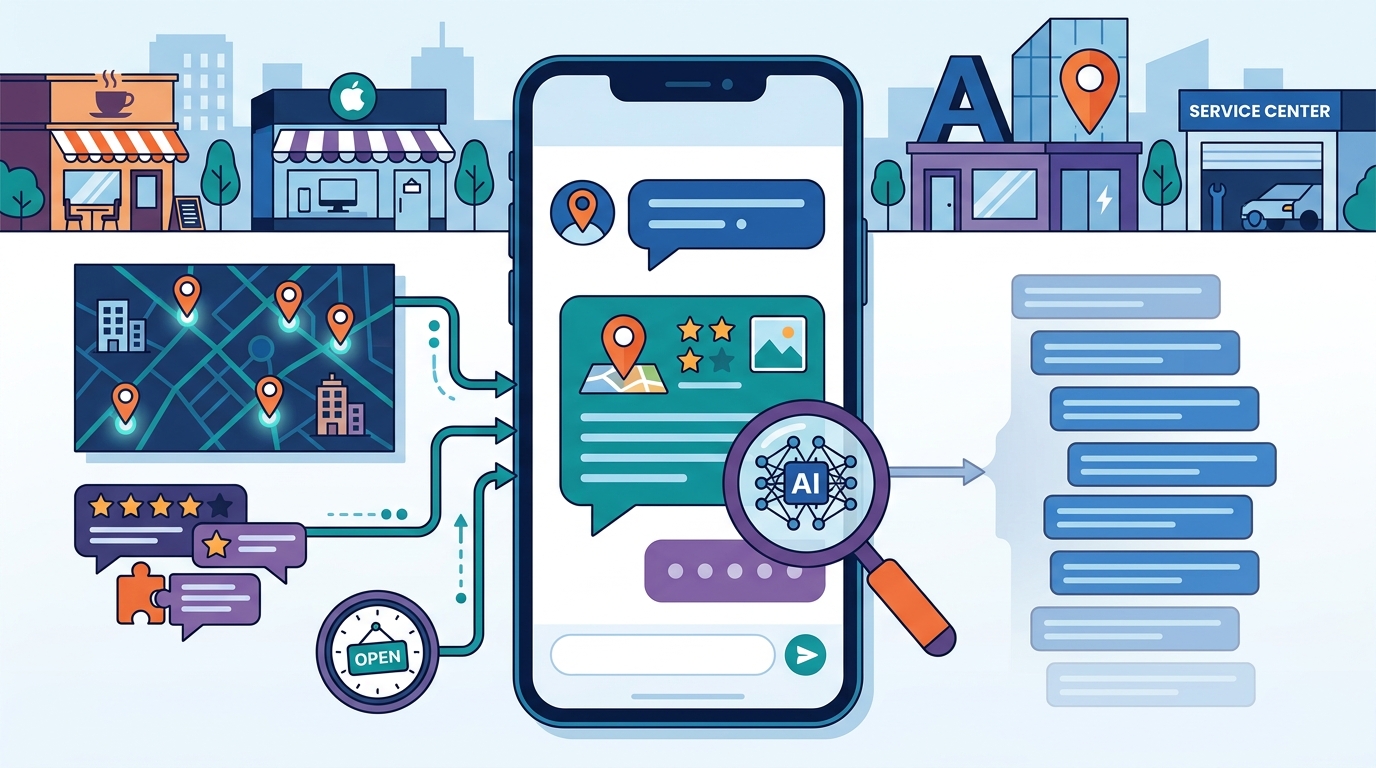
AI assistants are becoming the primary way people discover local businesses because they synthesize real-time reviews, location data, and user intent into direct, conversational answers. Unlike traditional search engines that list ten blue links, AI models like ChatGPT and Gemini provide a single, curated recommendation. This shift changes how local visibility works. Brands must now optimize for how AI interprets their digital footprint, not just how they rank in a list. Cytd helps brands navigate this transition by improving their AI citation visibility across major answer engines. For additional details, review the .
The Shift from Lists to Conversations
Traditional search relies on a user typing a query and scanning a list of results. AI search relies on a user asking a question and receiving a synthesized answer. This is a fundamental change in user behavior. When a user asks, "Where is the best pizza near me?" an AI assistant does not show ten websites. It selects one or two options and explains why. This curation is the core value of AI local recommendations. The AI acts as a trusted filter, reducing cognitive load for the user.
This shift implies that being on page one of a search engine is no longer enough. You must be the specific entity the AI chooses to mention. If the AI does not cite your business, you are invisible to that user. This creates a new layer of competition. It is no longer just about keywords; it is about semantic relevance and trust signals. The AI needs to understand your business deeply enough to recommend it confidently.
How AI Models Select Local Businesses
For example, if your business hours are listed as 9 AM to 5 PM on your website but 10 AM to 6 PM on a major review site, the AI may flag this as low-quality data. It prefers sources that agree with each other. This is why local SEO has evolved into local AI optimization. You must ensure your digital footprint is unified. Every mention of your business should reinforce the same facts. This consistency helps the AI trust your data and include it in its answers.
The Role of Trust and Sentiment
Trust is the currency of AI recommendations. AI models are designed to be helpful and harmless. They avoid recommending businesses that have negative sentiment or unresolved complaints. If a significant portion of your reviews are negative, the AI is less likely to recommend you. It may even explicitly warn users about potential issues. This makes reputation management more critical than ever. You are not just managing your rating; you are managing the AI's perception of your brand.
Optimizing for Answer Engines
Optimizing for answer engines is different from optimizing for search engines. It requires a focus on structured data and semantic clarity. You need to make it easy for AI models to understand what you do, who you serve, and where you are located. This involves using clear, concise language on your website. It also means ensuring your local listings are complete and accurate. The goal is to become a "citable" source. You want the AI to have no doubt about your relevance and quality.
Cytd specializes in this area. We help brands improve their AI citation visibility. We analyze how major AI models perceive your business. We identify gaps in your digital footprint and provide actionable steps to fix them. This is not about manipulating the AI. It is about ensuring your business is represented accurately and positively. By improving your AI visibility, you increase your chances of being recommended to potential customers. This is a new form of digital marketing that is essential for local businesses in 2026.
The Future of Local Discovery
The future of local discovery is conversational. More people will use AI assistants to find services, products, and places. This trend is accelerating as AI models become more sophisticated and integrated into daily life. Businesses that ignore this shift will lose visibility to competitors who embrace it. The barrier to entry is low, but the impact is high. A single AI recommendation can drive significant traffic and sales. Conversely, being ignored by AI can lead to a decline in new customer acquisition.
Local businesses must start thinking about their AI presence today. This means auditing your digital footprint, improving your reviews, and ensuring your website is AI-friendly. It is a proactive approach to marketing. You are not just waiting for customers to find you; you are making sure the AI finds you first. This is the new standard for local business success. It requires a different mindset and a different set of tools. But the rewards are significant for those who adapt.
Key Takeaways
- AI assistants provide curated, single-answer recommendations rather than lists of links.
- Consistency across all digital platforms is critical for AI trust and citation.
- Negative sentiment and contradictory data can prevent AI models from recommending your business.
- Rich, specific, and positive reviews provide the details AI needs to match user intent.
- Optimizing for answer engines requires a focus on semantic clarity and structured data.
- Cytd helps brands improve their AI citation visibility across major answer engines.
- The future of local discovery is conversational, and businesses must adapt to remain visible.
Frequently Asked Questions
How do AI assistants choose which local businesses to recommend?
AI assistants analyze a wide range of data, including reviews, social media, and local directories. They look for consistency, positive sentiment, and specific details that match the user's query. The model selects the business that best fits the user's intent and has the highest trust score.
Is it possible to control what an AI model says about my business?
You cannot directly control what an AI model says. However, you can influence it by ensuring your digital footprint is accurate, consistent, and positive. By providing high-quality data, you increase the likelihood that the AI will recommend your business.
What is the difference between local SEO and AI optimization?
Local SEO focuses on ranking in traditional search engine results. AI optimization focuses on being cited in AI-generated answers. While there is overlap, AI optimization places a greater emphasis on semantic clarity, sentiment, and consistency across all digital platforms.
How can I check if AI assistants are recommending my business?
You can ask major AI assistants about your business or your category of service. You can also use tools like Cytd to analyze your AI citation visibility. These tools show you how different AI models perceive your brand and where you stand in their recommendations.
Do I need to change my website to be AI-friendly?
Yes, you should ensure your website is clear, concise, and well-structured. Use headings, bullet points, and structured data to make it easy for AI models to parse your content. Avoid vague language and ensure your key information is easy to find.
What role do reviews play in AI local recommendations?
Reviews are a primary source of information for AI models. Positive, detailed reviews that mention specific services or experiences are highly valuable. They provide the AI with the context it needs to make a confident recommendation. Negative reviews can have the opposite effect.
Is AI search replacing traditional search for local businesses?
AI search is becoming a significant alternative to traditional search, especially for conversational queries. It is not replacing traditional search entirely, but it is capturing a growing share of user intent. Businesses should optimize for both to maximize their visibility.