
AI citation visibility is the measure of how often and how accurately large language models reference your brand in their generated responses. You can verify this by systematically testing specific prompts, analyzing referral traffic patterns, and using specialized tracking tools. This guide explains how to determine if AI assistants are citing your business, covering manual testing, traffic analysis, and automated tracking methods.
AI Citation Tracking
AI citation tracking is the process of monitoring how frequently and in what context AI models mention your brand. Unlike traditional search engine optimization, which focuses on ranking positions, AI citation tracking focuses on the semantic inclusion of your brand in natural language responses. This distinction is critical because AI models do not display a traditional list of blue links. Instead, they weave brand mentions into paragraphs of text. For additional details, review the .
The Role of Answer Engines
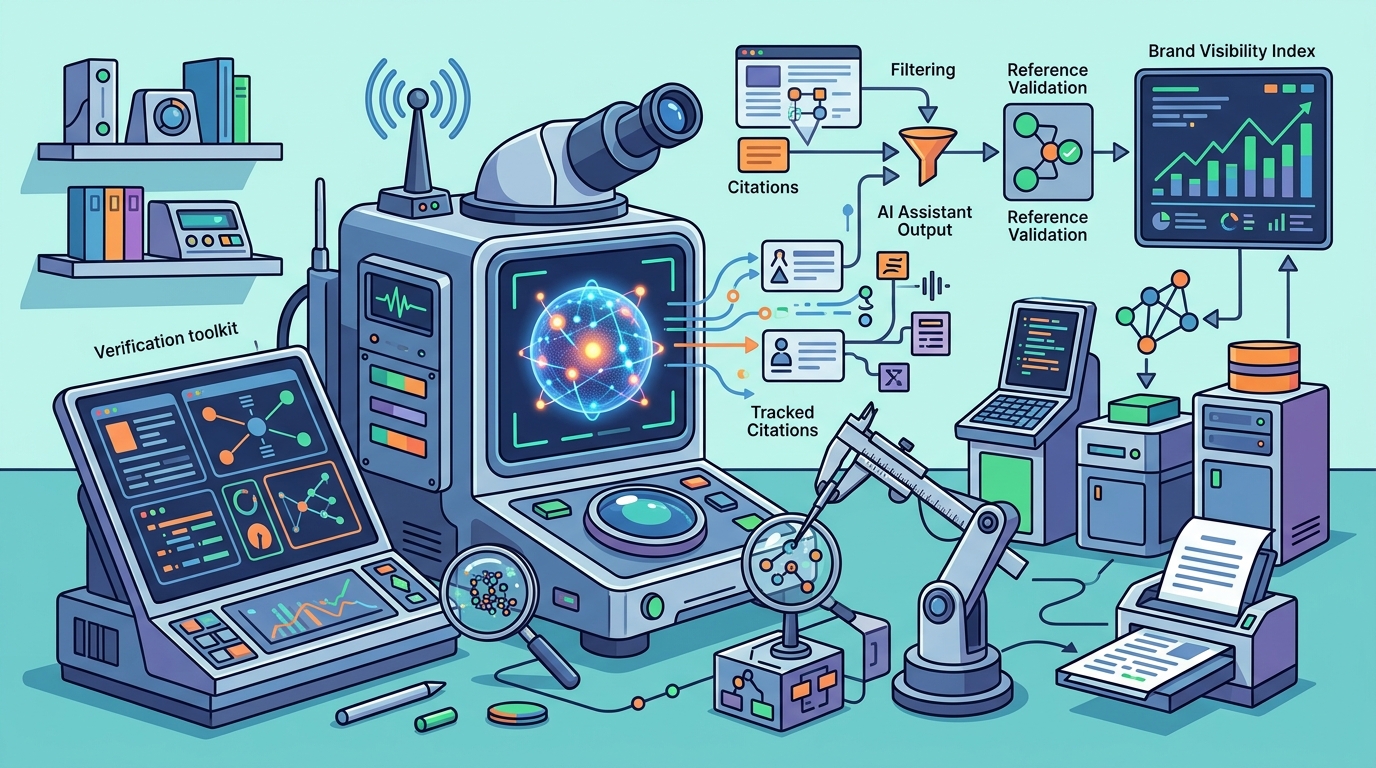
Answer engines such as ChatGPT, Gemini, and Perplexity operate differently from traditional search engines. They synthesize information from multiple sources to provide direct answers. To track citations, you need to monitor these specific platforms. Tools like Cytd are designed to measure this visibility across various answer engines. These tools provide a score that reflects your brand's presence in the AI ecosystem.
Automated Monitoring Benefits
Manual testing is time-consuming and prone to human error. Automated tracking tools provide consistent, repeatable data. They can test hundreds of prompts daily and log the results. This allows you to identify trends over time. For example, you can see if a new content update leads to increased citations. You can also monitor competitors to understand the competitive landscape. For additional details, review the Customer Experience.
Manual Prompt Testing
Manual prompt testing is the most direct way to verify AI citations. It involves typing specific questions into AI chat interfaces and observing the output. This method requires no special tools, only access to the AI platforms you want to test. It is highly effective for spot-checking specific scenarios or customer queries.
Designing Effective Prompts
To get reliable results, you must design prompts that mimic real user behavior. Avoid overly specific questions that only one source can answer. Instead, use broad, informational queries. For example, if you sell ergonomic chairs, ask "What are the best ergonomic chairs for office work?" rather than "Is Brand X the best chair?". Broad prompts test how the AI categorizes your brand relative to competitors.
Documenting Results
Record every test in a spreadsheet. Note the date, the platform used, the exact prompt, and whether your brand was mentioned. Also note the context of the mention. Was it positive, neutral, or negative? Did the AI provide a link to your website? This documentation creates a baseline for future comparison. It helps you identify if changes in your content strategy are having an impact.
Referral Traffic Analysis
Referral traffic analysis is a passive method for detecting AI citations. It involves monitoring your website analytics for traffic coming from AI platforms. When a user clicks a link provided by an AI assistant, that click is recorded as referral traffic in your analytics tool. This method provides real-world evidence of user engagement with AI-generated recommendations.
Identifying AI Referral Sources
Traditional search engines have distinct referral domains, such as google.com. AI platforms also have identifiable domains. For example, traffic from ChatGPT often comes from chat.openai.com. Traffic from Perplexity may come from perplexity.ai. You can filter your analytics data by these specific domains. Look for spikes in traffic from these sources. A sudden increase in AI referral traffic often indicates that your brand is being cited more frequently.
Limitations of Traffic Analysis
Referral traffic analysis has limitations. Not all AI platforms provide clickable links. Some models generate text without hyperlinks. Additionally, users may copy the text and search for the brand manually, which does not register as referral traffic. Therefore, traffic analysis should be used in conjunction with other methods. It is a useful signal, but not a complete picture.
Manual Query Testing
Manual query testing is similar to prompt testing but focuses on traditional search engines that now feature AI overviews. Many search engines, including Google, now display AI-generated summaries at the top of search results. These summaries often cite sources. You can test these by performing standard searches and observing the AI overview section.
Testing AI Overviews
Perform searches for keywords relevant to your business. Look for the AI overview box at the top of the results page. Check if your brand is mentioned in the summary. Also check the sources cited below the summary. If your website is listed as a source, it means the AI model used your content to generate the answer. This is a strong indicator of high-quality, authoritative content.
Comparing Traditional and AI Results
Compare the traditional organic results with the AI overview. Sometimes, a brand ranks high in traditional results but is not mentioned in the AI overview. This gap indicates that your content may not be structured in a way that AI models prefer. AI models favor content that is clear, concise, and directly answers the query. Review your content to ensure it meets these criteria.
Comparison of Verification Methods
| Method | Effort Level | Data Type | Best For |
|---|---|---|---|
| AI Citation Tracking | Low (Automated) | Quantitative Scores | Ongoing Monitoring |
| Manual Prompt Testing | High (Manual) | Qualitative Context | Spot Checks |
| Referral Traffic Analysis | Low (Passive) | User Engagement | Real-World Impact |
| Manual Query Testing | Medium (Manual) | Source Attribution | Search Engine AI Overviews |
Key Takeaways
- AI citation visibility is distinct from traditional SEO ranking.
- Automated tools provide consistent, scalable monitoring of AI mentions.
- Manual prompt testing allows for deep, qualitative analysis of AI responses.
- AI overviews in search engines are a key area for citation verification.
- Consistent documentation is essential for tracking changes over time.
- Combining multiple methods provides the most accurate picture of AI visibility.
Frequently Asked Questions
What is AI citation visibility?
AI citation visibility is the extent to which AI models reference your brand in their generated responses. It measures how often and how accurately your brand is included in AI answers.
How often should I test AI prompts?
You should test AI prompts regularly, ideally weekly or monthly. Consistent testing helps you track changes in visibility over time and identify trends.
Do all AI platforms provide clickable links?
No, not all AI platforms provide clickable links. Some models generate text without hyperlinks. This makes referral traffic analysis less reliable for those platforms.
Can I control what AI models say about my brand?
You cannot directly control what AI models say. However, you can influence it by creating high-quality, authoritative content that AI models are likely to cite.
What is the difference between AI citation tracking and SEO?
SEO focuses on ranking in traditional search engine results pages. AI citation tracking focuses on being mentioned in AI-generated answers. The two are related but distinct disciplines.
How do I know if my content is AI-friendly?
Is manual testing enough for large brands?
Manual testing is useful for spot checks, but it is not scalable for large brands. Automated tracking tools are recommended for comprehensive monitoring of AI visibility.
Conclusion
Verifying AI citation visibility requires a multi-faceted approach. You must combine automated tracking, manual testing, and traffic analysis to get a complete picture. Start by establishing a baseline with manual prompt testing. Then, implement automated tracking for ongoing monitoring. Finally, analyze referral traffic to understand real-world user engagement. By following these steps, you can ensure your brand is visible and recommended by AI assistants. Cytd can help you measure and improve your AI visibility across major answer engines.