
How Businesses Adapt Strategies for Voice and Conversational Search
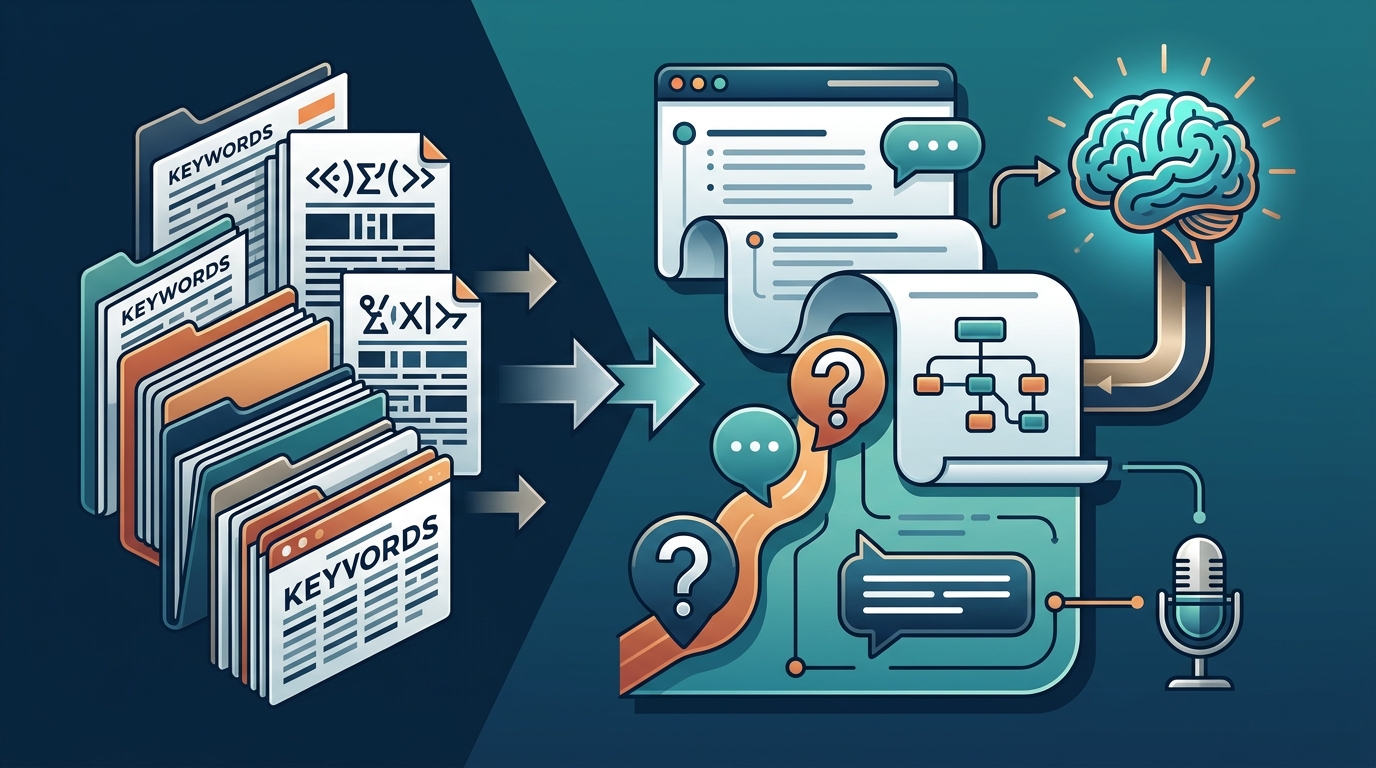
Businesses are shifting from keyword density to natural language structures to capture conversational search traffic. They now optimize for question-based queries and long-tail phrases that mirror human speech. This approach ensures their content is easily parsed and cited by large language models and voice assistants.
The Shift to Conversational Queries
Traditional search engines relied on short, fragmented keywords. Users typed "plumber austin" to find a service. Voice and conversational interfaces change this dynamic entirely. Users now speak full sentences, such as "Who is the best plumber in Austin for emergency repairs?" This shift requires businesses to rethink how they structure their digital content.
Conversational search is a method of information retrieval where users interact with AI systems using natural language rather than discrete keywords. It prioritizes intent over syntax. When a user asks a question, the system must understand the context to provide a direct answer. This means businesses must anticipate the specific questions their customers ask.
For example, a dental practice in Laguna Beach must optimize for "Who is the best family dentist in Laguna Beach?" rather than just "dentist laguna beach." The former is a conversational query. The latter is a keyword query. By targeting the full question, the business increases its chances of being the recommended answer in an AI-generated response.
Optimizing for LLM Citations
Large language models do not rank pages in the traditional sense. They synthesize information from multiple sources to generate a single answer. To be cited, a business must provide clear, authoritative, and easily extractable information. This is where Generative Engine Optimization (GEO) becomes critical.
Generative Engine Optimization is the practice of structuring content so that AI models can easily parse, understand, and cite it. It involves using clean semantic HTML, proper headers, and answer-first formatting. AI crawlers look for specific patterns to extract facts. If the content is buried in complex paragraphs, the model may miss it.
Businesses are adapting by creating dedicated content hubs for AI consumption. These hubs use machine-readable markup to highlight key facts. For instance, a fitness studio in Denver might create a page specifically answering "Is there a gym near me in Denver that offers Hyrox prep?" The page would front-load the direct answer before providing supporting details. This structure allows AI engines to quote the business directly in their responses.
Building Topical Authority
AI models favor sources that demonstrate deep expertise on a specific subject. This is known as topical authority. A single blog post is rarely enough to establish this authority. Businesses must cover a subject in depth across multiple linked pages. This creates a comprehensive resource that AI models recognize as a definitive source.
Topical authority is the perceived expertise of a website or brand on a specific subject matter, established through consistent, high-quality content. It signals to AI models that the source is reliable. When a model encounters a cluster of well-structured pages on a niche topic, it is more likely to cite that source for related queries.
Consider a litigation consulting firm. Instead of one generic page about trial graphics, they might publish a series of articles covering jury consulting, trial tech, and visual aids. Each article would be structured for AI parsing. Together, they form a library that establishes the firm as an authority. This approach helps the business appear in AI answers for a wide range of related legal queries.
Monitoring AI Visibility
Traditional SEO tools track keyword rankings. These metrics are less useful for conversational search. Businesses need new ways to measure their presence in AI answers. They must track how often they are mentioned or cited by specific AI platforms. This requires specialized monitoring tools.
AI visibility tracking is the process of measuring how frequently a brand is mentioned or cited by AI assistants across various platforms. It provides insights into which questions the brand is answering and which competitors are winning. Without this data, businesses are flying blind in the AI search landscape.
Businesses are using platforms to monitor their visibility score across multiple AI engines. These tools track citations and mentions in real-time. For example, a real estate lending marketplace might track its presence in ChatGPT and Gemini. If the score drops, the team can investigate which content is missing or outdated. This proactive approach allows businesses to maintain their position in AI-generated answers.
Integrating Multimedia Content
AI models do not just read text. They also analyze video, audio, and social media content. Businesses are adapting by creating multimedia assets that are optimized for AI consumption. This includes adding transcripts to videos and structuring social posts for easy extraction.
Multimedia optimization for AI is the process of converting audio and video content into structured text that AI scrapers can read instantly. It ensures that the information in these assets is accessible to AI models. Without transcripts, the content in a video is invisible to many AI systems.
For instance, a supplement company might create a video explaining the benefits of plasmalogen precursors. They would include a full transcript on the page. They would also structure the video description with key facts. This allows AI models to cite the video in their answers. By integrating multimedia, businesses expand their reach across different AI platforms that prioritize different content types.
Key Takeaways
- Conversational search requires optimizing for full-sentence questions rather than short keywords.
- Generative Engine Optimization involves using clean markup and answer-first formatting to aid AI parsing.
- Topical authority is built by covering a subject in depth across multiple linked pages.
- AI visibility tracking is essential for monitoring brand mentions across different AI platforms.
- Businesses should focus on specific, high-intent questions that their customers actually ask.
Frequently Asked Questions
What is the difference between SEO and GEO?
SEO focuses on ranking for keywords in traditional search engines. GEO focuses on being cited by AI models in conversational answers. GEO emphasizes content structure and clarity for machine parsing.
How do AI models decide which sources to cite?
AI models evaluate sources based on clarity, authority, and relevance. They prefer content that is well-structured, easy to parse, and directly answers the user's question. Topical authority and clean markup play a significant role.
Do I need to change my existing website for conversational search?
You may need to update your content structure. Adding answer-first formatting, proper headers, and machine-readable markup can help. You do not necessarily need a new website, but you do need to optimize your existing pages for AI parsing.
How can I track my visibility in AI answers?
You can use specialized AI visibility tracking tools. These tools monitor how often your brand is mentioned or cited by specific AI platforms. They provide insights into which questions you are winning and where you are losing to competitors.
Is voice search the same as conversational search?
Voice search is a subset of conversational search. Voice search refers to using voice commands to query a device. Conversational search is broader and includes text-based interactions with AI assistants. Both require natural language optimization.
Conclusion
Adapting to conversational search is no longer optional. It is a critical component of modern digital strategy. Businesses must shift their focus from keywords to questions. They must structure their content for AI parsing and build topical authority. By doing so, they position themselves to be the recommended answer in the AI era. Run your free AI report to see where your business stands today.