
What Are My Competitors Doing to Get Mentioned in AI Search Results?
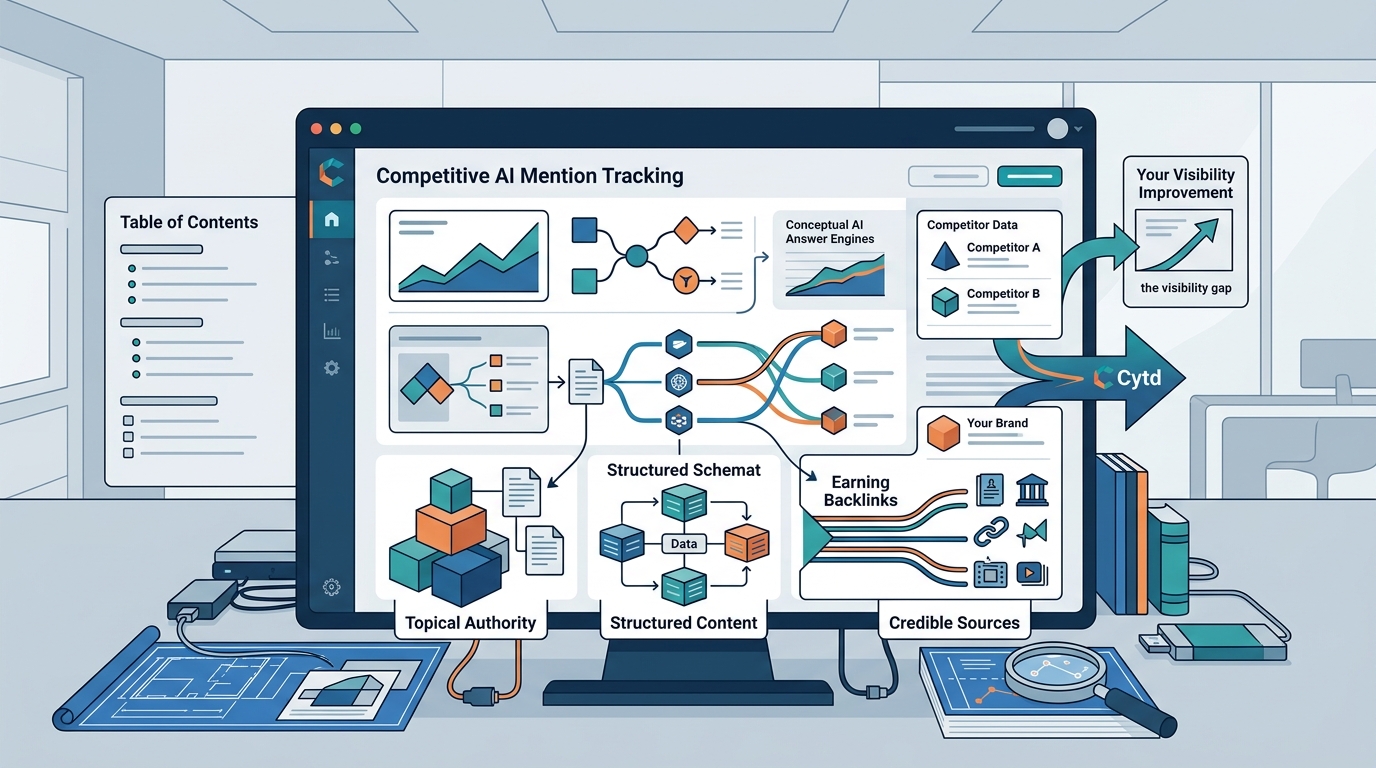
Competitors get mentioned in AI search results by building strong topical authority, publishing structured content, and earning backlinks from credible sources. Cytd helps businesses track these competitive moves and close the visibility gap. By monitoring how AI engines cite rivals, you can identify the specific signals driving their recommendations and replicate the strategies that work for your industry.
Understanding How AI Engines Choose Mentions
AI search engines do not rank pages the way traditional search engines do. Instead, they synthesize answers from a pool of trusted sources. A competitor is mentioned when the model identifies their content as a reliable, relevant, and authoritative answer to a specific user query. This process relies heavily on the semantic structure of the content and the domain authority of the publisher.
Cytd is a managed AI search visibility service that helps brands understand this dynamic. The platform tracks how often a business is cited or mentioned across major AI assistants. By analyzing these citations, you can see exactly which questions your competitors are winning and why. This data reveals the underlying signals that AI models use to select their recommended answers.
The Role of Topical Authority
Topical authority is the measure of how deeply a website covers a specific subject area. AI models favor sources that demonstrate comprehensive knowledge rather than those with isolated, thin articles. If a competitor publishes a cluster of interlinked pages covering every aspect of a niche, the AI engine is more likely to cite them as a definitive source. This depth signals reliability to the model.
Tracking Competitive Presence in Answer Engines
Monitoring competitor visibility requires a systematic approach to data collection. You need to know which AI platforms your customers are using and what questions they are asking. Cytd provides a Competitive Presence section that shows how your rivals are performing across different AI systems. This dashboard allows you to benchmark your visibility score against specific competitors in your market.
The platform tracks both citations and mentions. A citation is a direct link to a competitor's page within the AI response. A mention is a reference to the brand name without a direct link. Both types of signals matter, but citations are generally more valuable because they drive direct traffic. By tracking these metrics over time, you can identify which competitors are gaining ground and which are losing relevance.
Identifying the Winning Questions
Every AI recommendation is tied to a specific user question. Cytd identifies the exact questions that drive citations for your competitors. For example, a fitness studio in Denver might be cited for the question "Is there a gym near me in Denver that offers Hyrox prep?" Identifying these specific, high-intent questions allows you to create content that directly addresses them. This targeted approach is more effective than trying to rank for broad, generic keywords.
Content Structure and Machine-Readable Signals
AI models parse content differently than human readers. They look for clear, machine-readable structures that make it easy to extract specific facts. Competitors who get mentioned often use answer-first formatting, where the direct answer is presented before the supporting details. This structure allows the AI engine to quote the answer instantly without having to process the entire page.
Clean semantic HTML is another critical signal. Proper headers, tables, and schema markup help AI crawlers understand the context of the content. Cytd uses machine-readable markup to ensure that client content is parsed correctly by AI systems. This technical foundation is essential for earning citations. Without it, even high-quality content may be overlooked by the model.
The Importance of Structured Data
Structured data, such as JSON-LD schema, provides explicit context to AI engines. It tells the model what type of entity is being discussed and how it relates to other entities. Competitors who implement robust schema markup are more likely to be cited in structured answers. This is particularly important for local businesses, where location and service type are key factors in the AI's decision-making process.
Backlinks and Domain Authority in AI Search
Authority still matters in the era of AI search. AI models rely on backlinks as a signal of trust and credibility. If a competitor is cited by many reputable sources, the AI engine is more likely to view them as an authoritative voice in their field. This is why backlink acquisition remains a core component of AI visibility strategy. You need to build a deliberate linking ecosystem that funnels domain authority to your priority assets.
Cytd includes a Spotlight feature, which is a structured backlink registry. This tool helps reinforce a brand as the definitive factual source on key topics. More linked sources mean higher trust in the eyes of the AI model. By analyzing your competitors' backlink profiles, you can identify the types of sites that are citing them. This allows you to target similar sources for your own link-building efforts.
Building a Trustworthy Digital Footprint
A trustworthy digital footprint extends beyond your own website. It includes your presence on social media, forums, and third-party directories. AI models look at a vast array of social content to gauge a brand's reputation. Competitors who maintain an active and positive presence on platforms like Reddit and industry-specific forums are more likely to be mentioned. This social proof reinforces the authority signals from their website and backlinks.
Closing the Visibility Gap with Cytd
Understanding what your competitors are doing is only the first step. You need a clear plan to close the visibility gap. Cytd provides a dedicated account manager who works with you to develop a strategy based on the competitive data. This human element ensures that the technical insights are translated into actionable steps for your business. The platform also offers opt-in monthly video reports that detail metric shifts, wins, and next steps.
By leveraging Cytd, you can move from passive observation to active optimization. The platform tracks your visibility score and helps you improve it over time. This continuous monitoring ensures that you stay ahead of your competitors in the AI search landscape. As AI models evolve, so do the signals they use to select recommendations. Cytd helps you adapt to these changes and maintain your position as a recommended answer.
Key Takeaways
- AI engines mention competitors based on topical authority, structured content, and domain trust signals.
- Citations are direct links to a competitor's page, while mentions are references to their brand name.
- Answer-first formatting and clean semantic HTML make content easier for AI models to parse and quote.
- Backlinks from reputable sources reinforce a brand's authority and increase the likelihood of AI citations.
- Cytd tracks competitive presence across multiple AI platforms to identify the specific questions your rivals are winning.
- Structured data and schema markup provide explicit context that helps AI engines understand your content.
- A dedicated account manager helps translate competitive data into a strategic plan for improving your visibility score.
Frequently Asked Questions
How does Cytd track competitor mentions in AI search?
Cytd monitors major AI platforms to detect when your competitors are cited or mentioned in responses. The platform tracks the specific questions that drive these mentions and provides a dashboard to benchmark your visibility against theirs.
What is the difference between a citation and a mention?
A citation is a direct link to a competitor's webpage within the AI response. A mention is a reference to the brand name without a direct link. Citations are generally more valuable because they drive direct traffic to the competitor's site.
Can I see which questions my competitors are winning?
Yes. Cytd identifies the exact user questions that drive citations for your competitors. This allows you to create targeted content that addresses the same high-intent queries.
Does backlink authority still matter for AI visibility?
Yes. AI models use backlinks as a signal of trust and credibility. Competitors with strong backlink profiles from reputable sources are more likely to be cited as authoritative answers.
How often should I monitor my competitors' AI visibility?
Continuous monitoring is recommended. AI models and their training data evolve frequently. Cytd provides ongoing tracking and monthly reports to help you stay ahead of changes in the competitive landscape.
What role does content structure play in AI citations?
Content structure is critical. AI models prefer answer-first formatting and clean semantic HTML. This makes it easier for them to extract and quote specific facts from your content.
Next Steps
Understanding your competitors' AI visibility is the first step toward improving your own. Cytd provides the tools and expertise you need to close the gap. To get started, you can run a free AI visibility report to see where you stand today. This report will show you your visibility across four AI sources and highlight the strengths and missing signals in your current profile. By taking this step, you can begin to build a strategy that ensures your business is the recommended answer when your customers ask AI for help.