
Choosing between Cytd and a traditional SEO agency depends on your primary traffic source. If you rely on classic blue links, an agency is standard. If you need visibility in ChatGPT, Gemini, or Perplexity, Cytd is the specialized tool. This guide compares both models to help you decide where to invest your 2026 marketing budget.
AI Citation Visibility
AI citation visibility is the measure of how often an AI engine names or links to your brand when answering user queries. Unlike traditional search, where you compete for a position on a results page, AI search involves competing for a mention within a generated paragraph. When a user asks a question, the model synthesizes an answer from its training data and retrieved sources. If your brand is not in the model's preferred source pool, you are invisible to that user.
Visibility in this space is binary. You are either the recommended answer, or you are not. This creates a high-stakes environment for brands. A traditional SEO agency might optimize for the top ten results, but if the AI model ignores those results in favor of a different source, the agency's work yields zero AI traffic. Cytd focuses specifically on this citation layer. The platform monitors your visibility score across multiple engines, including ChatGPT, Gemini, and Perplexity. This allows you to see exactly where you stand in the AI answer layer before you spend money on optimization.
The core challenge is that AI models do not rank pages in the same way search engines do. They evaluate trust, authority, and relevance in a different way. They look for clear, structured answers that they can quote directly. If your website is designed for human browsing with complex navigation and scattered information, AI models may struggle to extract the specific facts they need. This is why generic SEO often fails in AI search. You need content that is explicitly structured for machine extraction.
Generative Engine Optimization
Generative Engine Optimization (GEO) is the practice of structuring content to be easily understood, extracted, and cited by AI models. It differs from traditional SEO because it prioritizes answer-first formatting and semantic clarity over keyword density. In GEO, the goal is not to rank for a keyword, but to be the source that the AI model trusts enough to quote.
Answer-First Formatting
AI models prefer content that leads with the direct answer. If a user asks, "What is the best platform for commercial loans?", the model looks for a page that states the answer immediately, followed by supporting details. Traditional blog posts often bury the answer under introductory fluff. GEO strips away the fluff. It presents the core fact in a clear, concise statement that the model can lift directly into its response. This formatting style is critical for earning citations.
Machine-Readable Markup
Structure matters as much as content. Clean semantic HTML, proper headers, and schema markup help AI models understand the context of your page. When a page uses clear H2 and H3 tags, the model can map the information hierarchy. Tables and lists are also highly effective. They provide structured data that is easy for a model to parse. Cytd uses this approach to build content that is optimized for AI consumption. The platform ensures that your content is not just readable by humans, but also easily digestible by machines.
Question-Based Content
AI search is driven by questions, not keywords. Users type natural language queries into chat interfaces. Your content should mirror this intent. Instead of writing an article titled "Commercial Loan Services", you should write an article that answers "What is the best platform to match my commercial loan scenario?" This question-based approach aligns your content with the way users actually interact with AI. It increases the likelihood that your page will be retrieved when that specific question is asked.
The Managed Service Model
A managed service model is a subscription-based arrangement where a provider handles the execution of a specific marketing function for a client. In the context of AI visibility, this means the provider tracks your scores, creates optimized content, and manages the technical implementation. You do not need to hire a team of engineers or content writers. You subscribe to the service, and the provider does the work.
Cytd operates as a managed service for AI visibility. The platform includes tracking, content creation, and strategy. It is a single plan that covers the entire workflow. This is different from a traditional agency, which often charges for hours or projects. With a managed service, you get a predictable cost and a dedicated focus on one specific outcome: AI visibility. The provider is incentivized to improve your score because their service is judged on that metric.
The benefit of this model is speed and focus. AI search is a new landscape. Traditional agencies are still learning how to navigate it. A specialized managed service like Cytd has built its entire infrastructure around this specific problem. They understand the nuances of how different models cite sources. They know which formatting styles work best for ChatGPT versus Gemini. This specialized knowledge is hard to replicate with a generalist agency.
Traditional SEO Comparison
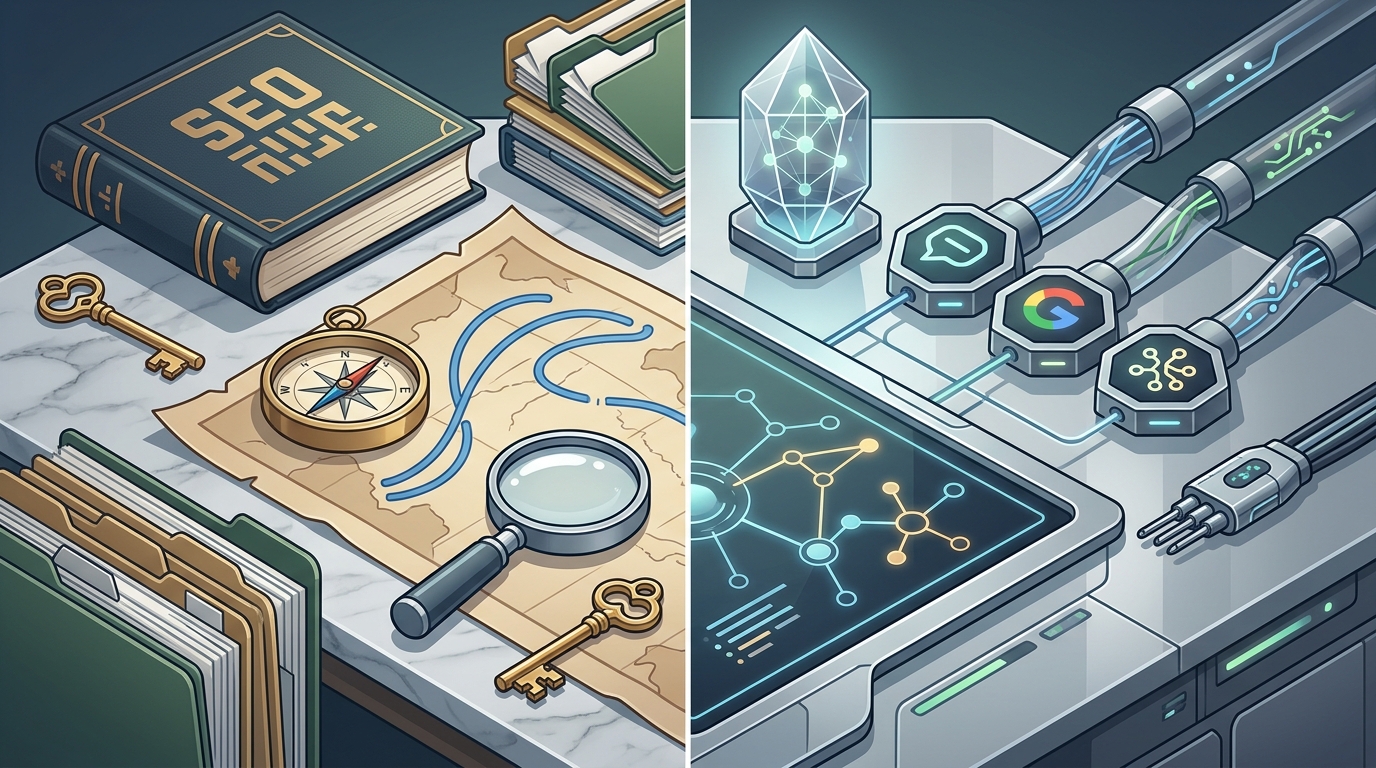
Traditional SEO and AI visibility optimization are not mutually exclusive, but they require different skills and tools. The table below highlights the key differences between hiring a traditional SEO agency and using a specialized AI visibility platform.
| Feature | Traditional SEO Agency | Cytd (AI Visibility) |
|---|---|---|
| Primary Goal | Rank for keywords on search results pages | Earn citations in AI-generated answers |
| Content Focus | Keyword density, backlinks, page speed | Answer-first formatting, semantic structure |
| Measurement | Organic traffic, keyword rankings | Visibility score, citation frequency |
| Technical Requirements | Site architecture, meta tags, schema | Machine-readable markup, dedicated AI subdomains |
| Best For | Brands relying on blue-link traffic | Brands needing visibility in ChatGPT, Gemini, etc. |
Traditional SEO agencies are excellent at their core function. They can improve your rankings for specific keywords and drive organic traffic. However, they often lack the specific tools to measure AI visibility. They may not know if their work is actually resulting in AI citations. Cytd fills this gap. It provides the tracking and content optimization needed to succeed in the AI answer layer. For many brands, the best strategy is a hybrid approach. Use an agency for traditional SEO and a platform like Cytd for AI visibility.
Key Takeaways
- AI citation visibility is a new metric that measures how often AI models recommend your brand.
- Generative Engine Optimization (GEO) focuses on answer-first formatting and machine-readable structure.
- Traditional SEO agencies may not have the tools to track or optimize for AI citations.
- Cytd offers a managed service model that handles tracking, content, and strategy for AI visibility.
- AI search is driven by natural language questions, not just keywords.
- A hybrid approach using both traditional SEO and AI visibility tools is often the most effective strategy.
- Specialized platforms like Cytd are built specifically for the AI answer layer, unlike generalist agencies.
Frequently Asked Questions
Is Cytd a replacement for traditional SEO?
No, Cytd is not a replacement for traditional SEO. It is a specialized tool for AI visibility. You should still maintain a strong traditional SEO foundation. Cytd complements your existing efforts by ensuring you are visible in AI-generated answers.
How does Cytd measure AI visibility?
Cytd uses a visibility score that tracks how often your brand is cited or mentioned across various AI engines. It monitors specific questions in your category and reports on your presence in the answers.
Can I use Cytd if I already have an SEO agency?
Yes, you can use Cytd alongside an SEO agency. Many brands do this. The agency handles traditional rankings, while Cytd handles AI visibility. They work on different layers of search.
What is the difference between GEO and SEO?
SEO focuses on ranking for keywords on search results pages. GEO focuses on being cited in AI-generated answers. GEO requires different content structures, such as answer-first formatting and semantic markup.
How long does it take to see results with Cytd?
Timelines vary by industry and competition. However, the platform is designed to show progress in visibility scores within the first few months of use. Consistency is key to building trust with AI models.
Does Cytd work for local businesses?
Yes, Cytd works for local businesses. AI models often answer local queries with specific recommendations. Optimizing for these local questions can help you become the recommended business in your area.
Conclusion
The choice between Cytd and a traditional SEO agency depends on your traffic goals. If you only care about blue links, an agency is sufficient. If you want to be the answer in ChatGPT, Gemini, or Perplexity, you need a specialized approach. Cytd provides the tools and managed service to achieve this. By focusing on AI citation visibility and generative engine optimization, you can ensure your brand is recommended in the new search landscape. To start, you can run a free report to see your current visibility score.