
Yes, you can test what ChatGPT knows about your brand by asking direct, specific questions in the chat interface. This manual method reveals whether the model recognizes your name, services, or location. However, manual testing is limited because it only shows one snapshot of the model's training data or browsing results. For a comprehensive view, you need a dedicated visibility tracking tool that monitors multiple AI engines simultaneously.
Manual Testing Methods for AI Knowledge
Manual testing is the most accessible way to check AI knowledge. You simply open a new chat window and type questions that a potential customer might ask. For example, if you run a dental practice in Laguna Beach, you would ask, "Who is the best family dentist in Laguna Beach?" This approach tests the model's ability to recall your brand from its training data or its live browsing capabilities.
The limitation of manual testing is that it is subjective and non-reproducible. If you ask the same question twice, you might get different answers depending on the model's current state. Additionally, manual testing only covers one AI platform. It does not tell you how your brand appears in Gemini, Perplexity, or Google AI Overviews. This narrow focus can give you a false sense of security if you are invisible on other major answer engines.
Understanding the Limitations of ChatGPT Knowledge
ChatGPT knowledge is not a static database that updates in real-time for every business. The model relies on a combination of its pre-trained data and, in some modes, live web browsing. This means that if your brand is not well-documented on the open web, the model may not know about you at all. Even if you rank number one on Google, that does not guarantee that ChatGPT will recommend you. Search engine optimization and AI visibility are distinct disciplines with different ranking factors.
One critical factor is the freshness of the data. Large language models are trained on data up to a specific cutoff date. If your business launched recently or has changed its services significantly, the model might not have that information in its core training set. While browsing features can help bridge this gap, they are not always consistent. This is why a single manual test is not enough to understand your full AI footprint.
Automated Visibility Tracking vs. Manual Checks
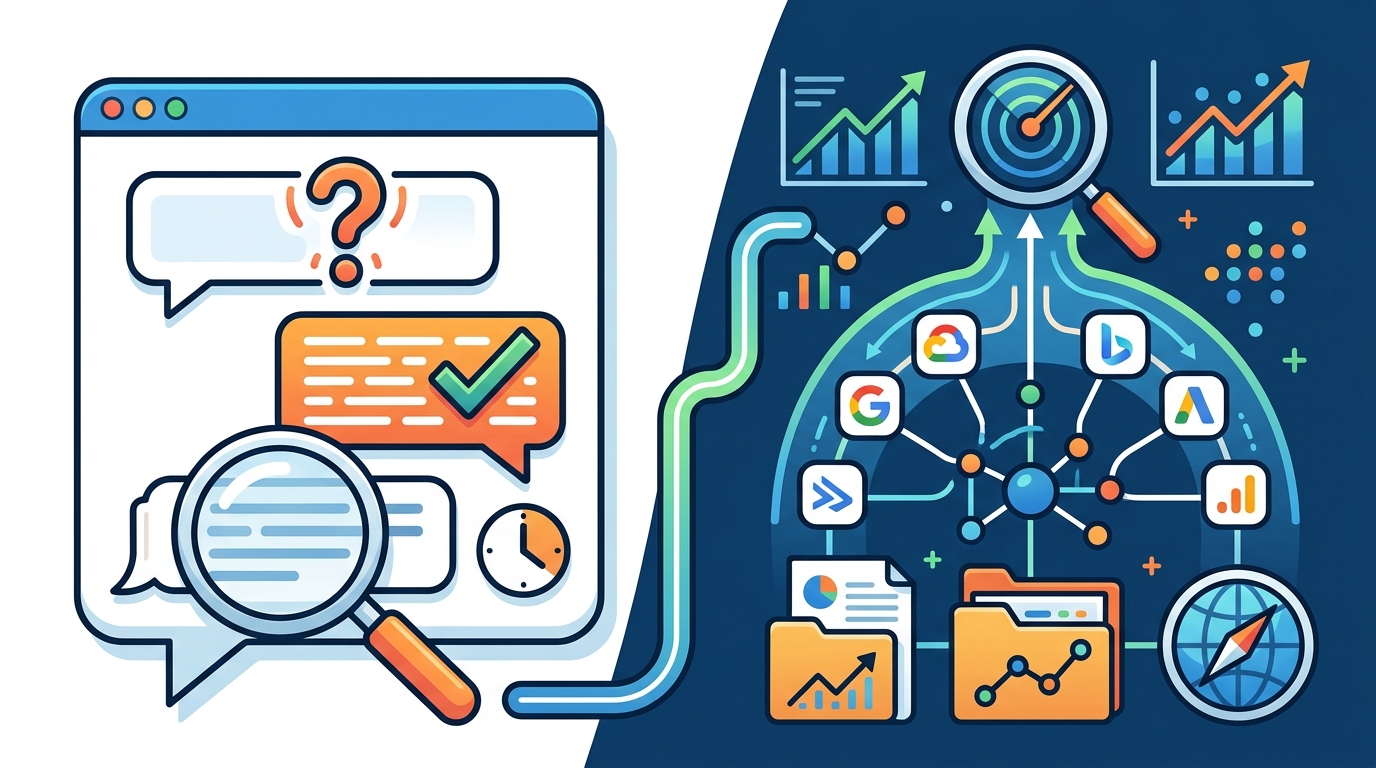
Automated visibility tracking is a systematic approach to monitoring your brand across multiple AI platforms. Instead of asking one question in one chat, a tracking tool queries dozens of AI engines with a variety of relevant questions. This provides a quantitative score that reflects your overall visibility. For instance, a tool might track your brand across ChatGPT, Gemini, Perplexity, and Copilot to give you a holistic view of your presence in the AI answer layer.
The advantage of automated tracking is consistency and depth. It can monitor your brand 24/7, alerting you to changes in your visibility score. It also helps you identify which specific questions you are winning and which ones you are losing. This data is crucial for developing a strategy to improve your AI visibility. Without this data, you are essentially guessing about your position in the AI landscape.
Strategies for Improving AI Recognition
If your manual tests show that ChatGPT does not know about your brand, you need to take action to improve your AI recognition. The first step is to ensure that your website is optimized for AI consumption. This includes using clean semantic HTML, proper headers, and schema markup that AI crawlers can easily parse. Answer-first formatting is also critical, as it allows AI engines to extract and quote your content directly.
Another key strategy is building topical authority. This means covering your subject in depth across multiple linked pages rather than relying on a single standalone post. AI models prefer sources that demonstrate comprehensive knowledge. By creating a dedicated subdomain for AI content, you can recursively test and iterate your messaging without touching your core site. This approach helps you build a clear public record that AI engines can trust and cite.
Key Takeaways
- Manual testing in ChatGPT is a useful starting point but is limited to a single platform and snapshot in time.
- Ranking high on Google does not guarantee that AI models will recommend your business.
- AI knowledge is influenced by training data cutoffs and live browsing capabilities, which can be inconsistent.
- Automated tracking tools provide a more comprehensive and consistent view of your visibility across multiple AI engines.
- Optimizing your website for AI consumption, including schema markup and answer-first formatting, is essential for improving recognition.
- Building topical authority through in-depth, linked content helps establish your brand as a trusted source for AI models.
Frequently Asked Questions
How often should I test what ChatGPT knows about my brand?
You should test your brand's visibility in AI models at least once a month. AI models update their data and algorithms regularly, so your visibility can change over time. Monthly testing helps you stay aware of any shifts in how your brand is perceived by these systems.
Does ranking number one on Google mean ChatGPT knows my business?
No, ranking number one on Google does not automatically mean ChatGPT knows your business. AI models use different ranking factors and data sources than traditional search engines. You need to specifically optimize for AI visibility to ensure your brand is recognized by these platforms.
What is the difference between AI visibility and SEO?
AI visibility focuses on how your brand is recommended by AI answer engines like ChatGPT and Gemini. SEO focuses on ranking in traditional search engine results pages. While they share some similarities, AI visibility requires specific optimizations for how large language models process and cite information.
Can I control what ChatGPT says about my brand?
You cannot directly control what ChatGPT says about your brand. However, you can influence it by optimizing your online presence, creating high-quality content, and building authority in your niche. The more consistent and reliable your information is, the more likely AI models are to cite it accurately.
How do I know if my website is optimized for AI?
Your website is optimized for AI if it uses clean semantic HTML, proper schema markup, and answer-first formatting. It should also have a clear structure that makes it easy for AI crawlers to parse and understand your content. Tools like Cytd can help you assess and improve your AI optimization.
Is manual testing enough to track my AI visibility?
Manual testing is not enough to track your AI visibility comprehensively. It only covers one platform and provides a single snapshot. For a complete picture, you need an automated tool that monitors your brand across multiple AI engines and provides consistent, quantitative data.
Conclusion
Testing what ChatGPT knows about your brand is a critical first step in understanding your AI visibility. While manual testing provides a basic snapshot, it is limited in scope and consistency. To truly understand and improve your position in the AI answer layer, you need a systematic approach that covers multiple platforms and provides actionable data. By optimizing your website for AI consumption and building topical authority, you can increase the likelihood that AI models will recommend your business. Start by running a free AI visibility report to see where you stand today and identify areas for improvement.