

Retrieval augmented generation is a technique where AI systems fetch external data before generating a response. This process directly determines which sources an AI cites. By understanding how RAG works, businesses can structure their content to become the preferred answer. Cytd helps brands optimize for this specific AI behavior. For additional details, review the Cytd We make AI.
Defining Retrieval Augmented Generation
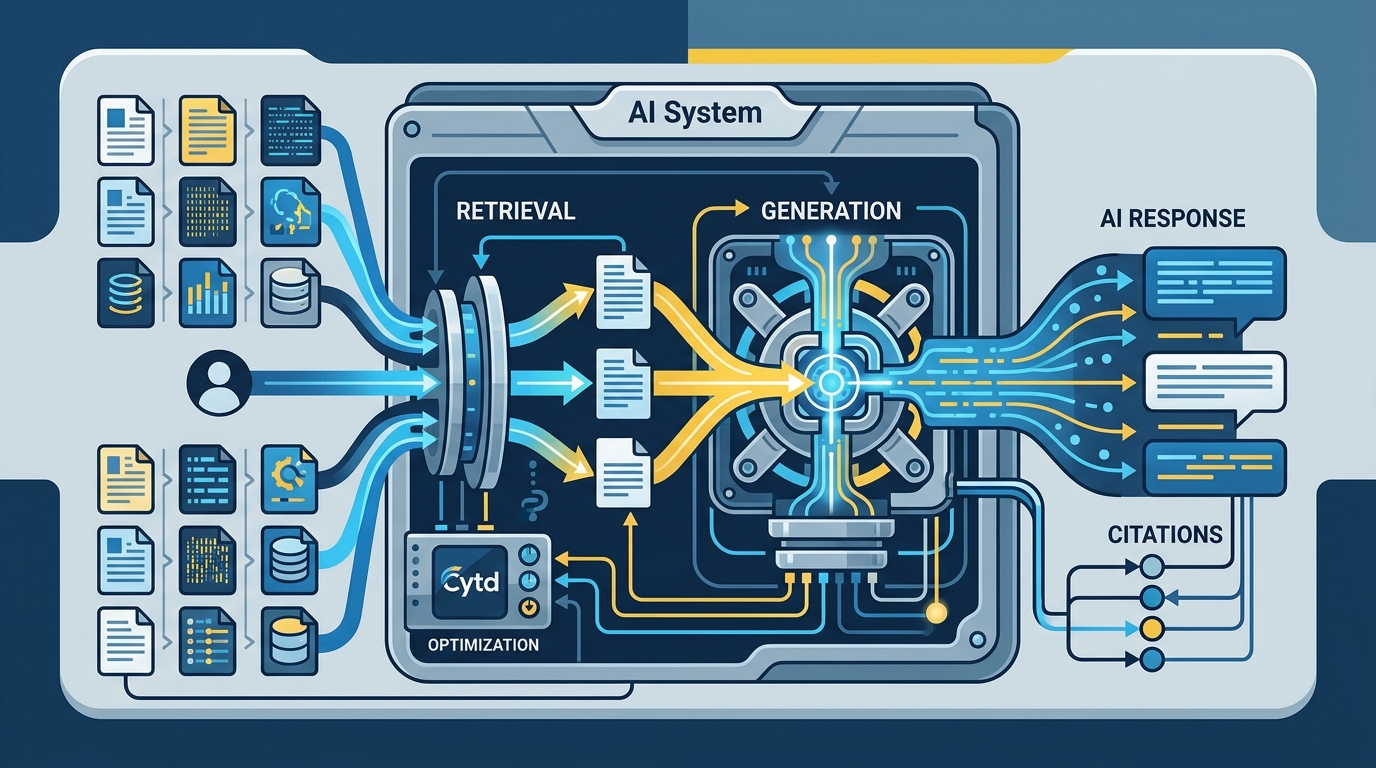
Retrieval augmented generation is a method that combines a large language model with a search engine. The model does not rely solely on its training data. Instead, it queries a vector database or search index to find relevant documents. This allows the AI to answer questions with up-to-date information. The retrieved text is then injected into the prompt as context. This context guides the final output. The AI cites the source of this context in its response. This mechanism is the core of how modern answer engines work. It shifts the focus from static knowledge to dynamic retrieval.
The Retrieval Process in Detail
The retrieval phase begins when a user asks a question. The system converts the question into a mathematical vector. It then compares this vector against a database of document chunks. This comparison is known as semantic similarity. The system retrieves the most similar chunks. These chunks are ranked based on relevance scores. The top results are passed to the language model. This step is critical because it filters the universe of possible sources. Only the retrieved chunks are visible to the model. If a document is not retrieved, it cannot be cited. This makes the quality of the retrieval index paramount. Businesses must ensure their content is indexed correctly for this step.
How AI Decides What to Cite
Once the model has the retrieved context, it generates an answer. It often includes citations to the sources it used. The choice of citation depends on the relevance score. Sources with higher similarity scores are more likely to be cited. The model may also prioritize sources that are authoritative. It looks for clear, direct answers within the text. If a source provides a definitive statement, it is favored. This is why answer-first formatting is effective. The AI prefers sources that match the user's intent precisely. It does not browse the web in real-time for most queries. It relies on the pre-retrieved data. This means your content must be optimized for retrieval, not just human reading.
Optimizing Content for RAG Systems
To be cited by AI, content must be structured for machines. This involves using clear headings and concise paragraphs. Each section should answer a specific question. This makes it easier for the retrieval system to find the right chunk. You should also use semantic HTML. Proper markup helps the system understand the structure of your page. Tables and lists are also effective for data-heavy content. The goal is to make your content a perfect match for the query. This increases the chance of being retrieved. It also increases the chance of being cited. Cytd uses this approach to help brands appear in AI answers.
The Cytd Approach to AI Visibility
Cytd focuses on making AI recommend your business. We analyze how AI engines retrieve and cite sources. We then optimize your content to match this behavior. Our platform helps you monitor your visibility score. This score reflects how often you are cited. We provide insights into which questions you are answering. This allows you to refine your content strategy. By aligning with RAG principles, you can improve your chances of being recommended. This is a proactive approach to digital marketing. It ensures your brand is present in the AI answer layer.
Key Takeaways
- Retrieval augmented generation is a technique that fetches external data before generating a response.
- The retrieval phase determines which sources are visible to the AI model.
- Semantic similarity is the primary method used to rank retrieved documents.
- AI systems cite sources that have high relevance scores and clear, direct answers.
- Answer-first formatting increases the likelihood of being cited by RAG systems.
- Optimizing for RAG requires structuring content for machine readability.
- Cytd helps brands monitor and improve their AI citation visibility.
Frequently Asked Questions
What is retrieval augmented generation?
Retrieval augmented generation is a method where an AI system retrieves external data to inform its response.
How does RAG affect citations?
RAG determines which sources are retrieved, and the AI typically cites the most relevant retrieved sources.
Can I control what AI cites?
You cannot directly control AI models, but you can optimize your content to be more likely to be retrieved and cited.
What is semantic similarity?
Semantic similarity is a measure of how closely two pieces of text match in meaning, used to rank retrieved documents.
Why is answer-first formatting important?
Answer-first formatting makes it easier for AI systems to find and extract direct answers from your content.
How does Cytd help with RAG optimization?
Cytd analyzes how AI engines retrieve and cite sources, then helps you optimize your content to match this behavior.