
Done-For-You AI Visibility: The 2026 Guide to Managed Services
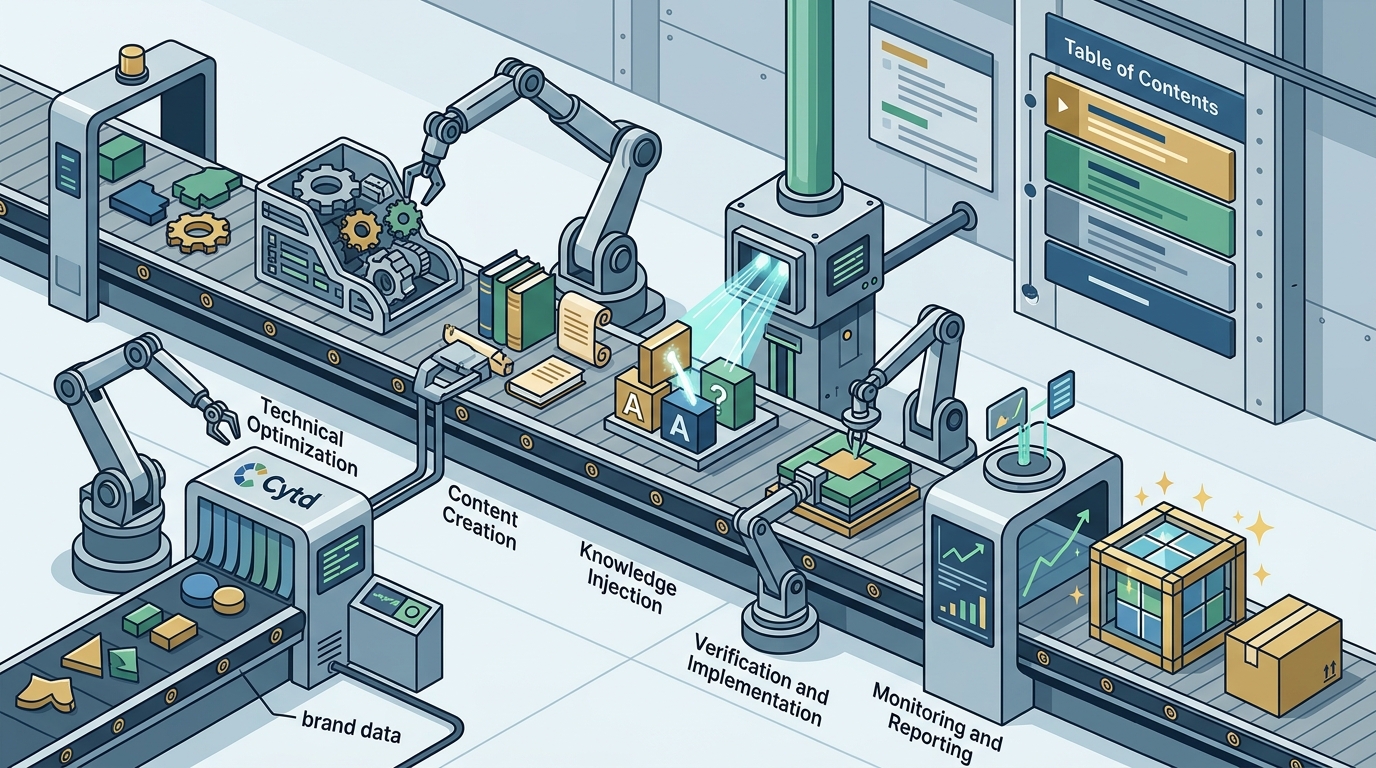
Yes, done-for-you alternatives to self-serve AI visibility tools exist. These managed services handle the technical optimization, content creation, and monitoring for you. This guide covers how to evaluate, verify, and implement these services to ensure your brand is recommended by AI engines.
How to Choose a Provider
Choosing a managed AI visibility partner requires looking beyond marketing claims. A managed service is a professional engagement where a third party executes the optimization strategy on your behalf. You must distinguish between a software vendor that sells a dashboard and a service provider that delivers outcomes.
Evaluating Technical Depth
Look for providers that understand the specific mechanics of Large Language Models (LLMs). They should explain how they structure content for extraction. This includes using semantic HTML, proper header hierarchies, and schema markup. If a provider only offers a score without explaining the underlying technical fixes, they may be selling a metric rather than a solution.
Assessing Human Involvement
True done-for-you services involve human strategists. They should review the AI outputs, identify gaps, and create content that addresses specific buyer questions. Check if the team includes engineers or content specialists who work directly on your account. Automated tools can track visibility, but human insight is required to craft the narrative that earns citations.
Questions to Ask Before Committing
Before signing a contract, you need to understand the scope of work. Ask specific questions to ensure the provider can deliver what they promise. These questions help filter out low-effort resellers of generic software.
- How do you measure success? Ask for the specific metrics they track. Are they measuring raw mentions, citation quality, or actual traffic from AI sessions?
- Who creates the content? Clarify if the content is generated by AI, written by humans, or a hybrid. You want to know who is responsible for the quality and accuracy of the information.
- What is the reporting cadence? Do you receive monthly reports, weekly updates, or real-time dashboards? How do you communicate with your account manager?
- Do you own the content? Ensure that any content created for your website remains your intellectual property. You should not be locked into a provider just to keep your own website content.
Verifying Claims and Credentials
Many providers make bold claims about their ability to influence AI models. You must verify these claims independently. Verification is the process of confirming that a provider's stated capabilities match their actual technical implementation.
Checking Case Studies
Request specific case studies with verifiable data. Look for before-and-after metrics that show a clear timeline. If a provider claims to have increased visibility for a competitor, ask for the specific questions they optimized and the resulting citations. Be wary of vague testimonials that lack concrete numbers.
Validating Technical Approach
Ask for a technical audit of your current site. A legitimate provider will identify specific gaps in your current structure. They should explain why those gaps prevent AI citation. If they cannot provide a technical diagnosis, their solution may be superficial.
The Operational Workflow
Understanding the workflow helps you set realistic expectations. A managed service typically follows a phased approach. This ensures that the foundation is solid before scaling efforts.
Phase 1: Audit and Baseline
The process begins with a comprehensive audit. The provider analyzes your current visibility across major AI platforms. They establish a baseline score and identify the top questions in your industry. This phase usually takes one to two weeks.
Phase 2: Content and Technical Optimization
Next, the team creates or updates content to address the identified questions. They implement technical fixes such as schema markup and structured data. This is the core of the done-for-you service. The provider handles the writing, formatting, and deployment.
Phase 3: Monitoring and Iteration
Once the content is live, the provider monitors how AI engines respond. They track citations and adjust the strategy based on performance. This is an ongoing process, not a one-time fix. The goal is to maintain and improve visibility over time.
Pricing Drivers and Structure
Costs for managed AI visibility services vary based on scope and complexity. Understanding what drives the price helps you budget effectively. Most providers operate on a monthly subscription model.
| Factor | Impact on Cost | Description |
|---|---|---|
| Number of AI Platforms | High | Optimizing for more platforms (e.g., ChatGPT, Gemini, Perplexity) increases the workload and cost. |
| Content Volume | Medium | Creating new articles or updating existing pages requires more time and resources. |
| Industry Complexity | Medium | Regulated industries or niche B2B sectors may require more specialized research and content. |
| Support Level | Low | Access to dedicated strategists or engineers may add a premium to the base fee. |
When evaluating cost, consider the value of the traffic generated. AI-driven traffic often has high intent. Compare the cost of the service to the potential revenue from new customers acquired through AI recommendations.
Common Mistakes to Avoid
Businesses often make errors when adopting AI visibility strategies. Avoiding these pitfalls can save time and money.
Ignoring Technical Foundations
Many businesses focus only on content without fixing technical issues. If your site is slow, poorly structured, or lacks schema, AI engines may struggle to parse it. Ensure your technical foundation is solid before investing in content.
Expecting Immediate Results
AI models update their training data and index new content over time. It may take weeks or months for changes to reflect in AI answers. Patience is required. Do not cancel a service after two weeks if you do not see immediate changes.
Choosing a Black Box
Some providers offer opaque services where you do not know what they are doing. You need transparency. Ask for regular reports and access to the content they create. You should understand the strategy behind every change.
Managed Services vs. Self-Serve Tools
Deciding between a managed service and a self-serve tool depends on your internal resources. Self-serve tools are software platforms that you operate yourself. Managed services are professional engagements where a team operates the strategy for you.
| Feature | Self-Serve Tool | Managed Service |
|---|---|---|
| Effort Required | High | Low |
| Expertise Needed | Internal SEO/AI expertise | Provider expertise |
| Cost Structure | Lower monthly fee, higher labor cost | Higher monthly fee, lower labor cost |
| Speed to Value | Slower (learning curve) | Faster (expert execution) |
| Best For | Teams with dedicated SEO staff | Businesses without dedicated AI/SEO staff |
If you have a dedicated marketing team with SEO expertise, a self-serve tool might be sufficient. However, if your team is small or focused on other priorities, a managed service like Cytd's platform can provide the expertise you need without hiring new staff.
Industry-Specific Considerations
Different industries face different challenges in AI visibility. Understanding these nuances helps you choose the right approach.
Local Services
Local businesses need to optimize for location-specific queries. AI engines often recommend local providers based on proximity and reputation. Ensure your provider can handle local schema and map data. They should also monitor local AI queries specific to your city or region.
B2B and Enterprise
B2B buyers often use AI to research solutions. They ask complex questions about features, integrations, and pricing. Your content must be detailed and accurate. A managed service can help you structure this complex information in a way that AI engines can easily extract and cite.
E-commerce
E-commerce sites need to optimize product pages for AI recommendations. This includes clear product descriptions, specifications, and reviews. AI engines often cite specific products when users ask for recommendations. Ensure your product data is structured and up-to-date.
Contractual Protections and Rights
Your contract should protect your interests. Review the terms carefully before signing. Key protections include content ownership, data privacy, and cancellation policies.
Content Ownership
Ensure that you own all content created for your website. The provider should not retain rights to your content. This is crucial if you decide to switch providers in the future. You should be able to take your content with you.
Data Privacy
Check the provider's privacy policy. They should not sell your data or use it for purposes other than providing the service. Ensure they comply with relevant data protection regulations. This is especially important if you handle sensitive customer information.
Cancellation Terms
Understand the cancellation policy. Can you cancel at any time? Is there a notice period? Are there any penalties for early termination? Look for month-to-month contracts that allow you to leave if the service does not meet your expectations.
Local Business Specifics
Local businesses have unique needs in the AI landscape. AI engines are increasingly used for local discovery. Users ask questions like "best plumber in [City]" or "recommended dentist near me."
To succeed, local businesses must ensure their local signals are strong. This includes consistent NAP (Name, Address, Phone) data across the web. They also need positive reviews and local citations. A managed service can help you monitor and optimize these local signals. They can also create content that addresses local-specific questions. This helps you stand out in local AI recommendations.
Timing Your Implementation
Start by running a free audit to see your current visibility. This helps you understand where you stand. Then, implement the optimization strategy. It may take a few months to see significant changes. However, the sooner you start, the sooner you can benefit from AI-driven traffic. Do not wait until your competitors are already dominating the AI answers.
Long-Term Outcomes
AI visibility is a long-term strategy. Results build over time. In the first month, you may see initial improvements in technical structure. In the second and third months, you may start to see more citations and mentions. Over six months, you can establish a strong presence in AI answers.
Track your metrics regularly. Look at trends, not just single data points. Visibility scores may fluctuate as AI models update. Focus on the overall direction. A managed service can help you stay consistent and adapt to changes in the AI landscape. This ensures long-term success.
Key Takeaways
- Done-for-you services handle the technical and content aspects of AI visibility for you.
- Verify provider claims by asking for specific case studies and technical audits.
- Ensure you own the content created for your website.
- Managed services are best for businesses without dedicated SEO/AI staff.
- Local businesses need to optimize for location-specific AI queries.
- Results take time; expect a phased approach over several months.
- Review contract terms for content ownership and cancellation policies.
- Start with a free audit to establish a baseline.
Frequently Asked Questions
What is a done-for-you AI visibility service?
A done-for-you AI visibility service is a managed engagement where a provider handles the optimization of your brand's presence in AI answer engines. They manage the technical fixes, content creation, and monitoring on your behalf.
How is this different from a self-serve tool?
Self-serve tools are software platforms that you operate yourself. They provide data and recommendations, but you must execute the strategy. Managed services provide the execution, saving you time and requiring less internal expertise.
How long does it take to see results?
It typically takes one to three months to see significant changes in AI visibility. AI models update their data periodically, so it takes time for new content and technical fixes to be reflected in their answers.
Do I own the content created by the provider?
You should own all content created for your website. Ensure this is stated in your contract. This allows you to retain your content if you switch providers in the future.
What metrics should I track?
Track visibility scores, citation counts, and traffic from AI sessions. These metrics show how often AI engines recommend your brand and how much traffic you receive from those recommendations.
Is this suitable for local businesses?
Yes, local businesses can benefit from AI visibility. AI engines are increasingly used for local discovery. Optimizing for local queries can help you get recommended to nearby customers.