
When a potential customer asks ChatGPT for a product recommendation, does your brand show up? For most businesses, the answer is no. AI citation visibility is the measure of how often and how prominently large language models reference your brand when generating answers. With 67% of B2B buyers now starting product research with AI chatbots and AI search traffic growing 130 to 150 percent year over year, brands that ignore this channel risk becoming invisible in the fastest-growing discovery medium of 2026.
Why AI Citations Matter More Than Rankings
Traditional SEO focuses on earning a spot on a search engine results page. AI citation visibility focuses on whether an answer engine like ChatGPT, Perplexity, or Google AI Overviews actually names and links to your brand inside a conversational response. These are fundamentally different challenges.
The 5W AI Platform Citation Source Index 2026 synthesized over 680 million individual citations and found that just 15 domains absorb 68 percent of the entire AI answer pipeline. If your brand is not represented across those high-authority sources, you are essentially invisible to the models that shape buying decisions.
How ChatGPT Picks Its Sources
Understanding citation patterns is the foundation of any optimization strategy. Generative Engine Optimization (GEO) is the practice of improving how a brand appears inside AI-generated answers rather than traditional search results.
Platform-Specific Citation Behavior
Each AI platform sources information differently. Research from Profound's citation analysis reveals the distinct preferences shown in the table below.
| AI Platform | Top Cited Source | Key Characteristic |
|---|---|---|
| ChatGPT | Wikipedia (7.8%) | Prefers encyclopedic, factual content |
| Google AI Overviews | Reddit (2.2%) | More distributed across source types |
| Perplexity | Reddit (6.6%) | Concentrates on community platforms |
ChatGPT also concentrates citations on Forbes, Business Insider, and Reddit. Commercial .com domains account for over 80 percent of all citations, while .org sites contribute roughly 11 percent.
The Role of Branded Mentions
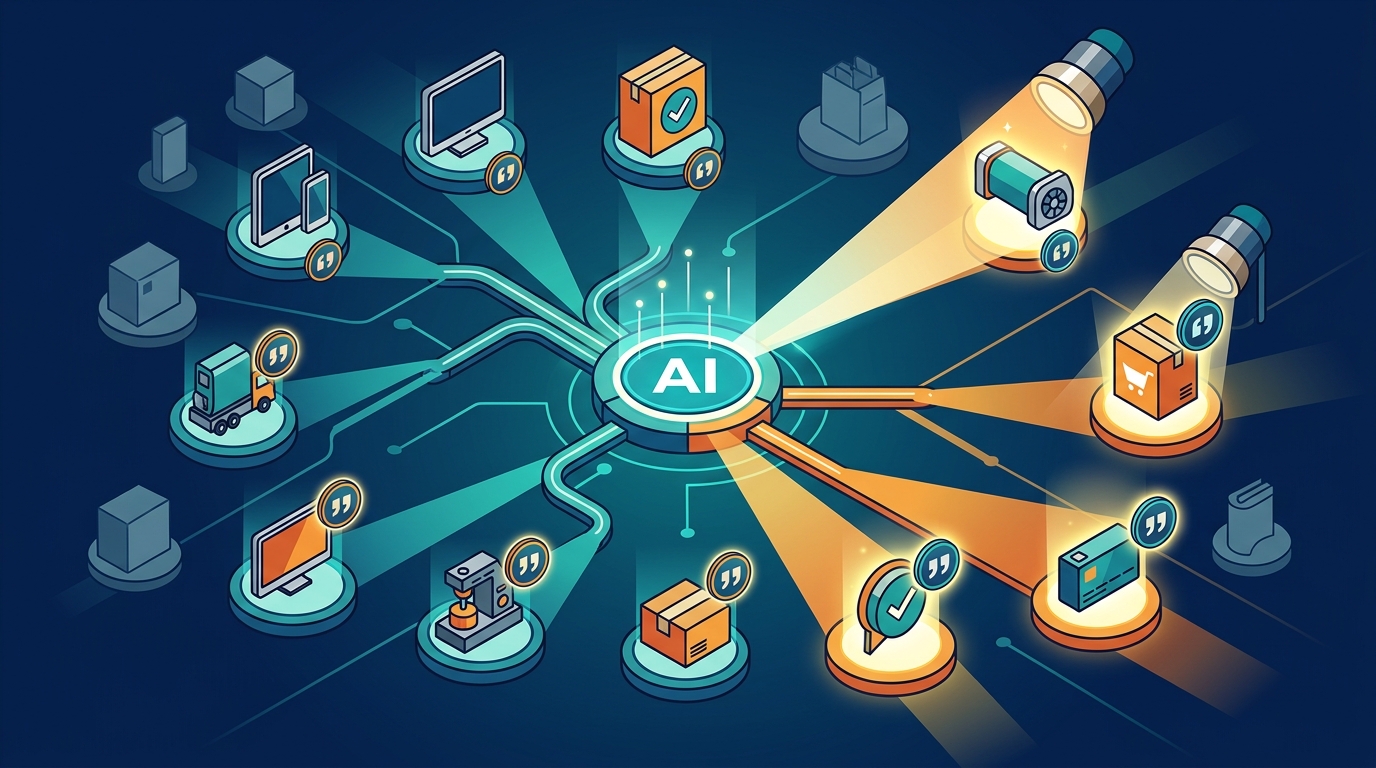
According to Contently's meta-analysis of 2025-2026 citation studies, the strongest predictor of appearing in AI answers is branded web mentions, not backlinks or domain rating. Ahrefs' December 2025 study measured a 0.664 correlation between branded mentions and AI Overview visibility. YouTube mentions correlated even higher at 0.737.
Step 1: Audit Your Current AI Visibility
Before you optimize, you need a baseline. An AI visibility audit answers three questions: Is your brand being cited? Where is it being cited? And how do you compare to competitors?
The visibility platform measures performance across ChatGPT, Google AI, Gemini, Perplexity, and Grok using a composite score built on three factors: Visibility, Compliance, and Relevance. Enter your domain, and the platform fetches AI-generated questions relevant to your industry, then evaluates how well your brand appears in the answers.
What the Cytd Score Measures
- Visibility: How easily AI systems can discover and access your content.
- Compliance: How well your content aligns with quality guidelines and trust standards AI systems use.
- Relevance: How closely your content matches the questions AI is trained to answer.
Step 2: Build Your Off-Site Footprint
Your own website influences roughly 25 percent of the citation equation. The other 75 percent lives off-site. Brands referenced positively across four or more independent sources are 2.8 times more likely to appear in ChatGPT responses than brands mentioned only on their own domain.
Priority Off-Site Channels
- Wikipedia: Treat it as infrastructure. ChatGPT cites Wikipedia more than any other single source.
- Reddit: Build authentic community engagement. Reddit captured roughly 40 percent of all AI citations in 2025-2026.
- Review platforms: Brands with positive presence on Trustpilot, G2, and similar sites are cited three times more frequently by AI models.
- Earned media: Journalism accounts for 27 percent of all AI citations, rising to 49 percent for time-sensitive queries.
The Cytd partner program helps agencies and platforms build these citation signals for their clients through a managed service that handles content publishing and data optimization across every relevant platform.
Step 3: Optimize On-Site Content for LLMs
Answer Engine Optimization (AEO) is the technical practice of structuring your website content so AI crawlers can easily parse and cite it. This includes schema markup, FAQ sections, LLMs.txt files, and clear entity descriptions.
Cytd's managed service addresses these technical elements directly. The platform helps brands create AI-readable pages with structured content, FAQs, and schema that make your business easier for answer engines to understand and recommend.
On-Site Optimization Checklist
- Add Organization and FAQ schema to key pages
- Write definitional sentences for every core product or service
- Structure content with clear H2/H3 hierarchies and short paragraphs
- Maintain a regularly updated newsroom or press page
- Implement an LLMs.txt file in your root directory
Step 4: Keep Content Fresh
Content freshness is a load-bearing signal. ConvertMate's analysis found that 76.4 percent of ChatGPT citations come from content updated within the last 30 days. Ahrefs' July 2025 study of 17 million citations confirmed ChatGPT shows the strongest recency preference of any AI engine measured.
Pick your top 20 pages by traffic and citation potential, set a 90-day refresh cadence, and treat the "Last updated" date as a critical page element. Cytd's pricing plans include ongoing content updates that keep your brand information current across AI platforms.
Step 5: Measure, Compare, and Iterate
Citation share is volatile. ChatGPT's Reddit citation share fell from roughly 60 percent to 10 percent in just six weeks in late 2025 after a single Google parameter change. Continuous monitoring is not optional.
Set up tracking across ChatGPT, Perplexity, Gemini, and Google AI Overviews. Identify which prompts mention your brand, which mention competitors, and where your gaps are. Cytd provides monthly video reports from a dedicated specialist, walking you through exactly what changed, what was done, and how you compare.
Key Takeaways
- AI citation visibility determines whether your brand gets recommended in ChatGPT, Perplexity, and Google AI Overviews.
- Branded web mentions are the strongest predictor of AI citation, more powerful than backlinks or domain authority alone.
- ChatGPT concentrates citations on Wikipedia, Reddit, Forbes, and Business Insider.
- Off-site presence across four or more independent sources makes your brand 2.8x more likely to appear in AI answers.
- 76.4 percent of ChatGPT citations reference content updated within the past 30 days.
- A platform like Cytd provides a composite score across Visibility, Compliance, and Relevance to give you an actionable baseline.
- Citation share shifts weekly, so continuous monitoring and iteration are essential.
Frequently Asked Questions
What is AI citation visibility?
AI citation visibility is the degree to which large language models like ChatGPT, Gemini, and Perplexity reference, mention, or link to your brand when generating answers to user queries. It is the AI-era equivalent of search engine rankings.
How is GEO different from traditional SEO?
Generative Engine Optimization (GEO) focuses on earning mentions, citations, and recommendations inside AI-generated answers. Traditional SEO focuses on ranking in search engine results pages. Both matter, but GEO addresses the growing channel where buyers increasingly start their research.
What sources does ChatGPT cite most often?
According to citation studies covering 680 million data points, ChatGPT concentrates on Wikipedia, Reddit, Forbes, and Business Insider. Commercial .com domains account for over 80 percent of all citations.
How quickly can I improve my ChatGPT citation rate?
Most businesses using a managed optimization service see initial visibility improvements within 30 to 60 days. However, citation share is volatile, so ongoing optimization is necessary to maintain and grow your position.
Does good Google SEO automatically mean good AI visibility?
No. AI platforms do not rely on Google rankings to select sources. Being on page one of Google does not guarantee that ChatGPT will recommend your brand. Different algorithms require a different strategy.
What is the Cytd Score?
The Cytd Score is a composite metric that measures your brand's AI search performance across three dimensions: Visibility (discoverability), Compliance (trust alignment), and Relevance (topic match). It provides a single actionable number to track improvement over time.
How important is content freshness for AI citations?
Extremely important. Research shows 76.4 percent of ChatGPT citations come from content updated within 30 days. Setting a regular refresh cadence for your highest-value pages is one of the most impactful actions you can take.
Can small or local businesses benefit from AI visibility optimization?
Yes. Local service businesses like dentists, realtors, and salons are already seeing results. When a customer asks ChatGPT for a recommendation in their area, the businesses with optimized AI presence get named first.
Start Measuring Your AI Visibility Today
You cannot improve what you do not measure. Run a free AI visibility scan with Cytd to see exactly how your brand appears across ChatGPT, Google AI, Perplexity, and Grok. Get your Cytd Score, identify gaps, and start earning the citations that drive the next generation of customer discovery.