
When someone asks ChatGPT or Google AI for a recommendation in your industry, does your brand show up? If not, you have an AI ranking problem. Generative Engine Optimization (GEO) is the practice of optimizing your content so that AI search engines cite it in their responses. Unlike traditional SEO, which chases page-one links, GEO focuses on getting your brand mentioned inside the answer itself. The right tools make the difference between invisibility and citation. This guide breaks down the most effective tool categories and platforms that help brands climb AI rankings in 2026.
What Is AI Ranking and Why It Matters
AI ranking is the position and frequency with which your brand appears in AI-generated answers across platforms like ChatGPT, Gemini, Perplexity, and Google AI Overviews. It differs fundamentally from traditional search ranking because users consume the answer without clicking through to a website.
The stakes are significant. According to Gartner, traditional search engine volume is predicted to drop 25% by 2026 due to AI assistants. Organic click-through rates for queries triggering AI Overviews have dropped by roughly 61% compared to traditional results. Brands that do not appear in AI answers risk losing a growing share of their audience.
Categories of AI Ranking Tools
Not all GEO tools do the same thing. Before choosing a platform, it helps to understand the three main categories.
Monitoring Tools
These tools track where and how your brand appears in AI-generated responses. They measure citation frequency, sentiment, and share of voice across multiple AI engines.
Optimization Tools
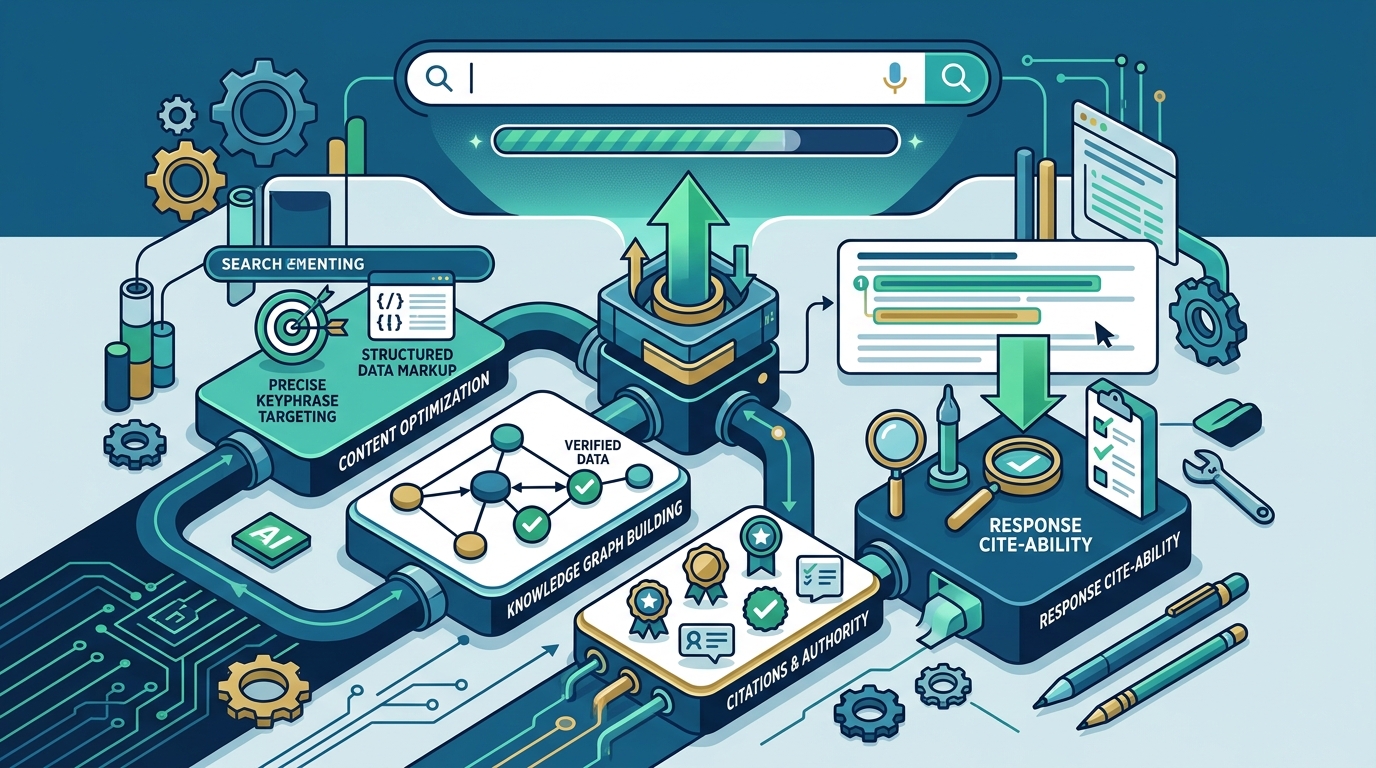
Optimization tools help you produce and structure content that AI systems are more likely to cite. They apply schema markup, entity tagging, and question-answer formatting at scale.
Full-Stack Platforms
A smaller group of tools combines monitoring and optimization in a single workflow. These platforms let you track visibility, identify gaps, and take corrective action without switching between products. Cytd is one such platform, built to help brands measure and improve their AI citation visibility across ChatGPT, Google AI, and Grok from a single dashboard.
| Tool Category | Primary Function | Best For | Example Platforms |
|---|---|---|---|
| AI Visibility Trackers | Monitor brand mentions in AI answers | Benchmarking and reporting | Profound, Otterly, HubSpot AEO Grader |
| Content Optimization | Structure content for AI citation | Editorial teams scaling GEO | Frase, AthenaHQ, Scrunch AI |
| Full-Stack GEO Platforms | Track + optimize in one loop | Brands wanting end-to-end control | Cytd, HeyAmos, Bear AI |
| Traditional SEO with GEO Add-ons | SEO suite plus AI visibility layer | Teams already in an SEO tool | Semrush, SE Ranking |
AI Visibility Tracking Platforms
Visibility tracking is the foundation of any AI ranking strategy. You cannot improve what you do not measure. Modern tracking tools query AI engines with real prompts and record whether your brand appears, how it is described, and how you compare to competitors.
Cytd's AI Visibility Score evaluates brands across three core factors: Visibility, Compliance, and Relevance. The platform scans your domain against AI-generated questions relevant to your industry and returns an actionable score showing how likely you are to get cited by AI platforms. Most local businesses score below 20 out of 100, which highlights the scale of the opportunity.
Enterprise-grade alternatives like Profound monitor 10+ AI engines and offer SOC 2 Type II compliance. For budget-conscious teams, tools like Otterly start at $39 per month and provide entry-level AI mention tracking.
Content Optimization for AI Citation
AI systems favor content that is easy to extract and reassemble. Content optimization for AI citation means structuring your pages around the specific questions people ask AI engines, using clear definitions, data points, and self-contained explanations.
Structure Content as Q&A Blocks
Content structured around the actual questions people ask AI engines tends to have a better chance of being cited. Use H2 and H3 headings that mirror conversational queries, and provide direct answers in the first sentence after each heading.
Prioritize Fact Density
Fact density is the ratio of unique, verifiable data points to total word count in a piece of content. LLMs function as compression algorithms that tend to discard filler. To rank, offer unique data and insights the model cannot find elsewhere.
Publish Citation Magnets
Original research, benchmarks, and state-of-the-industry reports create compounding citation networks. Every piece of original data on your domain strengthens the authority of surrounding pages. Cytd's ongoing optimization service handles this process for brands that prefer a managed approach.
Technical Foundations That Support AI Ranking
Before any content strategy can work, AI systems need to be able to read your pages. Technical readiness is the most common blind spot in AI ranking.
Start by checking your robots.txt file. Many sites block AI crawlers without realizing it. Cloudflare recently changed its default configuration to block AI bots, so if you use Cloudflare, your AI bot traffic may have been shut off automatically.
Schema markup and knowledge graphs are critical for ensuring AI agents can parse and ground your content. Share of Citation is the percentage metric that reveals how often a brand is cited in AI overviews compared to competitors. Tracking it requires tools that query real AI engines, not synthetic visibility scores.
Measuring AI Ranking Success
Traditional SEO metrics like rankings and clicks do not capture AI visibility. In 2026, brands need to track a parallel set of metrics alongside their existing dashboards.
Key metrics include AIO Visibility (the percentage of target keywords triggering an AI Overview), Share of Citation, and AI referral traffic in GA4. Adding AI referral traffic tracking in GA4 takes about 10 minutes and should be standard practice for any content marketing program this year.
Zero-click attribution is also essential. Because users often get answers without clicking, watch for spikes in brand search volume after securing a citation in a high-volume query. Implement "How did you hear about us?" surveys to capture qualitative signals. Cytd's results dashboard provides ongoing visibility scoring so brands can track progress over time rather than relying on one-time snapshots.
Key Takeaways
- AI ranking is how often and how prominently your brand appears in AI-generated answers, not traditional search results.
- Effective tools fall into three categories: monitoring, content optimization, and full-stack GEO platforms.
- Technical readiness, especially robots.txt and schema markup, is the most overlooked prerequisite for AI visibility.
- Fact density and Q&A-structured content outperform keyword-stuffed prose in AI citation.
- Share of Citation is the defining metric for AI ranking success in 2026.
- Original research and data-driven content create compounding citation authority across your domain.
- Platforms like Cytd combine visibility scoring with managed optimization to close the gap between measurement and action.
Frequently Asked Questions
What is Generative Engine Optimization (GEO)?
Generative Engine Optimization is the practice of structuring your content so that AI systems can find it, understand it, and cite it in their responses. It builds on SEO fundamentals but shifts focus from rankings and clicks to brand mentions inside AI-generated answers.
How is AI ranking different from traditional SEO ranking?
Traditional SEO optimizes for page position and clicks. AI ranking optimizes for mentions, citations, and recommendations inside AI-generated answers. A page can rank on Google's first page but never appear in ChatGPT responses, and vice versa.
What is the Cytd Score?
The Cytd Score is a composite metric that measures your brand's AI search visibility, compliance, and relevance. It evaluates how likely your domain is to get cited by AI platforms like ChatGPT, Google AI, and Grok.
Do I need to allow AI crawlers to access my site?
Yes. If your robots.txt blocks AI bots, your content will not appear in AI-generated answers. Check your configuration, especially if you use Cloudflare, which recently began blocking AI bots by default.
What metrics should I track for AI ranking?
Focus on AIO Visibility, Share of Citation, AI referral traffic in GA4, and brand search volume spikes. These metrics capture influence that traditional click-based analytics miss entirely.
How much do AI ranking tools cost?
Prices range widely. Entry-level trackers like Otterly start at $39 per month. Full-service platforms like Cytd offer managed optimization at $299 per month. Enterprise solutions from Profound require custom pricing.
Can traditional SEO tools help with AI ranking?
Some traditional SEO platforms, such as Semrush and SE Ranking, have added AI visibility layers. They can surface AI mentions alongside ranking shifts, but purpose-built GEO tools typically provide deeper citation analytics and optimization workflows.
How quickly can I see results from AI ranking optimization?
Some brands have reported visibility improvements within three weeks of publishing AI-optimized content. However, AI citation authority compounds over time. Brands publishing 10 to 20 high-quality articles per month across a focused topic cluster build authority faster than those publishing only a few.
Start Measuring Your AI Visibility Today
You cannot improve your AI ranking if you do not know where you stand. Check your free AI Visibility Score with Cytd and see exactly how AI platforms perceive your brand. The scan takes minutes, and the insights can reshape your entire digital strategy.