
AI-powered search engines like ChatGPT, Google AI Overviews, and Perplexity now handle billions of queries every month. Getting your website cited in their responses is no longer optional. It is the new frontier of digital visibility. But AI tools only cite a handful of sources per answer, typically between two and seven domains. That means competition for those citation slots is fierce. This guide walks you through practical, proven steps to increase your website's chances of earning AI citations and building lasting visibility across answer engines.
What Are AI Citations and Why Do They Matter?
AI citation optimization is the practice of structuring website content so that platforms like ChatGPT, Perplexity, and Google AI Overviews select it as a cited source when generating answers. Unlike traditional search rankings, AI citations place your brand directly inside the answer a user sees.
The numbers tell the story. According to Search Engine Land research on 8,000 AI citations, brands with high visibility scores dominated because they already appeared across high-quality third-party sites. Meanwhile, data from Search Engine Land shows that LLMs cite just 2 to 7 domains per response, far fewer than the traditional 10 blue links.
| Factor | Traditional SEO | AI Citation Optimization |
|---|---|---|
| Goal | Rank on results page | Get cited inside AI-generated answer |
| Success Metric | Position and CTR | Citation frequency and share of voice |
| Competition | 10 organic slots | 2-7 cited domains per response |
| Key Signal | Backlinks | Authority, structure, and freshness |
| Content Format | Keyword-optimized pages | Structured, extractable Q&A blocks |
Step 1: Audit Your Current AI Visibility
Before optimizing anything, you need a baseline. Enter your target prompts into ChatGPT, Perplexity, and Google AI Overviews to see which sources they cite and why. Study the tone, structure, and clarity of those cited sources to understand what qualifies as trustworthy.
Cytd's getting started guide walks you through setting up your first AI visibility audit. The goal is to identify three types of opportunities: prompts where competitors are visible but you are not, prompts where you are mentioned but not cited, and prompts where you are already winning.
Step 2: Fix Technical Barriers for AI Crawlers
Many sites block AI crawlers without knowing it. Check your robots.txt and CDN settings to ensure AI bots can access your content. Clean URL slugs that match search intent also matter. According to Siftly's analysis, slug structure shows the highest correlation with AI citation frequency among all technical variables.
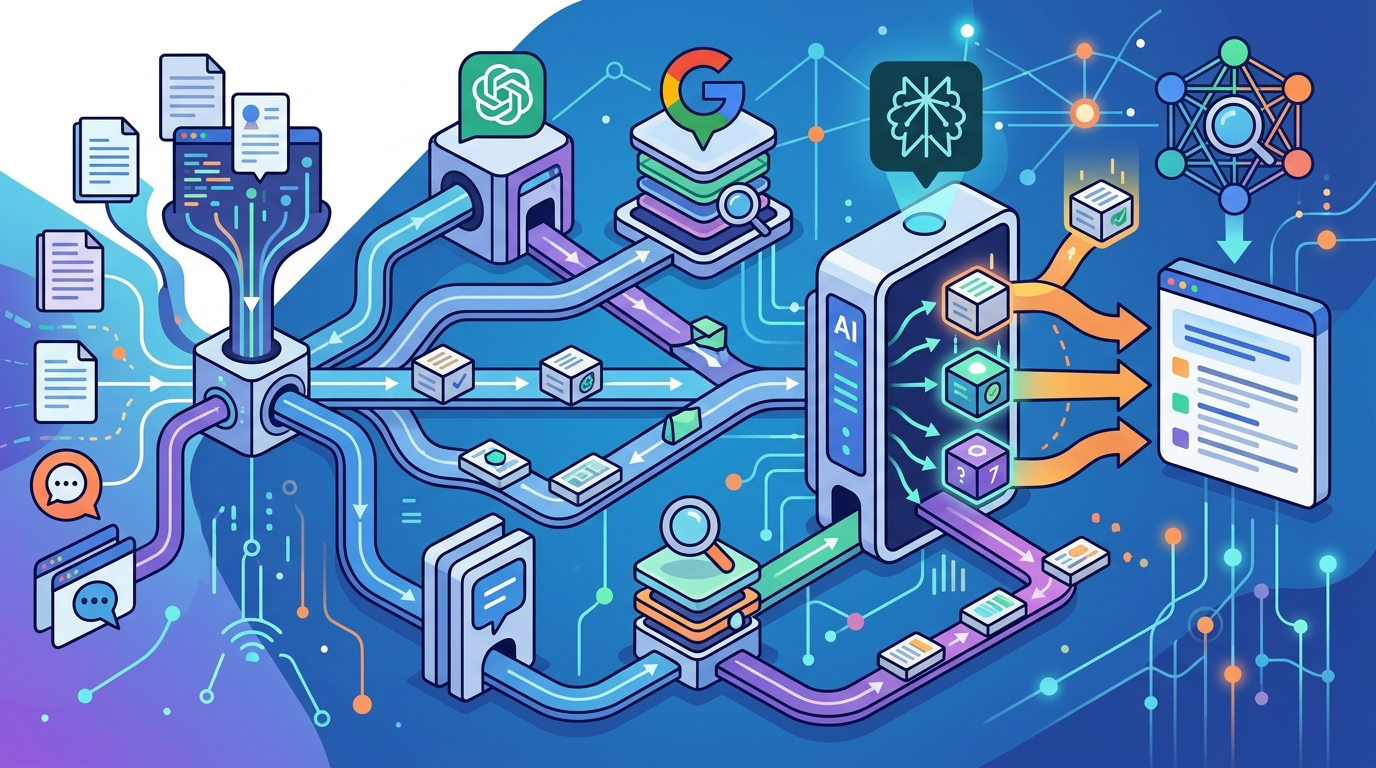
Technical Checklist
- Verify AI crawlers (GPTBot, Google-Extended) are not blocked in robots.txt
- Use descriptive, intent-matching URL slugs
- Implement JSON-LD schema markup for Articles, FAQs, and Products
- Ensure fast page load times and mobile responsiveness
Schema markup is especially important. Proper Article and FAQ schema increases AI citations by 28%, according to Search Engine Land. Learn more about technical requirements in Cytd's complete guide to AI visibility.
Step 3: Structure Content for LLM Extraction
AI models scan for clear, extractable answers. Pages that use clear H2/H3 and bullet point structures are 40% more likely to be cited by AI engines. The most effective approach is the Bottom Line Up Front (BLUF) format: lead each section with a direct answer, then expand with supporting details.
Formatting Best Practices
- Use question-based H2 headings that mirror how users phrase queries
- Answer each heading in the first one to two sentences
- Break complex ideas into bullet points and comparison tables
- Keep paragraphs to two to four sentences maximum
FAQ sections with question-based headings nearly double your chances of being cited by ChatGPT. For smaller domains, question-based titles carry up to 7x more impact on citations. Cytd's resource on LLM citation patterns explains which formats work best for each AI platform.
Step 4: Build Authority and Trust Signals
E-E-A-T (Experience, Expertise, Authoritativeness, Trustworthiness) is a framework Google uses to evaluate content quality. AI systems apply similar logic. Showcase expertise through detailed author bios, cite reputable sources within your content, and gather positive reviews and testimonials.
Strong brand signals increase your chances of being cited, as AI systems tend to favor recognizable, trusted sources. Monitor branded search volume quarterly and invest in building genuine topical authority around your core subjects. Cytd's visibility score guide helps you benchmark how AI models currently perceive your brand.
Step 5: Publish Original Research and Data
Original research is one of the most powerful levers for earning AI citations. Pages that include original data tables earn 4.1x more AI citations than those without, according to Search Engine Land. When your page is the only source with specific data or insights, AI tools are more incentivized to cite you.
Run surveys, publish benchmark studies, or analyze anonymized customer data to uncover insights others have not published. Keep statistics current because content updated within the last 30 days earns 3.2x more citations than stale pages.
Step 6: Expand Your Web Presence Beyond Your Site
Generative Engine Optimization (GEO) is the practice of shaping your content so it performs well inside AI-powered search experiences. But your own website is only part of the equation. AI models pull from the broader web, so brand mentions on trusted outlets, forums, and industry blogs strengthen your chances significantly.
Where to Build Presence
- Contribute expert commentary via journalist services like HARO or Qwoted
- Guest post on established industry publications
- Participate in Reddit, Quora, and niche forum discussions
- Get listed in relevant industry directories (Clutch.co, G2, Capterra)
Even unlinked mentions help AI systems associate your brand with your topic area. Learn how backlinks and mentions interact in Cytd's article on backlinks for AI citations.
Step 7: Measure and Track Citation Performance
Traditional analytics tools do not capture AI citations. You need specialized monitoring to track mention frequency across multiple AI engines, analyze citation quality and sentiment, and benchmark against competitors. Cytd's content optimization platform monitors citations across ChatGPT, Google AI, Grok, and other answer engines so you can measure progress over time.
Key metrics to watch include citation frequency, share of voice versus competitors, brand sentiment in AI responses, and source accuracy. Expect a two to three month delay between implementing improvements and seeing visible impact in citation rates.
Key Takeaways
- AI tools cite only 2 to 7 domains per response, making every citation slot highly competitive.
- Pages with clear H2/H3 structures and bullet points are 40% more likely to be cited.
- FAQ schema and Article schema increase AI citation rates by up to 28%.
- Original data and research earn 4.1x more citations than pages without unique data.
- Content freshness matters: pages updated within 30 days earn 3.2x more citations.
- Brand mentions across third-party sites are as important as on-site optimization.
- Specialized tools like Cytd are essential for tracking AI visibility and citation performance.
Frequently Asked Questions
What is AI citation visibility?
AI citation visibility is the measure of how often and prominently your brand or website appears as a cited source in AI-generated responses. Platforms like ChatGPT, Perplexity, and Google AI Overviews each have different citation behaviors, making it important to track visibility across all of them.
How is GEO different from traditional SEO?
Generative Engine Optimization focuses on getting your content cited inside AI-generated answers, rather than ranking on a list of links. Traditional SEO measures success by position and click-through rate, while GEO measures citation frequency and share of voice.
Do I need to be on page one of Google to get cited by AI?
Not necessarily. Research shows that 90% of pages cited by ChatGPT rank at position 21 or lower in traditional search results. What matters more is how clearly your content answers questions and how easily AI systems can extract your information.
Which content formats get cited most by AI tools?
FAQ sections, comparison tables, fact blocks, and self-contained content units consistently outperform traditional long-form content in citation rates. Bullet-formatted content with 5 to 7 items gets lifted more frequently than dense paragraphs.
How long does it take to see results from AI optimization?
Most sites see initial traction within 8 to 12 weeks, with notable citation growth after 4 to 6 months of consistent optimization. Progress accumulates slowly but steadily, so consistency is key.
Does schema markup help with AI citations?
Yes. JSON-LD schema for Articles, FAQs, and Products gives AI models a machine-readable map of your site. Without it, your content risks being overlooked in favor of competitors with cleaner technical signals.
How can I track my AI citation performance?
Traditional analytics platforms do not capture AI citations. You need a specialized tool like Cytd that monitors citations across multiple AI engines, tracks competitive benchmarks, and measures your share of voice over time.
Can small websites compete for AI citations?
Yes. Question-based titles carry up to 7x more impact on citations for smaller domains compared to large enterprise sites. Focused niche authority, strong content structure, and original data can help smaller sites earn citations alongside much larger competitors.
Start Improving Your AI Visibility Today
Every week without AI-optimized content is a week where competitors are training these models to cite their pages instead of yours. Book a free setup call with Cytd to audit your current AI visibility and get a personalized roadmap for earning more citations across ChatGPT, Google AI, Grok, and beyond.