
Getting cited by AI answer engines like ChatGPT, Google AI, and Perplexity requires more than traditional SEO tactics. In 2026, the content that earns visibility inside AI-generated responses is structurally distinct from content that ranks on page one of Google. Brands need specialized tools that analyze how large language models parse, evaluate, and surface information. This guide breaks down the most effective tools for creating tailored content that increases your likelihood of being cited by AI platforms, and explains why each matters for your citation visibility strategy.
Why AI Citation Requires a New Content Approach
Traditional SEO and AI citation optimization are no longer the same challenge. Research from the University of Toronto shows SEO correlation with AI citations ranges from only 40% down to 15% for specialized topics. Being on page one of Google does not guarantee that ChatGPT or Perplexity will recommend your brand.
Answer Engine Optimization (AEO) is the practice of structuring and enhancing your content so that AI-powered search platforms select it as a cited source when generating answers. AI search is growing rapidly, with ChatGPT alone handling over 2 billion queries daily. Content no longer just needs to rank; it needs to get cited.
The Shift From Clicks to Citations
Over 90% of queries in AI-powered search formats end without a click to any website, according to multiple independent studies. Users consume the AI-generated summary instead. This makes your presence inside the answer itself far more valuable than a traditional organic listing.
AI Visibility Measurement Platforms
Before you optimize content, you need to know where you stand. AI visibility measurement platforms track how often your brand appears in AI-generated responses and provide actionable scores.
Cytd
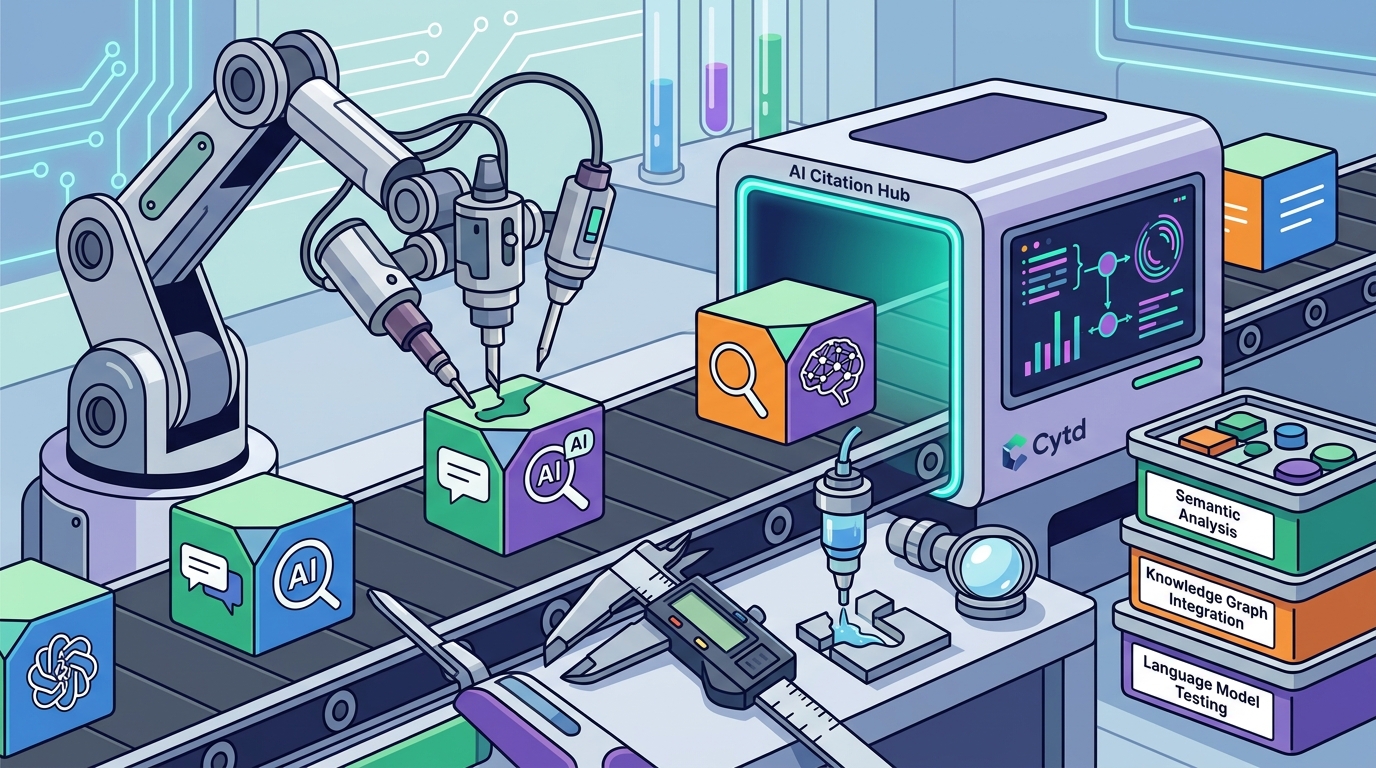
Cytd helps brands improve AI citation visibility and ranking potential across ChatGPT, Google AI, Grok, and other answer engines. The platform is built around three core factors: Visibility, Compliance, and Relevance. It provides ongoing content optimization recommendations and enhancements, allowing brands to systematically strengthen their presence. Most businesses see their first improvements within 30 days of signing up.
Dedicated Citation Intelligence Tools
Platforms like Profound, OtterlyAI, and Peec AI offer specialized citation tracking. These tools monitor which URLs get referenced in AI responses, track citation velocity changes, and benchmark your brand against competitors across ChatGPT, Perplexity, and Google AI Overviews.
Content Optimization Tools for AI Discoverability
A new category of content optimization tools has emerged that analyzes how large language models process and surface content. These go beyond keyword density to focus on entity coverage, semantic structure, and citation-aware formatting.
| Tool | Primary Strength | AI Citation Focus | Starting Price |
|---|---|---|---|
| Cytd | Managed AI visibility improvement | Native | Contact for pricing |
| Frase | Dual Google + AI scoring | GEO content optimizer | $15/mo |
| Surfer SEO | NLP-driven on-page optimization | AI Tracker on Pro plans | $99/mo |
| Clearscope | Letter-grade content scoring | Limited | $189/mo |
| MarketMuse | Enterprise topical authority | Moderate | Custom |
| NeuronWriter | Budget NLP optimization | Basic | $23/mo |
Content optimized specifically for AI discoverability sees 2.4x more citations than content optimized only for traditional SEO, according to testing by Presenc AI. Entity coverage is the single most impactful optimization factor, with comprehensive entity coverage scoring 38% higher in AI citation rates.
Citation Tracking and Analysis Tools
Citation tracking is the process of monitoring which sources AI engines reference in their generated responses and how those citations change over time. Without it, you are optimizing blindly.
Strong citation analysis tools provide URL-level and domain-level tracking, competitor benchmarking, sentiment analysis at the citation level, and actionable content briefs derived from citation gaps. Platforms with an action layer turn insights into executable recommendations rather than passive dashboards. Understanding your AI visibility score is the critical first step.
What to Look For
When evaluating citation tools, prioritize real-time tracking capabilities, cross-platform coverage (ChatGPT and Google AI Overviews are non-negotiable), integration depth with your existing analytics stack, and pricing that scales with your growth. Tools that refresh data multiple times daily capture citation velocity shifts that weekly-update tools miss entirely.
Content Formats That Earn the Most Citations
The format of your content matters as much as the content itself. AI models reward clarity and structure over keyword optimization.
High-Citation Formats
Comparison tables get extracted by AI engines at an 81% rate versus just 23% for prose covering the same points, according to meta-analysis of 2025-2026 AI citation studies. Pages with FAQ sections see roughly a 2.6x lift in how often they get referenced. Structured data markup is another significant factor; articles with schema markup receive 31% more AI citations than identical content without it.
The BLUF Principle
BLUF (Bottom Line Up Front) is a writing format where you lead each section with the key takeaway before providing supporting details. AI systems often cite the first one to two sentences after headings, making this approach essential. Start each section with one clear claim, then provide evidence and context below it. Review LLM citation patterns to understand exactly what AI models extract.
How to Choose the Right Tool Stack
Before choosing a tool, decide what you are actually optimizing for: a higher ranking position, inclusion inside an AI-generated answer, or both. In 2026, those are no longer the same challenge.
For brands focused on AI citation growth, start with a visibility measurement platform like Cytd to establish your baseline score. Layer in a content optimization tool that scores for semantic structure and entity coverage. Then add citation tracking to monitor progress and identify gaps. This three-layer approach covers measurement, creation, and monitoring in a single workflow.
Smaller teams should prioritize tools with native AI citation features rather than platforms that bolt on AI tracking as an afterthought. Native multi-platform tracking signals a tool designed for the citation era, while add-on tracking often signals a tool retrofitted for it.
Key Takeaways
- AI citation optimization is a distinct discipline from traditional SEO, with only 15-40% correlation between the two.
- Content optimized for AI discoverability earns 2.4x more citations than SEO-only content.
- Entity coverage is the highest-impact factor for AI citation rates, yielding a 38% improvement.
- Comparison tables are cited at an 81% rate by AI engines, versus 23% for equivalent prose.
- Schema markup increases AI citations by 31% across all major platforms.
- AI visibility platforms like Cytd provide managed, ongoing optimization that delivers measurable improvements within 30 days.
- The right tool stack combines visibility measurement, content optimization, and citation tracking.
Frequently Asked Questions
What is AI citation visibility?
AI citation visibility is a measure of how often and how prominently your brand or content appears as a cited source in AI-generated responses across platforms like ChatGPT, Google AI, and Perplexity. Learn more about what citation visibility means for your brand.
How is AI content optimization different from SEO content optimization?
AI content optimization focuses on how large language models evaluate and cite content, which differs from how search engine crawlers rank pages. AI models prioritize semantic structure, entity coverage, and factual clarity over keyword density and backlink profiles.
What content formats get cited most by AI engines?
Comparison tables, FAQ sections, and bullet-point lists earn the highest citation rates. Tables are extracted at an 81% rate, and FAQ sections produce a 2.6x lift in AI references compared to unstructured content.
How long does it take to improve AI citation rates?
Most businesses using a managed AI visibility service see initial improvements within 30 to 60 days. Ongoing optimization is critical because AI citation patterns shift as models update.
Do Google rankings affect AI citations?
Partially. Only about 38% of AI Overview citations come from top-10 Google results. Strong organic rankings provide authority signals, but AI engines use separate evaluation criteria for source selection.
Can I track AI citations with traditional analytics tools?
No. Traditional web analytics were not designed for AI search environments where visibility does not automatically translate to clicks. Specialized tools are required to monitor brand mentions and source citations within AI responses.
What is Answer Engine Optimization (AEO)?
Answer Engine Optimization is the practice of structuring content so that AI-powered search platforms select it as a cited source when generating answers. It complements traditional SEO by focusing on citation-earning factors like entity recognition, structured data, and content clarity.
How do I get started with AI visibility measurement?
Start by running a free AI visibility audit with a platform like Cytd to establish your baseline score. From there, identify citation gaps, optimize high-priority pages, and set up ongoing monitoring to track improvements.
Start Improving Your AI Citation Visibility Today
Your competitors are already optimizing for AI search. Every day without visibility measurement is a day your brand stays invisible to the AI platforms your customers rely on. Book a free setup call with Cytd and get your AI visibility score, actionable recommendations, and a clear path to earning more citations across ChatGPT, Google AI, and Grok.