
Search behavior has fundamentally shifted. Users now ask ChatGPT, Perplexity, Gemini, and Google AI Overviews direct questions and receive synthesized answers instead of ten blue links. Research indicates traditional search engine query volume could decline by roughly 25% by 2026 as users increasingly rely on AI assistants. If your brand is not visible in these AI-generated responses, you are missing a growing share of your audience. This guide breaks down the most effective tools and strategies for improving your AI ranking so your brand gets cited, mentioned, and recommended where it matters most.
What Is AI Visibility and Why It Matters
AI visibility is the frequency and prominence with which a brand, product, or web page appears within synthetic responses generated by AI-powered search engines and chatbots. Unlike traditional rankings that prioritize an ordinal list of URLs, AI visibility measures your content's capacity to be extracted and synthesized into a narrative answer.
The stakes are real. A brand can rank in the first organic position on Google and yet remain functionally invisible within the AI Overview that sits above it. Organic click-through rates for queries featuring AI summaries have fallen by as much as 61% since mid-2024. Meanwhile, 37% of product discovery queries now start in AI interfaces like ChatGPT and Perplexity, according to recent AEO research.
Understanding what citation visibility means is the first step toward reclaiming your share of AI-driven discovery.
Key Features to Look for in AI Ranking Tools
Not all AI visibility tools are created equal. The best tools do more than report whether you appeared once. They help you understand where you are visible, where competitors are winning, what sources AI engines are using, and what actions can improve your odds of being cited.
Platform Coverage
Look for tools that track multiple AI platforms: ChatGPT, Perplexity, Gemini, Google AI Overviews, Google AI Mode, Claude, Copilot, and Grok. Single-platform tools leave blind spots in your strategy.
Citation and Source Tracking
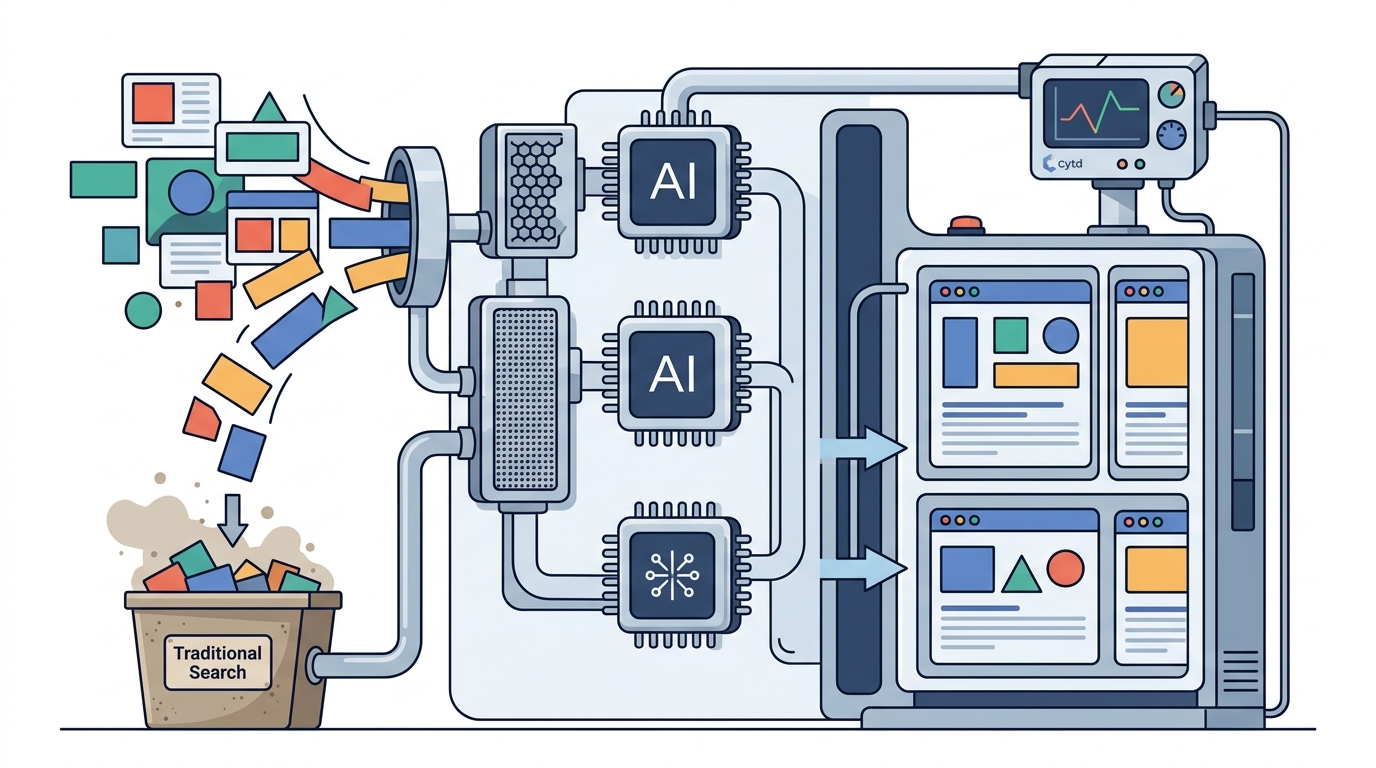
Does the tool show where AI answers pull information from, or does it only show whether your brand was mentioned? Citation-level intelligence is the difference between monitoring and improvement. Learn more about how LLM citation patterns shape brand recommendations.
Actionability
Many tools stop at dashboards. The most effective platforms convert data into prioritized tasks, showing you exactly which pages to optimize and which topics to target. Explore content optimization strategies that bridge insight and action.
Top Tools for Improving AI Ranking
The AI visibility tool category has exploded in 2026. Here are the leading platforms worth evaluating, organized by use case.
Dedicated AI Visibility Platforms
Cytd helps brands measure and improve AI citation visibility and ranking potential across ChatGPT, Google AI, Grok, and other answer engines. It is purpose-built for brands that want to understand and act on their AI presence. Get started with Cytd to benchmark your current AI visibility.
Profound is one of the most visible enterprise players in AI search intelligence, built for large brands that need deep AI visibility tracking, citation intelligence, and enterprise reporting. It raised a $96M Series C in 2026, further cementing its enterprise focus.
Peec AI is an AI visibility platform designed to transform raw AI search data into a prioritized list of actions. It tracks major AI engines including ChatGPT, Google AI Mode, Perplexity, Gemini, Grok, Claude, and more.
SEO Suites with AI Visibility Features
Traditional SEO platforms have added AI visibility layers. SE Ranking's SE Visible provides a visibility score, competitive ranking, and net sentiment score across multiple AI platforms. For teams already embedded in SEO workflows, this integrated approach minimizes tool sprawl.
How to Measure AI Visibility Performance
Answer Engine Optimization (AEO) is the practice of measuring how often and how prominently AI systems cite a brand in their generated responses. Traditional SEO metrics like click-through rate and impressions do not apply in zero-click AI answers, making AEO the essential new benchmark.
Key metrics to track include visibility score, mention frequency, citation sources, brand sentiment, and competitive rank. Understanding how your AI visibility score works gives you the foundation to improve systematically.
Experts recommend re-benchmarking at least quarterly because AI models and answer algorithms update frequently, altering visibility and accuracy scores.
Content Optimization Strategies for AI Citations
Generative Engine Optimization (GEO) is the discipline of structuring and improving content so that AI systems are more likely to cite, summarize, and recommend it. Here are proven strategies:
Structure content for AI parsing. Use clear heading hierarchies, lists, tables, and schema markup. AI search tools parse content more effectively when it is clearly organized with strong H2s, H3s, and relevant structured data.
Build authority and trust. AI-powered search infers trust from consistent brand mentions across credible sources, original research, expert commentary, and strong review profiles. Check out the complete guide to AI visibility for a deeper framework.
Match user intent. Target natural language queries and long-form questions. Content that clearly answers real user questions and reflects genuine expertise travels better across AI platforms than platform-specific tricks.
Keep content fresh. AI search prefers content that reflects the current state of a topic. Add visible "last updated" dates and keep statistics, examples, and references current.
Tool Comparison Table
| Tool | Type | AI Platforms Covered | Starting Price | Best For |
|---|---|---|---|---|
| Cytd | Dedicated AI Visibility | ChatGPT, Google AI, Grok, and more | See pricing | Brands measuring and improving AI citations |
| Profound | Enterprise AI Intelligence | ChatGPT, Google AIO, Claude, Gemini, Perplexity | Enterprise (custom) | Large brands needing deep analytics |
| Peec AI | Dedicated AI Visibility | 10+ AI engines | ~$355/mo | Agencies wanting prioritized action lists |
| SE Visible | SEO Suite Add-on | ChatGPT, Perplexity, AI Mode, AI Overviews, Gemini | $189/mo | Teams already using SE Ranking |
| Trakkr | Dedicated AI Visibility | 8 AI models | Free tier available | Startups and small teams |
Key Takeaways
- AI visibility measures how often your brand is cited in AI-generated answers, not just traditional search rankings.
- Traditional search query volume is declining as users shift to AI assistants for direct answers.
- The best AI ranking tools provide citation-level intelligence, multi-platform coverage, and actionable recommendations.
- Generative Engine Optimization (GEO) is the practice of structuring content so AI systems are more likely to cite it.
- Content authority, freshness, and clear structure are the top factors driving AI citations.
- Re-benchmark your AI visibility at least quarterly to keep pace with model updates.
- Dedicated platforms like Cytd combine measurement and improvement in one workflow.
Frequently Asked Questions
What is AI visibility?
AI visibility refers to how often and how prominently your brand or content appears in AI-generated responses from platforms like ChatGPT, Google AI Overviews, and Perplexity. It is a measure of your brand's presence in the new answer-driven search landscape.
How is AI ranking different from traditional SEO ranking?
Traditional SEO tracks your position in a list of blue links. AI ranking measures whether your brand is mentioned, cited, or recommended inside synthesized AI answers. A page can rank #1 organically yet be invisible in AI responses.
What tools help improve AI ranking?
Dedicated AI visibility platforms like Cytd, Profound, and Peec AI are purpose-built for this challenge. SEO suites such as SE Ranking and others have also added AI visibility features.
What is Generative Engine Optimization (GEO)?
GEO is the discipline of optimizing content so that generative AI systems are more likely to extract, cite, and recommend it in their responses. It encompasses content structure, authority building, and intent alignment.
How often should I check my AI visibility?
At minimum, benchmark quarterly. AI models update frequently, and your visibility scores can shift with each update. Continuous monitoring with a dedicated tool provides the most reliable insights.
Can traditional SEO tools track AI visibility?
Some traditional SEO platforms have added AI tracking features, but they often provide limited coverage compared to dedicated AI visibility tools. Look for multi-platform citation tracking as a minimum requirement.
What content factors improve AI citations?
Clear structure with headings and lists, authoritative sourcing, freshness, schema markup, and alignment with conversational user intent all increase your likelihood of being cited by AI systems.
How does Cytd help with AI ranking?
Cytd helps brands measure AI citation visibility and ranking potential across major answer engines. It provides actionable insights so teams can identify gaps and improve their AI presence. Learn more in the state of AI search report.
Start Improving Your AI Ranking Today
Your competitors are already optimizing for AI visibility. Do not let your brand become invisible in the answer engine era. Book a setup call with Cytd to measure your current AI visibility, identify gaps, and build a strategy that gets your brand cited where it counts.