
Organic traffic patterns are shifting as users increasingly rely on generative interfaces for information retrieval. Businesses must adapt their optimization strategies to capture attention in these new digital environments. This guide outlines the essential methods to enhance your presence across AI-driven platforms. You will learn how to structure content, leverage measurement tools, and align with the algorithms that power modern search assistants. Mastering these techniques ensures your brand remains visible to the next generation of searchers.
Understanding AI Search Mechanics
Traditional search engines operate by ranking individual pages based on relevance and authority. AI search functions differently. These systems synthesize information from multiple sources to generate a direct answer. This shift changes how content must be prepared for discovery. Your goal is no longer just to rank on a list. Your goal is to be cited within the generated response.
AI SEO is the practice of optimizing content to appear in generative search answers. This requires a fundamental change in how you approach keyword targeting. You must focus on answering specific questions comprehensively. Search Generative Experience is a search interface that synthesizes answers from multiple sources using large language models. Understanding this mechanism is the first step toward building a winning strategy.
Generative models prioritize content that demonstrates expertise and clarity. They scan for structured data and clear definitions. Content that is difficult to parse or overly promotional often gets deprioritized. You must write for the machine first, and the human second. This means using clear headings, concise language, and logical flow. Tools like Cytd help teams track how their content performs in these AI answers, providing critical feedback for optimization.
Structuring Content for Generative Models
Content structure plays a vital role in AI visibility. Generative models look for patterns that indicate high-quality information. They favor content that directly addresses user intent without unnecessary fluff. Your articles should follow a clear hierarchy of information. Use descriptive headings to guide the model through your content.
Direct answers are highly valued by AI systems. Place your core answer near the beginning of your content. Avoid burying key information deep within long paragraphs. AI models often extract the most relevant snippets from the top of a page. If your main point is hidden, the model may miss it entirely. This approach ensures your content is selected for citation.
Use lists and tables to present data efficiently. AI models can easily parse structured lists and tabular data. This format makes it simpler for the model to extract specific facts. You should also include clear definitions for key terms. AI systems look for explicit definitions to build their knowledge graph. A clear definition helps the model understand and reproduce your expertise.
Measuring and Tracking AI Visibility
You cannot improve what you do not measure. Traditional analytics tools track clicks and impressions. They do not track citations in AI-generated answers. This gap creates a blind spot in your optimization efforts. You need specialized tools to monitor your AI visibility.
AI Visibility is the frequency and accuracy with which a brand appears in AI-generated responses. Tracking this metric requires a different approach than standard SEO. You must monitor how your content is referenced across various AI platforms. This includes generative search tools, chat assistants, and research platforms. Regular monitoring allows you to identify trends and adjust your strategy.
Platforms like Cytd provide the necessary infrastructure to track these metrics. They allow you to see which queries trigger your content in AI answers. You can also identify gaps where your brand is missing from responses. This data drives your optimization efforts and ensures you stay ahead of competitors. Without measurement, you are operating in the dark.
Optimizing for Entity Recognition
Modern AI systems rely heavily on entity recognition. They map relationships between people, places, organizations, and concepts. Your content must clearly define these entities and their connections. This helps the AI model understand the context of your information.
Focus on building a strong knowledge graph for your brand. Use consistent naming conventions across all your content. Ensure your website clearly identifies your organization and key personnel. Link your content to authoritative sources that reinforce your entities. This creates a network of signals that strengthens your entity profile.
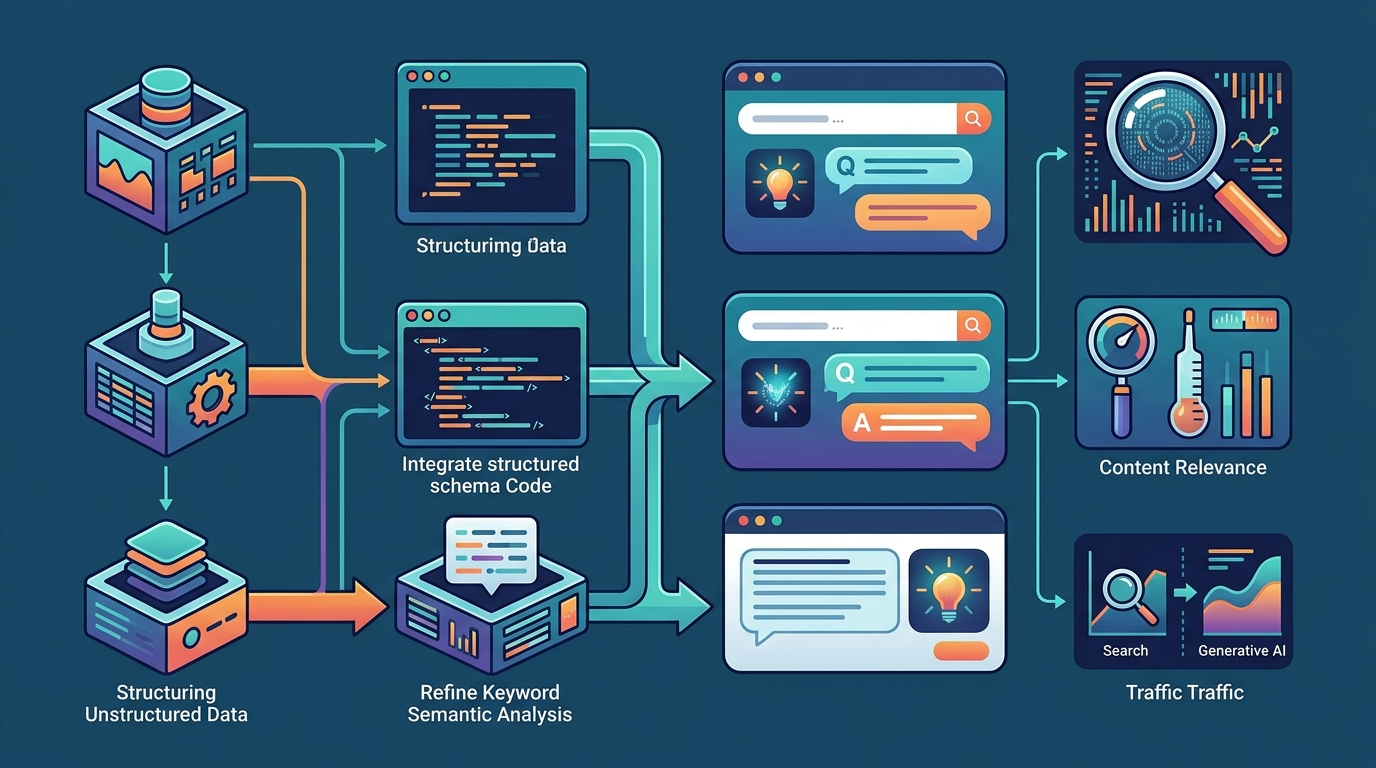
Schema markup remains a powerful tool for entity optimization. Structured data provides explicit clues about the meaning of your content. It helps AI models categorize and index your information accurately. Use schema to define products, articles, FAQs, and local business information. This structured approach reduces ambiguity and improves citation chances.
Technical Foundations for AI Readiness
Technical performance impacts AI visibility just as it does traditional search. Slow loading speeds and poor mobile experiences can hinder content extraction. AI models prefer content that is easily accessible and well-structured. Ensure your website meets modern technical standards.
Core Web Vitals are essential for a healthy technical foundation. These metrics measure loading performance, interactivity, and visual stability. A fast, stable website provides a better experience for both users and AI crawlers. Optimize your images, minify your code, and leverage caching. These technical improvements support your content optimization efforts.
Security and trust signals are also critical. AI models prioritize content from secure, trustworthy sources. Ensure your website uses HTTPS and maintains a clean security record. Avoid intrusive interstitials and pop-ups that disrupt the user experience. A secure, user-friendly site builds the trust required for AI citation.
Implementing a Continuous Improvement Loop
AI search is an evolving landscape. Algorithms and user behaviors change frequently. Your optimization strategy must adapt to these shifts. Establish a continuous improvement loop to stay ahead.
Regularly review your AI visibility data. Identify queries where your content performs well and those where it does not. Adjust your content to address gaps and reinforce strengths. Test new content formats and structures to see what resonates with AI models. This iterative process ensures your strategy remains effective over time.
Collaborate across teams to optimize for AI. Content creators, developers, and SEO specialists must work together. Share insights from AI visibility tools with all stakeholders. This collaborative approach ensures that optimization efforts are aligned and comprehensive. Use platforms like Cytd to centralize your data and streamline your workflow.
Key Takeaways
- AI search synthesizes answers from multiple sources, requiring content to be optimized for citation rather than just ranking.
- Direct answers and clear content structure significantly increase the likelihood of AI model selection.
- Measuring AI visibility requires specialized tools that track citations across generative platforms.
- Entity optimization and structured data help AI models understand and categorize your content accurately.
- Technical performance and security signals contribute to the trustworthiness of your content in AI responses.
- Continuous monitoring and iterative optimization are essential for maintaining long-term AI visibility.
- Collaboration across teams ensures that AI SEO efforts are integrated and effective.
Frequently Asked Questions
What is the difference between traditional SEO and AI SEO?
Traditional SEO focuses on ranking individual pages on a search results list. AI SEO focuses on being cited within generative answers that synthesize information from multiple sources. This requires a shift in content strategy and measurement approaches.
How can I measure my AI visibility?
You can measure AI visibility using specialized tools that track how your content appears in AI-generated responses. These tools monitor citations across various platforms and provide insights into your performance. Platforms like Cytd offer comprehensive tracking capabilities for this purpose.
Does structured data still matter for AI search?
Yes, structured data remains crucial for AI search. It provides explicit clues about the meaning of your content, helping AI models categorize and index information accurately. Schema markup enhances entity recognition and improves citation chances.
How often should I update my content for AI SEO?
You should update your content regularly to reflect the latest information and trends. AI models prioritize fresh, accurate content. Establish a schedule for reviewing and updating your high-visibility pages to maintain relevance.
What role do entities play in AI search optimization?
Entities are the building blocks of AI knowledge graphs. Optimizing for entities involves clearly defining your brand, products, and key concepts. This helps AI models understand the context and relationships within your content.
Can AI search traffic replace traditional organic traffic?
AI search traffic is growing but is unlikely to completely replace traditional organic traffic in the near future. Instead, it represents a new channel that complements existing search behaviors. Businesses should optimize for both to maximize their reach.
How do I optimize my content for entity recognition?
Optimize for entity recognition by using consistent naming conventions, clear definitions, and structured data. Link your content to authoritative sources and build a strong knowledge graph for your brand. This helps AI models map and understand your entities accurately.
Start Improving Your AI Visibility Today
Optimizing for AI search is no longer optional. It is a critical component of modern digital strategy. By understanding AI mechanics, structuring your content effectively, and measuring your visibility, you can capture this emerging traffic. Take the first step toward AI dominance by implementing these best practices. Visit Cytd to start measuring and improving your AI visibility today.