
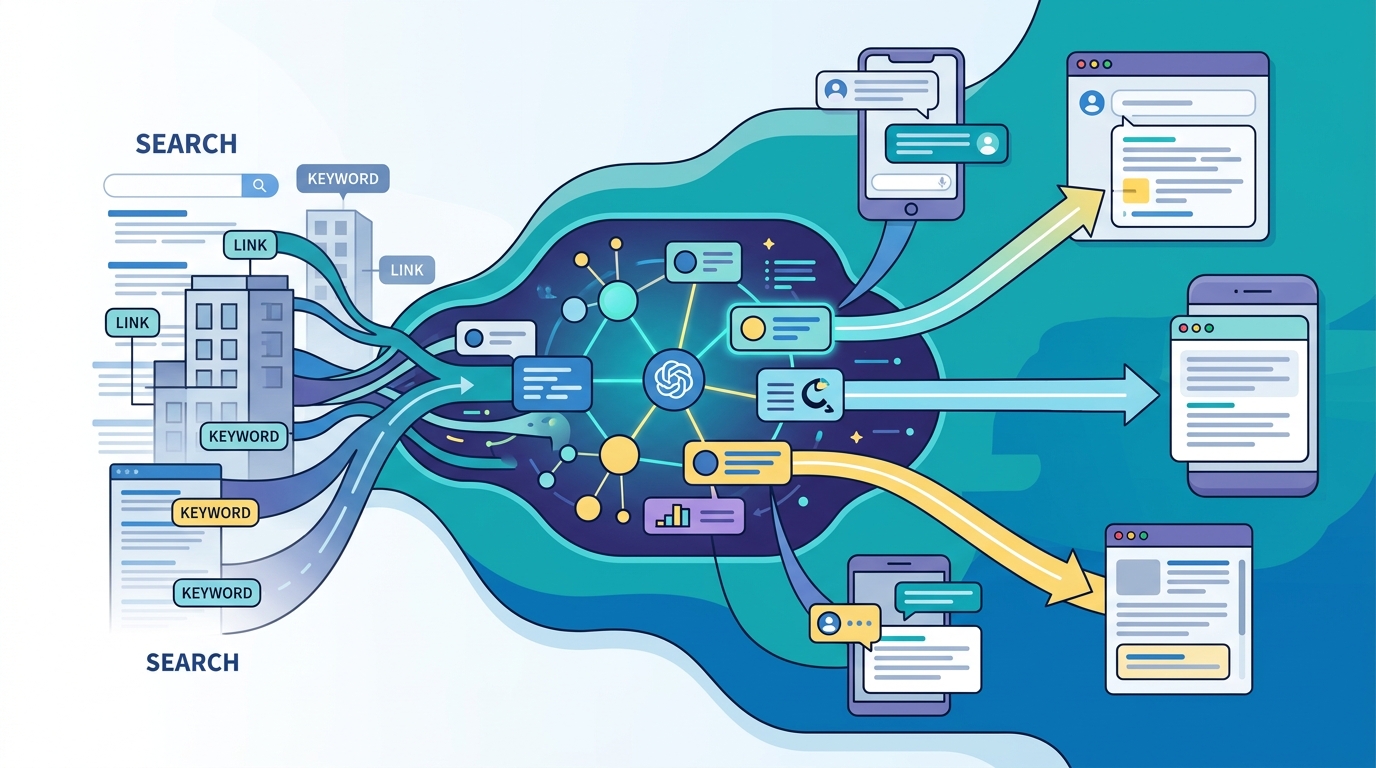
Traditional search engine optimization is undergoing a fundamental paradigm shift. As generative AI models like ChatGPT, Google Gemini, and Perplexity increasingly replace traditional keyword queries, businesses face a new challenge: appearing in AI-generated answers rather than just blue links. AI visibility is the metric that determines whether your brand is cited as a primary source by large language models. Recent industry analysis indicates that 25% of all search volume has already shifted toward AI-driven interfaces, creating an urgent need for brands to adapt their digital presence. This guide details the precise mechanisms, technical requirements, and strategic frameworks necessary to secure top-tier placement in AI search results. (Terms of Service CYTD)
What is AI Visibility?
AI visibility is the degree to which a brand's digital assets are referenced, cited, or recommended by generative AI models during user queries. Unlike traditional SEO, which focuses on ranking on a Search Engine Results Page (SERP), AI SEO focuses on being the source of truth within an AI's generated response. When a user asks, "What is the best CRM for small businesses?" an AI model scans its training data and real-time web sources to construct an answer. If your brand is cited, you gain trust, authority, and high-intent traffic without paying for ad space. (Cytd Measure amp Improve)
This concept is distinct from brand awareness. Brand awareness is about recognition. AI visibility is about citation. A brand can be well-known but invisible to AI if its digital footprint lacks the structural clarity and authority signals that large language models prioritize. According to recent market data, most local businesses currently have an AI visibility score below 20 out of 100, indicating a massive gap in the market for those who optimize correctly.
The Shift in Search Behavior
The way consumers find information is changing rapidly. Traditional search engines rely on keyword matching and link authority. AI platforms rely on semantic understanding and factual accuracy. This shift means that content must be not only readable by humans but also easily parsable by algorithms.
Data shows that users are increasingly turning to AI for direct answers rather than clicking through to multiple websites. This behavior reduces click-through rates for traditional organic results but increases the value of being the cited source. For example, if a user asks Siri or Google Assistant for a local plumber, the AI may provide a direct recommendation based on aggregated reviews and structured data. If your business lacks this structured data, you are effectively invisible to this growing segment of search traffic.
Furthermore, the competitive landscape is evolving. Early adopters of AI visibility strategies are seeing significant pipeline growth. One case study from Cytd.ai highlights a client who went from being "invisible" to being the most cited provider in their region, resulting in $31,000 in new monthly pipeline. This demonstrates that AI visibility is not just a branding exercise but a direct driver of revenue.
Technical Foundation for AI Citations
To be cited by AI, your website must speak the language of machines. This requires a robust technical foundation that ensures your content is accessible, structured, and authoritative. The following components are critical for establishing this foundation.
Structured Data and Schema Markup
Schema markup is a standardized vocabulary that helps search engines and AI models understand the context of your content. By implementing schema, you provide explicit clues about the meaning of your pages. For instance, using LocalBusiness schema helps AI models correctly identify your business name, address, phone number, and operating hours. Without this structured data, AI models must infer this information, which often leads to inaccuracies or omissions.
According to technical SEO best practices, businesses that implement comprehensive schema markup see a significant increase in their likelihood of being cited by AI assistants. This is because schema reduces the cognitive load on the AI model, allowing it to quickly verify facts and attributes.
Content Clarity and Authority
AI models prioritize content that is clear, concise, and authoritative. This means avoiding ambiguous language and ensuring that your content directly answers common user queries. Content should be structured with clear headings, bullet points, and definitions. This structure helps AI models parse the information and extract key facts.
Additionally, authority is built through backlinks and mentions from other reputable sources. AI models use these signals to determine the credibility of your content. Building a strong backlink profile from industry-relevant websites is essential for establishing your brand as a trusted source.
Brand Mentions and Entity Recognition
Entity recognition is the process by which AI models identify and connect different pieces of information about your brand. Consistent brand mentions across the web help solidify your entity's identity. This includes mentions in news articles, social media, and industry publications. The more consistent and widespread your brand mentions, the more likely AI models are to recognize and cite your brand.
Content Strategy for LLMs
Creating content for AI visibility requires a different approach than traditional content marketing. The goal is to create content that is not only valuable to humans but also easily digestible for AI models. This involves focusing on semantic relevance, factual accuracy, and comprehensive coverage of topics.
Answering Direct Questions
AI models are often used to answer specific questions. Therefore, your content should directly address these questions. Use clear, concise language and provide direct answers in the opening paragraphs. This increases the likelihood that your content will be selected as the source for AI-generated responses.
Comprehensive Topic Coverage
AI models value comprehensive content that covers a topic in depth. This means creating content that addresses all aspects of a user's query, including related questions and subtopics. By providing a complete picture, you increase the chances that your content will be cited as the primary source.
Regular Updates and Freshness
AI models prioritize fresh, up-to-date information. Regularly updating your content ensures that it remains relevant and accurate. This is particularly important for industries where information changes rapidly, such as technology, finance, and healthcare. Fresh content signals to AI models that your brand is an active and reliable source of information.
Measuring and Improving Visibility
Measuring AI visibility requires specialized tools and metrics. Traditional SEO tools may not provide accurate insights into how your brand is performing in AI search results. Instead, you need tools that can track your brand's presence in AI-generated answers across different platforms.
AI Visibility Scores
AI visibility scores provide a quantitative measure of your brand's presence in AI search results. These scores are typically based on factors such as the frequency of your brand mentions, the relevance of your content, and the authority of your backlink profile. Monitoring your AI visibility score over time helps you track the effectiveness of your optimization efforts.
Competitive Analysis
Understanding how your competitors are performing in AI search results is crucial for developing a competitive strategy. Analyze their content, backlink profiles, and schema markup to identify areas where you can outperform them. This competitive analysis can reveal gaps in the market and opportunities for improvement.
Continuous Optimization
AI visibility is not a one-time effort. It requires continuous optimization and adaptation to changing algorithms and user behaviors. Regularly review your performance metrics, update your content, and refine your technical setup to maintain and improve your visibility.
Key Takeaways
- AI Visibility is Critical: With 25% of search volume shifting to AI, brands must optimize for AI citations to remain visible.
- Structured Data is Essential: Schema markup helps AI models understand and cite your business information accurately.
- Content Clarity Matters: Clear, concise, and comprehensive content is more likely to be cited by AI models.
- Authority Builds Trust: Backlinks and brand mentions establish your brand as a trusted source for AI algorithms.
- Measurement is Key: Use specialized tools to track your AI visibility score and competitive performance.
- Continuous Optimization: Regularly update content and technical setups to maintain visibility in evolving AI landscapes.
- Revenue Impact: Improved AI visibility can lead to significant pipeline growth, as seen in case studies with clients like Godfather Pickleball.
Frequently Asked Questions
What is the difference between AI SEO and traditional SEO?
Traditional SEO focuses on ranking on SERPs through keywords and backlinks. AI SEO focuses on being cited as a source in AI-generated answers, requiring structured data and semantic clarity.
How do I measure my AI visibility?
You can measure AI visibility using specialized tools that track your brand's presence in AI search results across platforms like ChatGPT, Gemini, and Perplexity. These tools provide an AI visibility score based on citations and mentions.
Is schema markup important for AI visibility?
Yes, schema markup is crucial. It provides structured data that helps AI models understand your content and business information, increasing the likelihood of accurate citations.
How long does it take to see results from AI SEO?
Results vary, but many businesses see significant improvements within 90 days. Some platforms offer guarantees, such as being cited within 90 days or receiving a full refund, indicating the potential speed of impact.
Can small businesses benefit from AI visibility?
Absolutely. Local businesses, in particular, can benefit greatly from AI visibility, as AI assistants often recommend local providers for services like plumbing, dining, and healthcare.
What role does content freshness play in AI visibility?
Content freshness is vital. AI models prioritize up-to-date information, so regularly updating your content ensures it remains relevant and cited in AI responses.
How do I improve my AI visibility score?
Improve your AI visibility score by implementing comprehensive schema markup, creating clear and authoritative content, building a strong backlink profile, and ensuring consistent brand mentions across the web.
Start Your AI Visibility Journey
The shift to AI-driven search is not a future trend; it is happening now. Businesses that fail to adapt risk becoming invisible to a growing segment of consumers. Cytd.ai provides the tools and expertise to help you navigate this new landscape. Our platform offers a comprehensive solution for measuring and improving your AI visibility, ensuring your brand is cited by the AI models your customers are using.
Don't let your competitors dominate AI search results. Visit Cytd.ai today to learn more about our services and start boosting your AI visibility. Whether you are a local business or an enterprise brand, our platform is designed to help you get found in AI search results. Apply as a partner or join our AI Sales Executive program to start earning by helping others improve their visibility.