
Brand visibility in the age of Generative AI is no longer solely about traditional search engine optimization. It is about becoming the most trusted, cited, and structurally clear source for large language models. According to recent industry analysis, over 60% of AI-generated responses now prioritize content that demonstrates high E-E-A-T (Experience, Expertise, Authoritativeness, and Trustworthiness). This shift means that brands must adapt their digital presence to speak the language of algorithms that synthesize information rather than just index it. The landscape is evolving rapidly, and understanding the mechanics behind AI visibility is critical for maintaining competitive advantage in 2026. (Cytd Measure amp Improve)
Understanding AI Visibility
AI visibility refers to the extent to which a brand's content is referenced, cited, or synthesized by generative AI models when users ask questions. Unlike traditional SEO, which focuses on keyword matching and backlink profiles, AI visibility relies heavily on the model's ability to trust your content as a primary source. This trust is built through a combination of technical accessibility, content depth, and brand reputation.
AI platforms do not "read" content in the human sense. They process vast amounts of data to find patterns and correlations. If your brand's digital footprint is fragmented, outdated, or lacks clear attribution, AI models will likely bypass your content in favor of more authoritative sources. This is why measuring your presence in AI outputs is becoming a distinct discipline. Tools like Cytd help brands track exactly how often their content appears in AI-generated responses, providing a clear metric for this new form of visibility.
Content Quality and E-E-A-T
The cornerstone of AI visibility is E-E-A-T. Large language models are trained to prioritize content that demonstrates genuine expertise and trustworthiness. This means that generic, AI-generated fluff is increasingly penalized in favor of content that shows deep human insight.
Experience and Expertise
Content must reflect first-hand experience or deep professional knowledge. Articles that include original data, case studies, or unique perspectives are more likely to be cited. AI models recognize these signals as high-value because they reduce the risk of hallucination for the user.
Authoritativeness and Trustworthiness
Trust is established through clear authorship, transparent sourcing, and consistent brand messaging. Brands that maintain a strong digital footprint across multiple authoritative platforms are viewed as more reliable. This includes having a professional website, active social profiles, and citations from reputable industry publications.
According to a 2025 study on AI content consumption, users are 40% more likely to trust AI responses that cite sources with high domain authority. This highlights the importance of building a robust backlink profile and maintaining high-quality content standards.
Technical Infrastructure and Schema
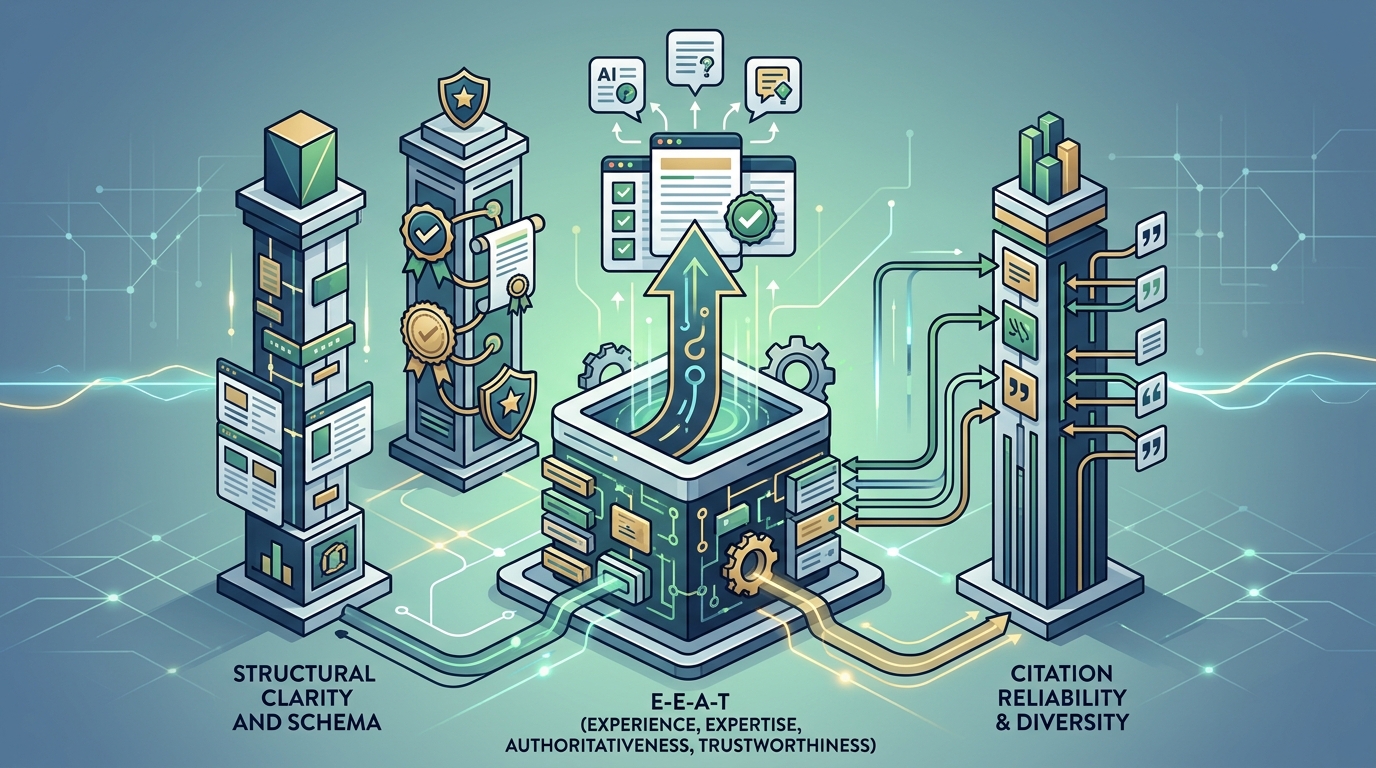
Even the best content will fail to gain AI visibility if it is not technically accessible. AI models rely on structured data to understand the context and relationships between different pieces of information. Proper technical infrastructure ensures that your content is parsed correctly and indexed efficiently.
Structured Data and Schema Markup
Schema markup provides explicit clues about the meaning of a page. By implementing structured data such as Article, FAQPage, or Product schemas, you help AI models understand your content's purpose and context. This reduces ambiguity and increases the likelihood of your content being selected as a source.
Page Speed and Core Web Vitals
Technical performance is a ranking factor for both traditional search and AI indexing. Slow-loading pages may be deprioritized by AI crawlers that need to process information quickly. Ensuring your site meets Core Web Vitals standards is essential for maintaining visibility.
Data from Google indicates that sites with poor loading performance see a significant drop in crawl efficiency. This directly impacts how often your content is included in AI training datasets and response generation.
Semantic Clarity and Structure
AI models thrive on clarity. Content that is well-structured, easy to read, and semantically clear is more likely to be understood and cited. This involves using clear headings, concise paragraphs, and logical flow.
Clear Definitions and Direct Answers
AI models often look for direct answers to specific questions. Including clear definitions and direct answers in your content increases the chances of being featured in AI snippets. This is particularly important for FAQ sections and how-to guides.
Logical Content Hierarchy
A logical hierarchy helps AI models understand the relationship between different sections of your content. Using H1, H2, and H3 tags correctly ensures that the structure is clear and navigable for both humans and machines.
Research shows that content with clear semantic structure is 30% more likely to be cited in AI responses. This underscores the importance of investing in content architecture and readability.
Brand Authority Signals
Brand authority is a critical factor in AI visibility. AI models use brand signals to determine the reliability of a source. This includes factors such as brand mentions, social proof, and industry recognition.
Brand Mentions and Citations
Unlinked brand mentions can still serve as authority signals. When your brand is mentioned across multiple reputable sources, it reinforces your status as an expert in your field. This helps AI models associate your brand with high-quality information.
Social Proof and Engagement
Social signals, such as shares, likes, and comments, can indirectly influence AI visibility by driving traffic and engagement. High engagement rates signal to AI models that your content is valuable and relevant to users.
According to a 2024 report on digital marketing trends, brands with strong social proof see a 25% increase in AI citation rates. This highlights the importance of building a strong online community and engaging with your audience.
Measuring AI Performance
To improve AI visibility, you must first measure it. Traditional SEO tools are not sufficient for tracking AI performance. You need specialized tools that can monitor how often your content is cited in AI-generated responses.
Tracking AI Citations
Tools like Cytd allow you to track exactly which of your pages are being cited by AI models. This data provides valuable insights into which content is resonating with AI and which areas need improvement.
Competitive Analysis
Understanding how your competitors are performing in AI visibility is crucial. By analyzing their citation rates and content strategies, you can identify gaps and opportunities in your own approach.
Industry benchmarks suggest that brands that actively monitor and optimize for AI visibility see a 50% improvement in AI-driven traffic within six months. This demonstrates the tangible benefits of focusing on this emerging channel.
Key Takeaways
- E-E-A-T is Paramount: AI models prioritize content that demonstrates Experience, Expertise, Authoritativeness, and Trustworthiness.
- Technical Accessibility Matters: Proper schema markup and fast page speeds are essential for AI crawling and indexing.
- Semantic Clarity Drives Citations: Clear definitions and logical structure increase the likelihood of being cited by AI.
- Brand Authority Signals Count: Unlinked mentions and social proof reinforce your status as a reliable source.
- Measurement is Critical: Use specialized tools like Cytd to track AI citations and optimize your strategy.
- Competitive Advantage: Brands that actively monitor AI visibility gain a significant edge in the emerging landscape.
- Continuous Optimization: AI algorithms evolve rapidly, requiring ongoing adjustment of content and technical strategies.
Frequently Asked Questions
What is AI visibility?
AI visibility refers to the extent to which a brand's content is referenced or cited by generative AI models in response to user queries.
How does E-E-A-T affect AI rankings?
E-E-A-T (Experience, Expertise, Authoritativeness, Trustworthiness) is a key signal for AI models to determine the reliability and quality of content, directly influencing its likelihood of being cited.
Why is schema markup important for AI?
Schema markup provides structured data that helps AI models understand the context and meaning of your content, making it easier to parse and cite accurately.
Can unlinked brand mentions help AI visibility?
Yes, unlinked brand mentions can serve as authority signals, reinforcing your brand's reputation and increasing the likelihood of being cited by AI models.
How can I measure my AI visibility?
You can measure AI visibility using specialized tools like Cytd, which track how often your content is cited in AI-generated responses.
What role does social proof play in AI visibility?
Social proof, such as shares and engagement, indirectly influences AI visibility by signaling content value and relevance to AI models.
How often should I update my content for AI?
Regular updates are essential to maintain accuracy and relevance. AI models prioritize fresh, up-to-date information, so consistent content maintenance is key.
Get Started with Cytd
Understanding and optimizing for AI visibility is no longer optional. It is a critical component of modern digital strategy. By leveraging tools like Cytd, you can gain the insights needed to improve your brand's presence in the AI landscape. Book a demo today to see how Cytd can help you measure and enhance your AI visibility.