
Generative AI has fundamentally altered the landscape of consumer discovery. According to recent industry analysis, 25% of all search volume has already shifted toward AI-driven interfaces like ChatGPT and Gemini. This shift means that the traditional funnel of clicking through blue links is being replaced by direct, conversational answers. For business owners, the critical question is no longer just "how do I rank on Google?" but rather "how do I get cited by AI?" Understanding the decision-making logic of large language models is essential for maintaining visibility in this new era. (Home Cytd)
The Role of Visibility Signals
ChatGPT and similar generative models do not browse the live web in real-time for every single query in the same way traditional search engines do. Instead, they rely on a vast corpus of training data and indexed information to construct responses. Visibility is the first gatekeeper. If a business lacks a digital footprint that these models can easily parse and index, it effectively ceases to exist in the AI's knowledge graph.
When a user asks, "Who is the best plumber in [City]?" the AI scans its internal database for entities that match the query's intent. If your business has not been explicitly mentioned in high-quality, authoritative contexts, the AI cannot retrieve your name. This is why many businesses find themselves invisible during critical decision-making moments. The AI does not guess; it retrieves. If the data is thin, the AI plays it safe and recommends competitors with stronger digital signals.
For local businesses, this means that traditional SEO tactics are no longer sufficient. You must ensure that your business name, address, and phone number are not just present, but prominently featured in contexts that AI models prioritize. This involves creating content that is specifically structured to be understood by machine learning algorithms, not just human readers.
Establishing Authority and Trust
Once visibility is established, the AI evaluates the authority of the sources it finds. Large language models are trained to prioritize information from reputable, established, and trusted entities. This is similar to how traditional search engines use backlinks and domain authority, but the criteria are often more nuanced.
AI models look for consistency and verification across multiple platforms. If your business is mentioned on your own website, on local directories, in news articles, and in industry reports, the AI assigns a higher trust score to your brand. Conversely, if your information is sparse or contradictory, the AI may hesitate to recommend you, fearing it might provide inaccurate information to the user.
Trust is also built through the quality of the content associated with your brand. Articles, case studies, and expert opinions that discuss your services in a positive, detailed manner contribute to your authority. The AI analyzes the sentiment and the depth of these mentions to determine if your brand is a credible choice. This is why simply having a website is not enough; you must have a narrative that reinforces your expertise and reliability.
Coverage and Contextual Depth
Coverage refers to the breadth and depth of your digital presence. It is not enough to be mentioned once; your brand must be discussed in various contexts that align with potential customer queries. For example, a software company should be mentioned in contexts related to "best CRM for small business," "enterprise software solutions," and "customer relationship management tools."
The AI looks for semantic relevance. It connects your brand to the specific keywords and phrases that users are likely to employ. If your content is too narrow or uses jargon that the AI does not associate with common consumer queries, your chances of being recommended drop significantly. Broadening your coverage to include related topics and long-tail keywords helps the AI understand the full scope of your business.
Furthermore, the AI values up-to-date information. Businesses that regularly update their content, release new products, or engage in current industry discussions are more likely to be seen as relevant and active. This dynamic nature of information helps the AI prioritize businesses that are currently operating and evolving, rather than those that have been stagnant for years.
The Cytd Score: Measuring AI Readiness
To help businesses navigate this complex landscape, Cytd.ai has developed a proprietary metric called the Cytd Score. This score evaluates how well a business is positioned to be recommended by AI across major platforms like ChatGPT, Gemini, Siri, and Perplexity. The score is broken down into three key components: Visibility, Authority, and Coverage.
| Component | What It Measures | Why It Matters |
|---|---|---|
| Visibility | How often your brand appears in AI responses | Without visibility, you are invisible to AI-driven discovery. |
| Authority | The trustworthiness and credibility of your digital footprint | AI prioritizes trusted sources to ensure accurate recommendations. |
| Coverage | The breadth of topics and contexts your brand is associated with | Broad coverage increases the likelihood of matching diverse user queries. |
Most businesses start with a low Cytd Score, often below 50%. This indicates significant room for improvement. By addressing the gaps in visibility, authority, and coverage, businesses can significantly increase their chances of being the top recommendation when customers ask AI for advice. Cytd.ai provides the tools and services to monitor and improve this score, ensuring that your brand stays ahead of the curve.
Strategies to Improve AI Citation Visibility
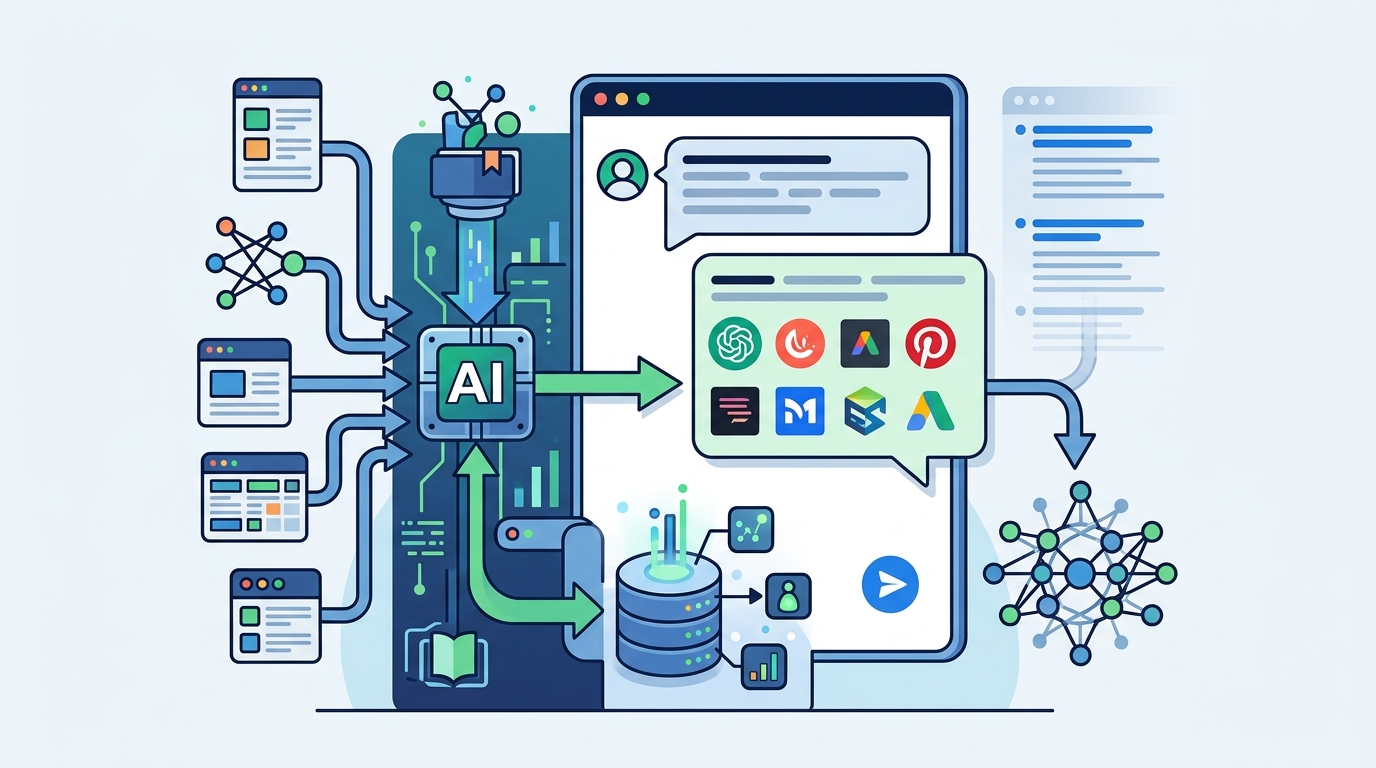
Improving your AI citation visibility requires a strategic approach that goes beyond traditional marketing. Here are several actionable steps to enhance your presence in AI search results.
1. Optimize for AI-Driven Queries
Understand how users phrase their questions to AI. Instead of focusing solely on keywords, focus on natural language queries. Create content that answers these questions directly and comprehensively. This includes FAQ sections, blog posts, and case studies that address common pain points and solutions.
2. Build High-Quality Citations
Citations are mentions of your business on other websites. High-quality citations from authoritative sources help build your authority. Work with PR agencies, industry publications, and local directories to secure these mentions. Ensure that the information provided in these citations is consistent and accurate.
3. Leverage Structured Data
Structured data helps AI models understand the content of your website more easily. Implement schema markup to provide explicit clues about the meaning of your page content. This includes business information, reviews, and product details. Structured data makes it easier for AI to extract and use your information in its responses.
4. Monitor Your AI Presence
Regularly monitor how your brand is being mentioned in AI responses. Use tools like Cytd.ai to track your Cytd Score and identify areas for improvement. This ongoing monitoring allows you to adjust your strategy in real-time and stay competitive in the AI search landscape.
Key Takeaways
- 25% of search volume has shifted to AI interfaces, making AI visibility critical for business growth.
- Visibility is the first step; if AI cannot find your data, it cannot recommend your business.
- Authority and trust are built through consistent, high-quality mentions across multiple authoritative sources.
- Coverage depth ensures your brand is associated with a wide range of relevant topics and queries.
- The Cytd Score provides a measurable way to track your AI readiness across visibility, authority, and coverage.
- Structured data and natural language content are essential for helping AI models understand and cite your business.
- Continuous monitoring and optimization are required to maintain and improve your AI citation visibility over time.
Frequently Asked Questions
Does ChatGPT browse the live web for every query?
ChatGPT primarily relies on its training data and indexed information. While it can access some live data, it does not browse the entire web in real-time for every single query. This is why having a strong, indexed digital presence is crucial.
How can I improve my business's authority in AI models?
Improving authority involves building high-quality citations from reputable sources, creating comprehensive and expert content, and ensuring consistency across all digital platforms. Cytd.ai can help you identify and address gaps in your authority signals.
What is the Cytd Score?
The Cytd Score is a proprietary metric developed by Cytd.ai that evaluates how well a business is positioned to be recommended by AI. It measures visibility, authority, and coverage to provide a clear picture of your AI readiness.
Why is AI citation visibility important for local businesses?
Local businesses are increasingly being discovered through AI recommendations. If your business is not cited by AI, you miss out on potential customers who are using AI to find local services. Improving your citation visibility ensures you are part of that conversation.
How long does it take to see results from improving AI visibility?
Most clients start showing up in AI answers within 40 to 60 days of implementing a comprehensive AI visibility strategy. Consistency and ongoing optimization are key to maintaining and improving your results.
Can I track my AI visibility myself?
Yes, tools like Cytd.ai allow you to monitor your AI visibility, track your Cytd Score, and identify areas for improvement. Regular monitoring helps you stay proactive in managing your AI presence.
Get Your Brand Seen By AI
Don't let your competitors be the only ones recommended by AI. Take control of your digital future by understanding and optimizing for AI search. Visit Cytd.ai to get your free Cytd Score and discover how we can help your business become the top recommendation for AI-driven customers. Get Started today and ensure your brand is visible, authoritative, and ready for the AI age.