
Search behavior has undergone a permanent structural shift in 2026, with 25 percent of traditional search volume already migrating toward AI-driven interfaces. This migration means that for many businesses, the traditional search engine results page is no longer the primary point of discovery. Instead, buyers are asking conversational AI models who to choose, and those models are recommending brands based on specific digital signals. If your brand is not explicitly cited in these AI responses, you are effectively invisible to a growing segment of high-intent customers. Understanding how to evaluate this new visibility landscape is critical for maintaining market share. (We Put Your Business)
What Is AI Search Visibility?
AI search visibility refers to the frequency and context in which a brand is mentioned by generative AI models when users ask relevant questions. Unlike traditional organic search, where visibility is determined by keyword ranking and backlink profiles, AI visibility is determined by the model's trust in your brand's digital footprint. When a user asks, "Who is the best provider for [service] in [location]?" the AI synthesizes an answer from its training data and real-time web indexing. If your brand lacks sufficient citation-ready data, the AI will likely omit you in favor of competitors with stronger digital signals.
This concept is distinct from brand awareness. You might have high brand awareness in traditional media, but if that awareness does not translate into structured, AI-readable data, your visibility score remains low. The gap between traditional SEO and AI visibility is widening. Businesses that rely solely on blue-link optimization are missing the conversation happening in chat interfaces.
The Cytd Score: A New Metric
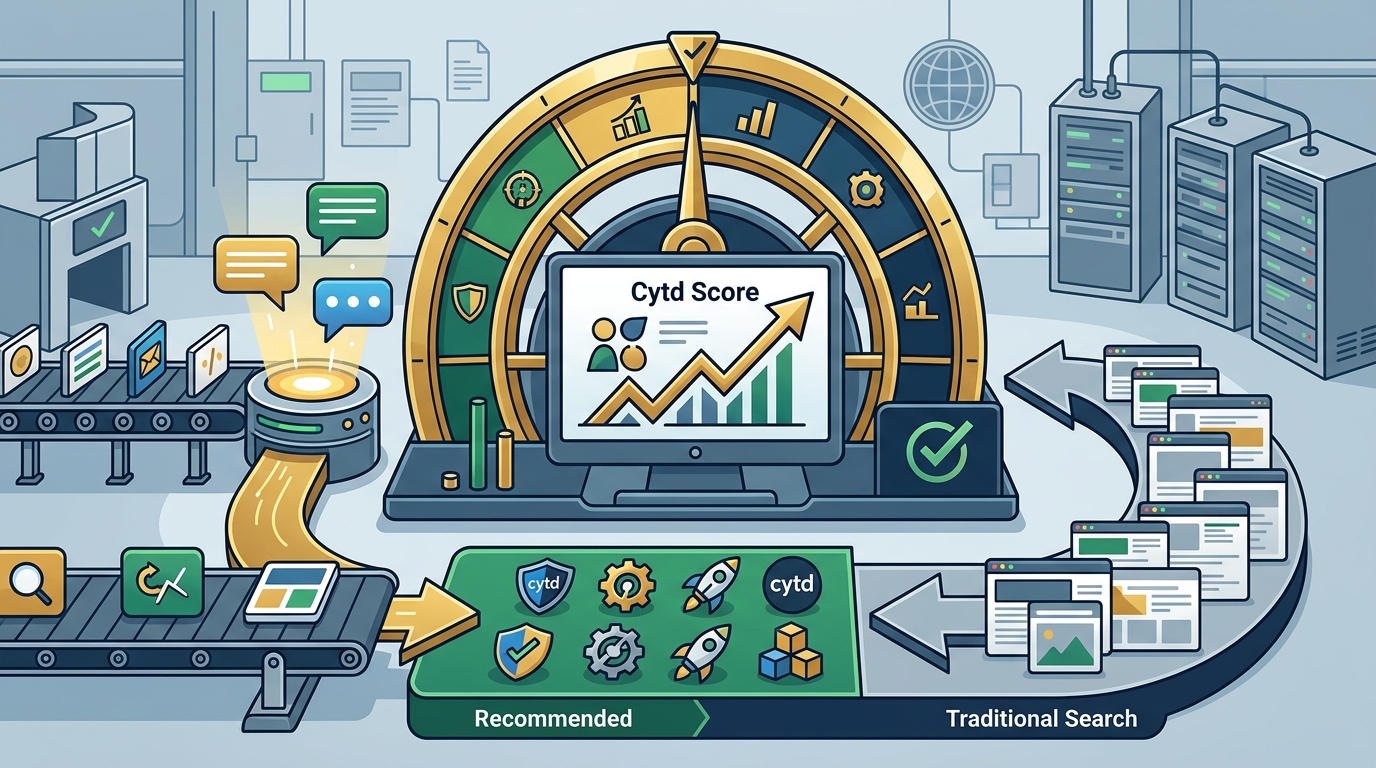
The Cytd Score is a proprietary metric developed to quantify a brand's presence in AI search results. It provides a holistic view of how well your business is positioned to be recommended by AI assistants like ChatGPT, Gemini, and Perplexity. Most brands start with a low or below-average score because their digital presence is fragmented or lacks the specific signals AI models prioritize.
Evaluating your Cytd Score is the first step in diagnosing your AI visibility health. The score is not a static number but a dynamic reflection of your brand's digital hygiene. A low score indicates that AI models do not have enough trustworthy information to confidently recommend your business over competitors. This invisibility is costly because it occurs at the moment of decision-making, often before the customer even visits your website.
The Three Pillars: Visibility, Authority, Coverage
The Cytd Score is broken down into three core components. Understanding these pillars is essential for any business looking to improve its AI search performance. Each pillar addresses a different aspect of how AI models process and rank brand information.
Visibility
Visibility measures how often your brand appears in AI-generated responses. It is not enough to have a website; your brand must be explicitly named in contexts relevant to buyer queries. Low visibility often results from a lack of third-party citations or unstructured data that AI models cannot easily parse. Improving visibility requires ensuring your brand is mentioned in authoritative contexts that AI systems trust.
Authority
Authority evaluates the trustworthiness of the sources mentioning your brand. AI models prioritize brands that are cited by other reputable entities. If your digital footprint consists only of self-published content, your authority score will suffer. Building authority involves earning mentions from industry publications, local business directories, and trusted review platforms. This signal tells the AI that your brand is a legitimate player in your industry.
3Coverage
Coverage assesses the breadth of your brand's presence across different AI platforms. A brand might be visible on one platform but invisible on another. Comprehensive coverage ensures that no matter which AI assistant your customer uses, your brand is part of the conversation. Gaps in coverage often occur when businesses optimize for one search engine while neglecting the data structures required by others.
Evaluation Methodology and Tools
Evaluating your AI search visibility requires specialized tools that can simulate AI queries and analyze the responses. Traditional SEO tools are not designed to measure AI citation frequency or sentiment. The evaluation process involves scanning multiple AI platforms to see how your brand is described and whether it is recommended in relevant contexts.
Cytd provides a free score check that offers a brief summary of your visibility across platforms like ChatGPT, Gemini, and Grok. This tool analyzes your domain and work email to provide a snapshot of your current standing. The evaluation takes less than 30 seconds and requires no credit card. It serves as a diagnostic starting point for businesses ready to address their AI visibility gaps.
For a deeper analysis, businesses can access full results that detail specific queries where your brand was omitted. This data allows you to identify exactly where your digital presence is failing to meet AI standards. The evaluation is not just about numbers; it is about understanding the narrative AI has constructed about your brand.
Comparison: Traditional SEO vs. AI Visibility
While traditional SEO and AI visibility share some foundational principles, their strategies and metrics differ significantly. Understanding these differences is crucial for allocating resources effectively. The table below outlines the key distinctions between the two approaches.
| Feature | Traditional SEO | AI Search Visibility |
|---|---|---|
| Primary Goal | Ranking on SERPs | Being cited by AI models |
| Key Metric | Organic Traffic | Citation Frequency & Sentiment |
| Content Focus | Keyword Optimization | Entity & Trust Signals |
| Discovery Channel | Search Engine Results Page | Conversational AI Interfaces |
| Time to Impact | Months to Years | 40-60 Days for Initial Visibility |
Traditional SEO focuses on optimizing for algorithms that rank pages based on relevance and authority. AI visibility focuses on optimizing for models that synthesize information to answer questions directly. A brand can rank #1 on Google but still be invisible to AI if it lacks the necessary citation structure. This divergence means that businesses must adopt a dual strategy to capture the full spectrum of digital discovery.
Key Takeaways
- 25% of search volume has shifted: A quarter of traditional search queries are now moving to AI-driven interfaces, fundamentally changing how customers discover services.
- Invisibility is silent: AI omissions do not appear in traditional analytics, making the lost revenue from invisible brands difficult to track without specialized tools.
- Cytd Score components: Visibility, Authority, and Coverage are the three pillars that determine your brand's recommendation likelihood in AI responses.
- Rapid improvement: Most clients start showing up in AI answers within 40-60 days of implementing visibility management strategies.
- Competitor risk: If AI does not trust your brand, it will confidently recommend competitors by name, directly impacting your market share.
- Free diagnostic available: Businesses can check their visibility across ChatGPT, Gemini, and Grok with a free, no-obligation Cytd Score check.
- Historical context: Cytd has been building technology since 2008, bringing deep technical expertise to the emerging field of AI search visibility.
Frequently Asked Questions
What is the Cytd Score?
The Cytd Score is a proprietary metric that quantifies a brand's visibility and trustworthiness in AI search results. It evaluates how often your brand is mentioned and recommended by AI models like ChatGPT and Gemini.
How is AI search visibility different from SEO?
SEO focuses on ranking on search engine results pages, while AI visibility focuses on being cited in conversational AI responses. A brand can have high SEO rankings but low AI visibility if it lacks the necessary citation signals.
Why is my brand invisible to AI?
Brands are often invisible to AI because they lack sufficient third-party citations, unstructured data, or clear entity definitions. AI models require trusted sources to confidently recommend a business.
How long does it take to improve AI visibility?
Most clients start seeing improvements in their AI visibility within 40 to 60 days. The timeline depends on the current state of the brand's digital footprint and the intensity of the optimization efforts.
Is the Cytd Score check free?
Yes, Cytd offers a free score check that provides a brief summary of your visibility across major AI platforms. It takes less than 30 seconds and requires no credit card.
Which AI platforms does Cytd monitor?
Cytd monitors visibility across ChatGPT, Gemini, Siri, Perplexity, and Grok. This comprehensive coverage ensures that your brand is visible regardless of which AI assistant your customer uses.
Can I track my AI visibility over time?
Yes, Cytd provides monthly video walkthroughs and competitor tracking to help you monitor your progress. This allows you to see exactly what improved and why your visibility score changes.
Get Your Free Cytd Score
Don't let your competitors dominate the AI conversation. If AI doesn't mention your brand, you are losing customers to those who do. Take the first step toward AI visibility today. Get your free Cytd Score now and discover how visible your business really is. View full results to understand your current standing and buy direct to start improving your visibility immediately. Read more on our blog for insights on the future of search.