
Best Ways to Improve AI SEO and AI Search Visibility in 2026
Search is no longer just about Google's ten blue links. Gartner predicted that traditional search engine volume would drop 25% by 2026 as AI chatbots and virtual agents absorb user queries. That shift is now reality. Consumers ask ChatGPT, Perplexity, Gemini, and Grok for recommendations, and those AI systems cite brands they consider authoritative. If your business is invisible to large language models, you are losing customers you never knew existed. This guide covers the best ways to improve AI SEO and AI search visibility so your brand gets cited, recommended, and trusted across every AI platform.
What Is AI SEO?
AI SEO is the practice of optimizing your digital presence so that AI-powered search engines and large language models can find, understand, and cite your content. Unlike traditional SEO, which focuses on ranking in Google SERPs, AI SEO targets citation visibility across platforms like ChatGPT, Google AI Overviews, and Grok.
Generative Engine Optimization (GEO) is a subset of AI SEO focused specifically on making content citable within AI-generated answers. Answer Engine Optimization (AEO) is the discipline of structuring content so AI systems select it as the definitive source for a user query. Together, these approaches form the foundation of modern AI search optimization.
Why AI Search Matters in 2026
The numbers tell a clear story. According to Gartner research, traditional search volume was forecast to drop 25% by 2026 as generative AI solutions became substitute answer engines. Meanwhile, AI Overviews reduce organic click-through rates on top results by an average of 34.5%, according to analysis from Evergreen Media. Up to 60% of Google searches now result in zero clicks.
For brands, this means traditional SEO alone is no longer sufficient. The businesses that show up in AI-generated answers capture trust and conversions that never flow through a classic SERP click.
| Factor | Traditional SEO | AI SEO / GEO |
|---|---|---|
| Primary Goal | Rank on Google SERPs | Get cited in AI-generated answers |
| Key Metric | Click-through rate (CTR) | Citation rate and mention frequency |
| Content Format | Keyword-optimized pages | Structured, concise, claim-based content |
| Discovery Channel | Google, Bing | ChatGPT, Perplexity, Gemini, Grok |
| Link Strategy | Backlink authority | Entity consistency and topical authority |
| Measurement Tool | Google Search Console | AI visibility platforms like Cytd |
Core Strategies to Improve AI Search Visibility
1. Build Entity Consistency Across Platforms
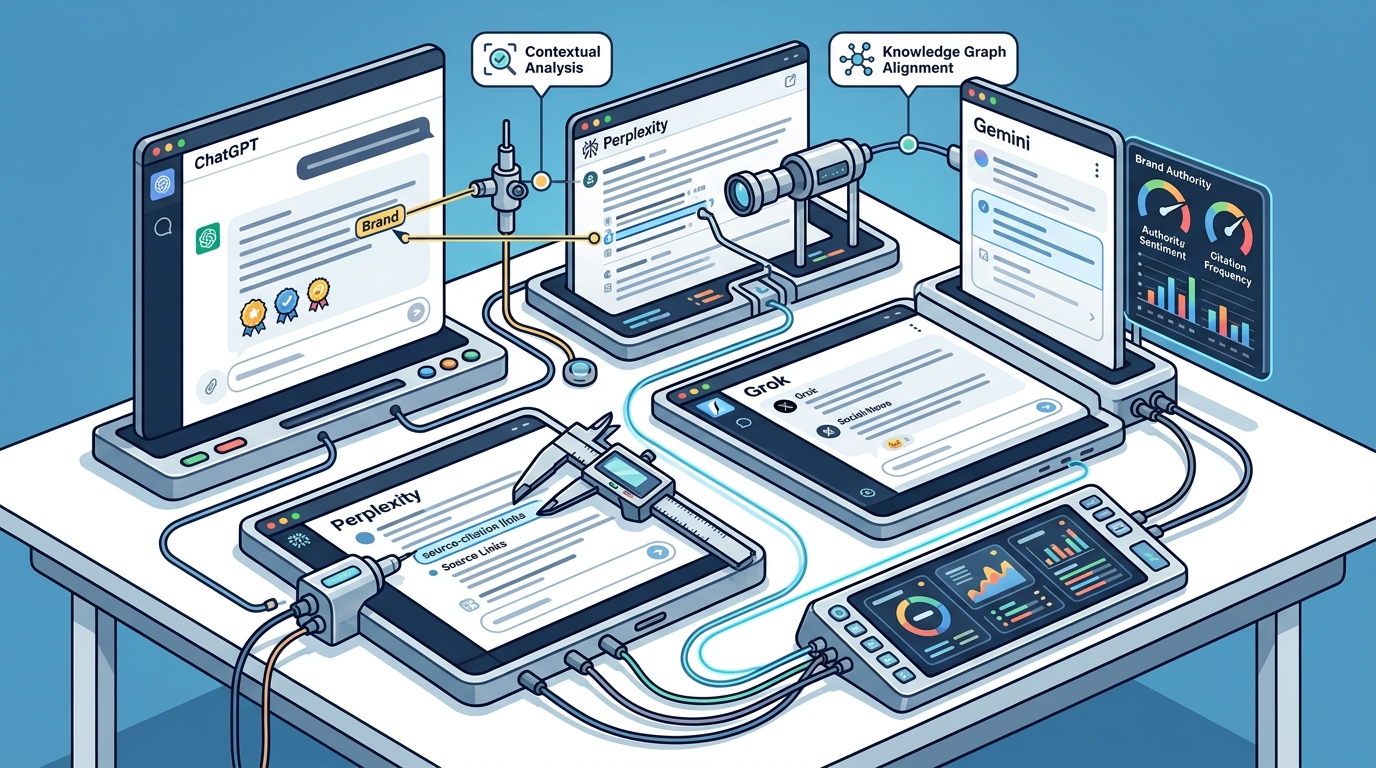
AI models determine brand authority by cross-referencing mentions across the web. Your business name, description, and key attributes must be consistent on your website, Google Business Profile, social media, and directory listings. Entity consistency and structured content cost nothing to implement but have outsized impact on AI discoverability.
2. Develop Topical Authority Through Depth
LLMs favor sources that demonstrate comprehensive expertise on a subject. Publishing in-depth, interlinked content clusters signals that your brand owns a topic. As Search Engine Land reports, AI search optimization now requires supplying information so AI agents can find, trust, and use it without a user ever visiting the site.
3. Optimize for Conversational and Long-Tail Queries
AI search users write full questions rather than two-word keywords. Target the natural-language questions your audience asks. Align each page with a specific intent, and answer the query directly in the opening paragraph. This increases the probability that an LLM will extract and cite your content.
Structured Data and Schema Markup
Structured data is machine-readable code added to your pages that helps AI systems understand your content's meaning. FAQPage, Product, LocalBusiness, and Organization schema types are particularly valuable for AI citation.
According to analysis from eLearning Industry, FAQs are extremely popular and beneficial for long-form articles because AI Overviews appear to favor them. Review stars and pricing schema are critical for product pages. Implementing the right schema types for your business category is one of the highest-leverage actions you can take.
Content Optimization for LLM Citation
Write Clear, Claim-Based Sentences
LLMs extract discrete factual statements. Every paragraph should contain at least one clear claim supported by evidence. Use the pattern "[Term] is [definition]" for key concepts so models can easily parse and cite your definitions.
Use Headers, Tables, and Lists
AI search tools rely on headers, tables, and other structural elements to determine content relevance. Short paragraphs, bullet points, and comparison tables make it far more likely that AI tools will parse your content and extract key insights.
Demonstrate E-E-A-T Signals
E-E-A-T stands for Experience, Expertise, Authoritativeness, and Trustworthiness. Google and AI systems alike use these signals to evaluate credibility. List expert authors, include original data, and add personal insights to strengthen your content's authority. Platforms like Cytd help brands measure and improve these signals specifically for AI visibility across ChatGPT, Gemini, and Grok.
Measuring Your AI Visibility Score
You cannot improve what you cannot measure. Traditional analytics tools like Google Search Console do not track whether AI platforms cite your brand. Purpose-built AI visibility platforms fill that gap.
Cytd measures AI search visibility through three core factors: Visibility, Compliance, and Relevance. The platform scans how well AI systems can discover your content, evaluates alignment with AI trust standards, and measures how closely your content matches the questions AI is trained to answer. Most businesses see their first improvements within 30 to 60 days.
Tracking your AI visibility score over time lets you benchmark against competitors and quantify the ROI of your AI SEO efforts. For agencies and consultants, Cytd's partner program enables you to offer AI visibility as a managed service.
Key Takeaways
- AI SEO is now essential: 25% of traditional search volume has shifted to AI chatbots and answer engines.
- Optimize for citation, not just clicks. The primary metric of success is appearing as a trusted source in AI-generated responses.
- Entity consistency across your website, directories, and social profiles is the foundation of AI discoverability.
- Structured data and schema markup dramatically increase your chances of being cited in AI Overviews and LLM answers.
- Content must be concise, claim-based, and organized with headers and tables for machine readability.
- E-E-A-T signals matter for AI systems just as much as they do for Google.
- Measure your progress with a dedicated AI visibility platform like Cytd to track citation rates across ChatGPT, Gemini, and Grok.
Frequently Asked Questions
What is AI SEO?
AI SEO is the practice of optimizing your content and digital presence so AI-powered platforms like ChatGPT, Google AI Overviews, and Perplexity can discover, cite, and recommend your brand in their generated answers.
How is AI SEO different from traditional SEO?
Traditional SEO focuses on ranking in Google search results and earning clicks. AI SEO focuses on getting your brand cited and recommended within AI-generated answers, where the user may never visit a traditional search results page.
What is Generative Engine Optimization (GEO)?
Generative Engine Optimization is the process of structuring content specifically to be surfaced and cited by generative AI systems. It emphasizes clear claims, structured data, and topical authority over traditional keyword density.
How do I measure AI visibility?
Use a dedicated AI visibility platform. Cytd provides an AI Visibility Score based on three factors: Visibility, Compliance, and Relevance. It tracks how often AI platforms cite your brand and benchmarks you against competitors.
Does structured data help with AI search?
Yes. Schema markup such as FAQPage, Product, and LocalBusiness helps AI systems understand your content at a structural level. This increases the likelihood of citation in AI Overviews and LLM-generated answers.
How long does it take to see results from AI SEO?
Most businesses see measurable visibility changes within 30 to 60 days of implementing AI SEO strategies, though building deep topical authority is an ongoing effort that compounds over time.
Is traditional SEO still important?
Absolutely. Traditional SEO and AI SEO are complementary. Strong on-page SEO, backlinks, and E-E-A-T signals feed into the authority that AI systems use to determine which brands to cite.
What platforms should I optimize for?
Focus on ChatGPT, Google AI Overviews, Gemini, Perplexity, and Grok. Each uses different data sources, so a multi-platform strategy is essential.
Start Improving Your AI Visibility Today
Every day you wait, competitors are training AI to recommend them instead of you. Check your free AI Visibility Score with Cytd and find out exactly where your brand stands across ChatGPT, Google AI, and Grok. It takes less than two minutes to see what AI knows about your business.