
How to Get Cited by AI Tools: 7 Proven Strategies for 2026
AI-powered search engines like ChatGPT, Google AI Overviews, and Perplexity now handle billions of queries every month, and they only cite 2 to 7 domains per response. If your website is not among them, you are invisible to a rapidly growing audience. AI citation visibility is the measure of how often and how prominently AI tools reference your content when generating answers. This guide walks you through seven actionable strategies to make your website the source AI models trust, quote, and link to. Whether you are a startup founder or a seasoned marketer, these steps will help you earn more AI citations starting today.
Why AI Citations Matter More Than Rankings
Traditional SEO focuses on earning a spot among ten blue links. Generative Engine Optimization (GEO) is the practice of shaping your content so it gets included or cited directly inside AI-generated answers. The shift is dramatic: organic click-through rates have dropped 61% for queries where a Google AI Overview appears, yet brands cited inside that overview see CTR 35% higher than traditional organic results.
LLMs cite just 2 to 7 domains per response on average, far fewer than traditional search. That means competition for each citation slot is fierce, but the payoff is outsized. Every citation your brand earns compounds over time as models learn to associate your domain with topical authority.
Step 1: Audit Your Current AI Visibility
Before optimizing anything, you need a baseline. Enter your target prompts into ChatGPT, Perplexity, and Google AI Overviews to see which sources they currently cite. The audit reveals three types of opportunities: prompts where competitors appear but you do not (priority targets), prompts where you are mentioned but not cited (optimization targets), and prompts where you are winning (content to protect).
Tools like the Cytd visibility score help you quantify your current standing across multiple AI engines so you can track progress over time. For a deeper look at what these scores mean, explore Cytd's complete guide to AI visibility.
Step 2: Structure Content for LLM Extraction
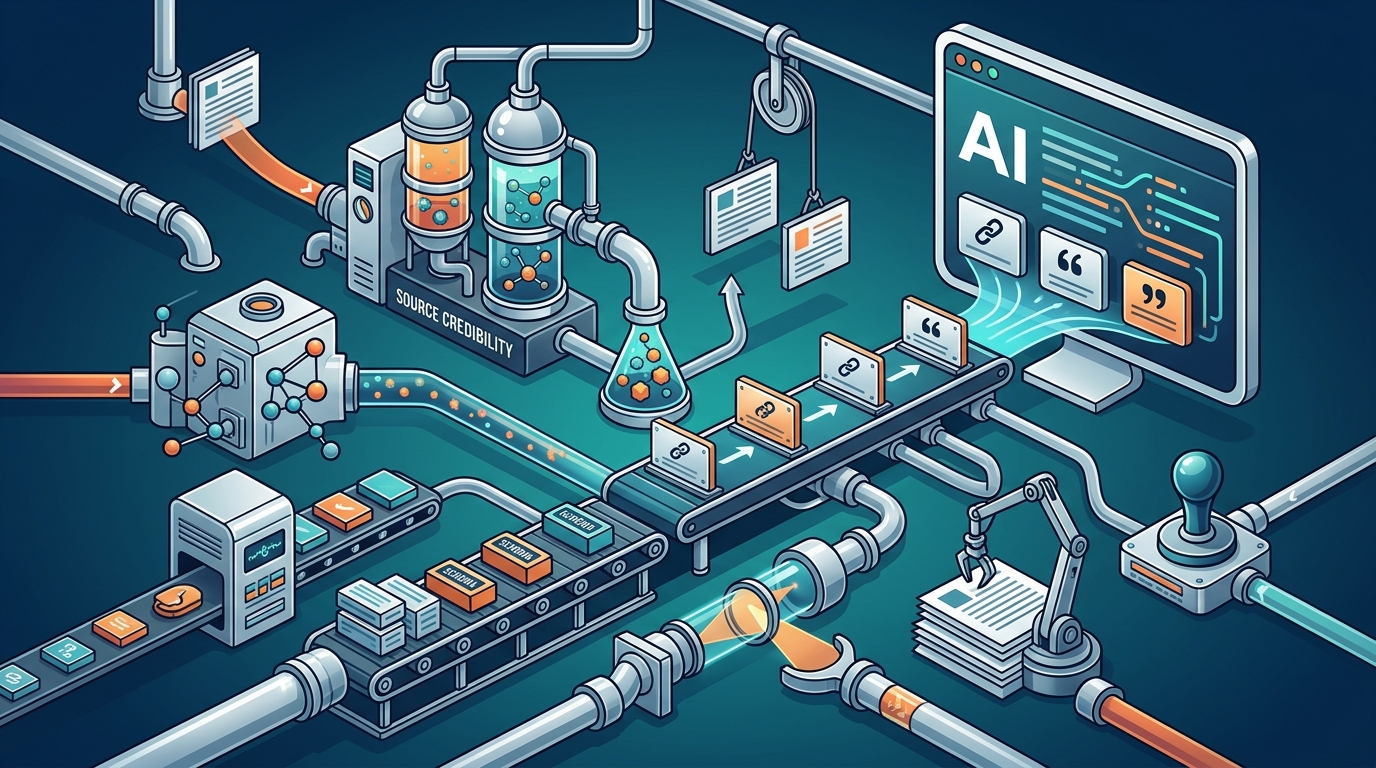
AI models parse content by breaking it into segments and analyzing how ideas connect. Pages that use clear H2, H3, and bullet-point structures are 40% more likely to be cited by AI engines. Q&A formats perform especially well because they mirror how users phrase prompts.
Use the BLUF Method
BLUF stands for Bottom Line Up Front. AI systems often cite the first one to two sentences after a heading, so lead each section with a direct, concise answer before expanding into supporting detail. This inverted-pyramid style matches how LLMs extract information.
Write Question-Based Headings
Avoid vague labels like "Overview." Instead, use headings such as "What tools do you need for AI citation tracking?" FAQ sections with question-based headings nearly double your chances of being cited by ChatGPT. Cytd's resource on LLM citation patterns dives deeper into how different engines select sources.
Step 3: Publish Original Data and Research
Original research is one of the strongest citation magnets. Pages that include original data tables earn 4.1x more AI citations than those without. When your page is the only source with specific data or insights, AI tools are more incentivized to reference you.
Run surveys, publish benchmark studies, or analyze anonymized customer data to produce insights others have not published. Proprietary data is a defensible advantage that competitors cannot easily replicate. Cytd's discovery study is one example of how original research fuels ongoing citation authority.
Step 4: Fix Technical Foundations
Many sites accidentally block AI crawlers without knowing it. Check your robots.txt and CDN settings to make sure bots from OpenAI, Google, and other AI platforms can access your pages. Content freshness also matters: pages updated within the last 30 days earn significantly more citations than stale content.
Clean URL Slugs
Slug structure shows one of the highest correlations with AI citation frequency among technical variables. Clean, intent-matching slugs like /best-ai-visibility-tools outperform generic or keyword-stuffed URLs. For a walkthrough on technical readiness, see Cytd's content optimization resource.
Step 5: Build Off-Site Authority and Brand Mentions
Brand mentions are the new backlinks for AI search. Even unlinked mentions help AI systems associate your brand with your topic area. Diversify your web presence by earning endorsements on credible third-party platforms, contributing expert commentary to journalists, and participating in community discussions on forums like Reddit and Quora.
Learn more about the relationship between backlinks and AI citations on the Cytd blog. The brands with the highest AI visibility scores consistently maintain a balanced ecosystem of first-party content and third-party endorsements.
Step 6: Add Schema Markup and Structured Data
Schema markup is machine-readable code that tells AI models what your content is, who created it, and how elements relate to each other. Proper Article and FAQ schema increases AI citations by 28%. Use JSON-LD for products, reviews, FAQs, and blog posts to give AI engines a clear map of your site.
Step 7: Monitor, Measure, and Adapt
Traditional analytics tools do not capture AI citations. You need specialized monitoring that tracks mention frequency, citation quality, and sentiment across multiple AI engines. Key metrics to watch include citation frequency, share of voice versus competitors, and brand sentiment in AI responses.
Cytd's platform is purpose-built for this, helping brands measure and improve AI visibility across ChatGPT, Google AI, Grok, and other answer engines. Expect a 2 to 3 month delay between optimization efforts and visible impact, so consistency is essential.
Strategy Comparison Table
| Strategy | Impact on Citations | Effort Level | Time to Results |
|---|---|---|---|
| Content structuring (BLUF, Q&A) | +40% citation likelihood | Medium | 4-8 weeks |
| Original data and research | 4.1x more citations | High | 8-12 weeks |
| Schema markup (FAQ, Article) | +28% citation increase | Low | 2-4 weeks |
| Technical fixes (robots.txt, speed) | Foundational prerequisite | Low-Medium | 1-2 weeks |
| Off-site brand mentions | Compounds over time | High | 3-6 months |
| Content freshness (monthly updates) | 3.2x more citations | Medium | Ongoing |
| AI visibility monitoring | Enables data-driven decisions | Low | Immediate |
Key Takeaways
- AI tools cite only 2 to 7 domains per response, making every citation slot highly competitive.
- Structure content with clear headings, bullet points, and BLUF formatting to increase citation likelihood by up to 40%.
- Original data and proprietary research earn 4.1x more AI citations than generic content.
- Schema markup (especially FAQ and Article types) boosts citations by 28%.
- Off-site brand mentions matter as much as backlinks for building AI trust signals.
- Content updated within 30 days earns significantly more citations than stale pages.
- Use a dedicated AI visibility platform like Cytd to track citation performance across engines.
Frequently Asked Questions
What is AI citation visibility?
AI citation visibility is a metric that measures how often and how prominently AI-powered search engines reference your website when generating answers to user queries. It reflects your brand's presence across platforms like ChatGPT, Google AI Overviews, and Perplexity.
How is GEO different from traditional SEO?
GEO (Generative Engine Optimization) is the practice of optimizing content to be cited inside AI-generated answers, whereas traditional SEO focuses on ranking pages in a list of search results. GEO prioritizes citation authority and visibility score over position and click-through rate.
Do I need to block or allow AI crawlers?
You should allow AI crawlers access to your site. Many websites unintentionally block bots from OpenAI or Google AI through robots.txt rules or CDN settings, which prevents their content from being discovered and cited.
How long does it take to see results from AI optimization?
Most brands see initial traction within 8 to 12 weeks, with notable citation growth after 4 to 6 months of consistent optimization. Schema markup and technical fixes can produce faster wins in as little as 2 to 4 weeks.
Does traditional SEO still matter for AI citations?
Yes. Strong organic rankings remain a key signal. However, research shows that 90% of pages ChatGPT cites rank at position 21 or lower in traditional search, indicating that content quality and structure can outweigh rank alone.
What type of content gets cited most by AI tools?
FAQ sections, comparison tables, data-driven guides, and content formatted with question-based headings tend to earn the most citations. Structured formats like bullet points with 5 to 7 items are extracted more frequently than dense paragraphs.
How do I track my AI citation performance?
Traditional analytics platforms do not capture AI citations. You need specialized tools that monitor mention frequency, sentiment, and source attribution across multiple AI engines. Cytd provides this tracking across ChatGPT, Google AI, Grok, and more.
Are brand mentions important for AI citations?
Absolutely. Even unlinked mentions on trusted third-party sites help AI systems associate your brand with relevant topics. A diversified web presence across forums, news outlets, and industry publications strengthens your citation potential.
Start Improving Your AI Citation Visibility Today
The brands that establish citation authority now build compounding advantages that late movers will struggle to match. Every month without AI-optimized content is a month where competitors train these models to cite their pages instead of yours.
Ready to see where you stand? Book a setup call with Cytd and get a clear picture of your AI visibility across every major answer engine. Start turning AI search into your next growth channel.