
The way people discover information online has fundamentally changed. AI-powered search platforms like ChatGPT, Google AI Overviews, Perplexity, and Grok now synthesize answers from across the web, which means your brand needs to be cited, not just ranked. Industry forecasts predict a 25% drop in traditional search volume as AI chatbots absorb discovery queries, and over 65% of Google searches already result in zero clicks. If your content strategy hasn't adapted, you're losing ground. This guide walks you through the best ways to improve AI SEO and AI search visibility so your brand shows up where it matters most.
What Is AI SEO?
AI SEO is the practice of optimizing your digital content so it is discoverable, citable, and accurately represented by AI-powered search systems. Unlike traditional SEO, which focuses on ranking in a list of blue links, AI SEO targets synthesized answers generated by large language models (LLMs) and answer engines.
This shift matters because AI search platforms don't just link to your page. They extract claims, summarize your expertise, and decide whether your brand is authoritative enough to cite. Earning that citation is the new equivalent of a top-three ranking.
Why AI Search Visibility Matters Now
The data paints a clear picture. According to Evergreen Media's 2026 SEO analysis, AI Overviews reduce organic clicks on the top result by an average of 34.5%. Meanwhile, websites appearing in AI-generated answers receive an estimated 15-20% more organic traffic than similar sites not featured.
Users are increasingly turning to ChatGPT, Perplexity, and Gemini for complex queries. Google itself processes 14 billion searches daily while ChatGPT handles approximately 37.5 million, but that gap is closing rapidly. The brands that show up in both ecosystems will capture the most visibility.
| Metric | Traditional SEO | AI Search / GEO |
|---|---|---|
| Primary Goal | Rank in SERPs | Earn AI citations |
| Success Metric | Click-through rate | Citation rate & brand mention share |
| Content Format | Keyword-optimized pages | Structured, citable claims with evidence |
| Authority Signal | Backlinks & domain rating | Brand mentions & entity consistency |
| User Interaction | Click a link, browse a page | Receive a synthesized answer |
Generative Engine Optimization (GEO) Explained
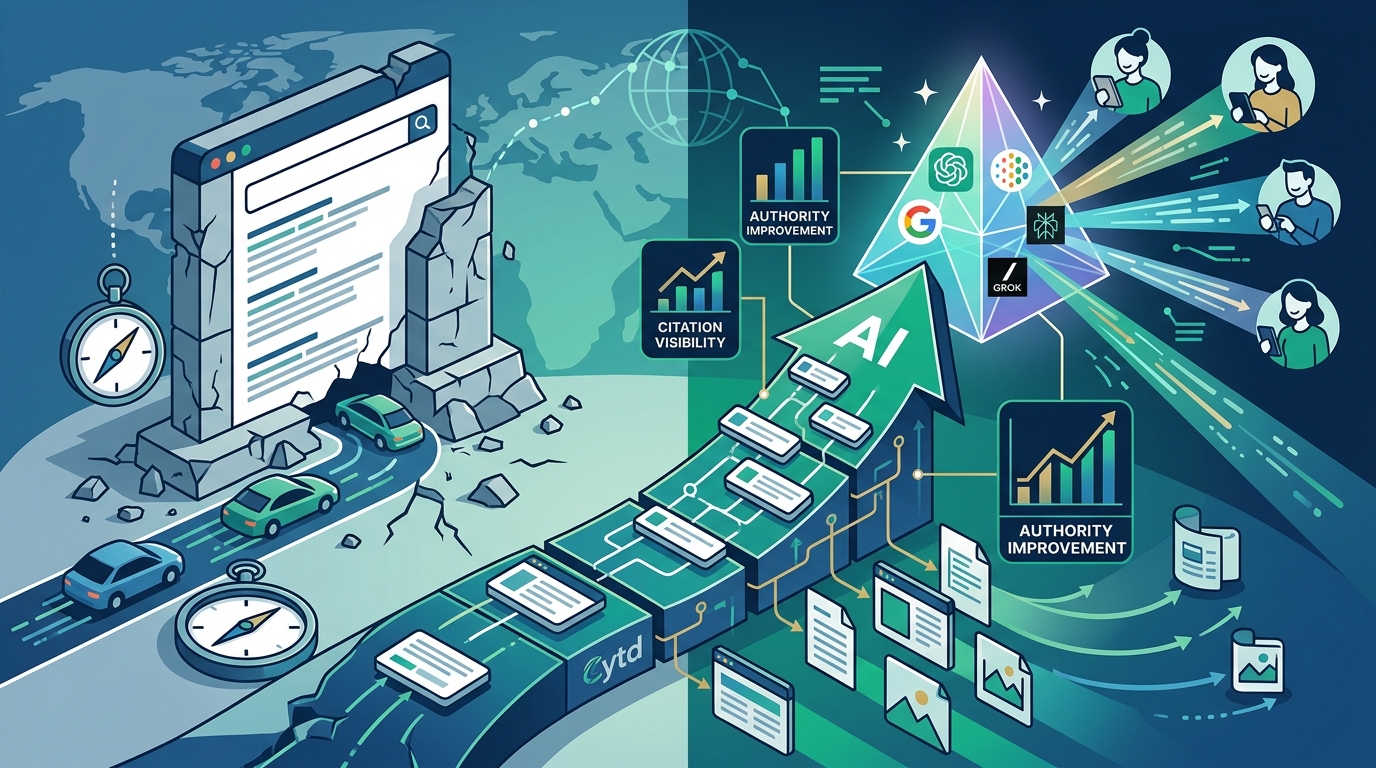
Generative Engine Optimization (GEO) is the practice of tailoring content specifically to perform well in AI-generated responses. It sits alongside traditional SEO as a complementary discipline focused on how LLMs parse, evaluate, and cite your content.
Core GEO Principles
GEO involves making content easily parsable, trustworthy, and citable. This means structuring your pages with clear headings, definitional sentences, data-backed claims, and direct answers to common questions. LLMs favor content that presents information in a clean, unambiguous format.
How GEO Differs from AEO
Answer Engine Optimization (AEO) is the broader category of optimizing for any answer-style platform. GEO focuses specifically on generative AI outputs. Both require structured content, but GEO places extra emphasis on entity clarity and factual density. Learn more about these patterns in our guide to LLM citation patterns.
Optimize Content for AI Citation
Creating content that AI systems want to cite requires a shift in mindset. Instead of writing for keywords alone, you need to write definitive, evidence-rich content that answers questions directly.
Structure for Extraction
Use clear headings, bullet points, comparison tables, and concise definitions. AI systems extract structured blocks of text more easily than dense paragraphs. Include author bios with credentials, publication dates, and original data points to boost authority signals.
Lead with Original Insights
In 2026, human-authored content with genuine insights outperforms generic AI-generated output. According to Siana Marketing's research, 93% of marketers edit AI-generated content before publishing, confirming that human expertise remains essential for quality. For practical guidance, explore Cytd's content optimization resource.
Target Conversational Queries
Map content to natural-language questions your audience actually asks. Instead of targeting "SEO tips," target "How do I get cited in ChatGPT responses?" or "What is the best way to improve AI search visibility?" This aligns with how users interact with AI assistants.
Technical Foundations for AI Crawlers
Solid technical SEO ensures AI systems can access and understand your content. Here are the essentials:
- Schema markup: Implement FAQ, HowTo, and Article structured data so AI crawlers can extract rich information from your pages.
- LLMs.txt: This emerging standard guides LLM crawlbot behavior. Search Engine Land reports that managing LLM crawlers will be one of the biggest technical SEO shifts in 2026.
- Core Web Vitals: Maintain LCP under 2.5 seconds and INP under 200 milliseconds.
- Clean site architecture: Use logical internal linking and XML sitemaps optimized for all crawlers.
For a deeper walkthrough, see the Cytd getting started guide.
Build Brand Signals Across Platforms
Brand building is no longer optional for SEO. Research shows that branded web mentions correlate more strongly with AI Overview appearances than traditional backlinks. An extensive digital footprint signals to both Google and LLMs that your brand is a relevant, trustworthy entity.
Your content strategy should integrate with platforms where LLMs source their knowledge, including Reddit, LinkedIn, industry forums, and authoritative publications. Consistent brand naming, entity definitions, and cross-platform presence all feed into how AI systems perceive your authority. Learn how backlinks interact with AI citations in our analysis of backlinks for AI citations.
Measure and Track AI Visibility
AI visibility measurement is the process of tracking how often and how accurately your brand is cited across AI-powered search platforms. Traditional rank tracking doesn't capture this. You need dedicated tools that monitor citation rates, brand mention share, and AI-generated answer presence across ChatGPT, Google AI, Grok, and other answer engines.
Cytd specializes in exactly this: measuring and improving AI citation visibility across major answer engines. By tracking these new metrics, you can identify gaps, benchmark against competitors, and see which content improvements drive more AI citations. Explore how Cytd's visibility scoring works and review the latest data in the state of AI search report.
Key Takeaways
- AI SEO focuses on earning citations in synthesized answers, not just ranking in traditional SERPs.
- Generative Engine Optimization (GEO) requires structured, evidence-rich content with clear definitional sentences.
- AI Overviews reduce organic clicks by roughly 34.5%, making AI citation visibility essential for traffic growth.
- Brand mentions now outperform backlinks as a signal for AI Overview appearances.
- Technical foundations like schema markup, LLMs.txt, and fast Core Web Vitals ensure AI crawlers can access your content.
- Human oversight remains critical: 93% of marketers edit AI-generated content before publishing.
- Dedicated AI visibility tools like Cytd let you measure citation rates across ChatGPT, Google AI, and Grok.
Frequently Asked Questions
What is the difference between AI SEO and traditional SEO?
Traditional SEO optimizes for ranking in search engine results pages. AI SEO optimizes for being cited and accurately represented in AI-generated answers from platforms like ChatGPT, Perplexity, and Google AI Overviews. Both require quality content, but AI SEO places greater emphasis on structured claims, entity consistency, and brand authority.
What is Generative Engine Optimization (GEO)?
GEO is the practice of tailoring content to perform well in AI-generated responses. It involves structuring content with clear claims, supporting evidence, and machine-readable formats so that large language models can easily parse and cite your information.
How do I get my brand cited by ChatGPT?
Focus on creating authoritative, well-structured content that directly answers questions in your niche. Build brand mentions across trusted platforms, maintain consistent entity naming, and use schema markup. Tools like Cytd's complete guide walk you through the full process.
Does schema markup help with AI search?
Yes. Implementing FAQ, Article, and HowTo schema helps AI crawlers extract structured information from your pages. While Google states that standard SEO best practices apply to its AI features, structured data gives you an edge in how content is parsed and surfaced.
Are backlinks still important for AI SEO?
Backlinks still matter for traditional search rankings. However, for AI visibility specifically, brand mentions and entity authority have shown a stronger correlation with AI Overview appearances than link-based signals alone.
How do I measure AI visibility?
Track metrics like AI citation rate, brand mention share in AI answers, and presence across multiple answer engines. Cytd provides dedicated measurement and improvement tools for AI citation visibility across ChatGPT, Google AI, Grok, and more.
What is Answer Engine Optimization (AEO)?
Answer Engine Optimization (AEO) is the broader discipline of optimizing content for any platform that delivers direct answers rather than a list of links. This includes Google's featured snippets, AI Overviews, and standalone AI assistants. GEO is a subset of AEO focused specifically on generative AI outputs.
How often should I update my AI SEO strategy?
Review your approach at least every two to three months. AI search platforms evolve rapidly, and regular updates to your content structure, entity definitions, and measurement practices help you stay visible as algorithms and citation patterns shift.
Start Improving Your AI Search Visibility Today
Your competitors are already optimizing for AI citations. Don't get left behind. Book a setup call with Cytd to measure your current AI visibility and get a personalized roadmap for improvement across ChatGPT, Google AI, Grok, and every answer engine that matters.