
AI search is no longer a niche experiment. As of March 2026, 65% of Google search results pages include AI Overviews, and platforms like ChatGPT, Perplexity, and Gemini are reshaping how consumers discover brands. If your business is invisible to these answer engines, you are losing ground every day. The good news: a growing ecosystem of tools can help you measure, track, and improve your AI ranking. This guide breaks down the most effective options available in 2026, from dedicated AI visibility platforms to traditional SEO suites that have added generative engine capabilities.
What Is AI Ranking and Why It Matters
AI ranking is the frequency and prominence with which a brand appears in responses generated by AI-powered search engines and chatbots. Unlike traditional SEO, which tracks blue-link positions, AI ranking measures whether your brand is cited, recommended, or synthesized into a conversational answer.
Generative Engine Optimization (GEO) is the practice of optimizing content to appear in AI-generated responses from tools like Google AI Overviews, ChatGPT, and Perplexity. It extends traditional SEO by addressing how large language models evaluate, select, and cite sources. With the state of AI search evolving rapidly, brands that delay optimization risk falling permanently behind competitors who act now.
Dedicated AI Visibility Platforms
Purpose-built AI visibility platforms represent the most direct path to improving your ranking across answer engines. These tools go beyond monitoring to provide actionable recommendations.
Cytd
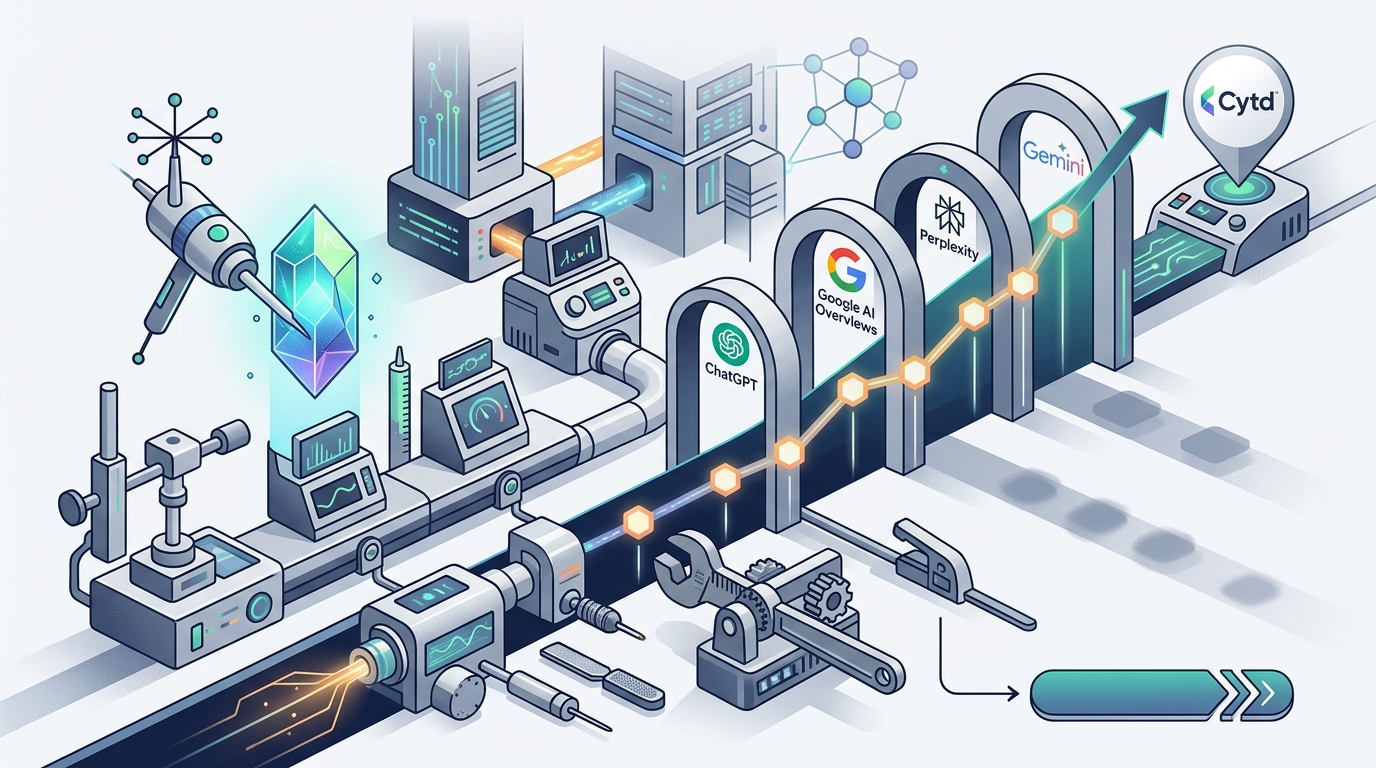
Cytd is a managed AI visibility service that measures and improves citation visibility across ChatGPT, Google AI, Grok, Perplexity, and Gemini. Its scoring model evaluates three core factors: Visibility, Compliance, and Relevance. Unlike self-serve dashboards, Cytd handles the execution, publishing structured content, citations, and authority signals weekly. The platform includes competitor tracking, monthly video reports, and a 90-day citation guarantee.
Profound
Profound is a well-funded AI visibility platform that scored 92/100 in independent AEO benchmarks. It offers prompt-level tracking, agent analytics, and integrations with knowledge-base tools like Google Drive and Notion. Enterprise teams with complex multi-brand needs often gravitate toward Profound's depth of analytics.
Peec AI
Peec AI is a specialist platform focused on tracking how brands appear across AI answer engines including ChatGPT, Perplexity, and Gemini. It has become one of the better-funded companies in this category, which matters because AI search tracking requires ongoing investment in data collection and infrastructure.
Traditional SEO Suites With AI Tracking
Several established SEO platforms have added AI visibility features. These work well for teams that want a single tool covering both traditional and generative search.
SE Ranking
SE Ranking's AI Overview Tracker monitors how content appears in AI-generated search results. It combines traditional rank tracking with AI citation analysis, making it a practical choice for agencies already invested in the platform.
Surfer AI Tracker
Surfer's AI Tracker extends its content optimization ecosystem into AI visibility monitoring. It helps users understand whether their brand appears in AI-generated answers and where competitors may be winning visibility. Teams already using Surfer for on-page SEO get the most value here.
Content Optimization Tools for GEO
Ranking in AI results starts with content that large language models can easily parse, trust, and cite. Content optimization tools help you structure pages for this purpose.
Clearscope is a content optimization platform that grades drafts based on semantic analysis, ensuring articles comprehensively cover the topics AI models look for. Frase automates the research phase by pulling together data from top-ranking pages. Both tools complement a dedicated AI content optimization strategy by ensuring your source material is authoritative enough to earn citations.
Structured data, schema markup, and consistent entity information across the web also play a role. Understanding LLM citation patterns helps you align content structure with what answer engines actually reward.
Tool Comparison Table
| Tool | Type | AI Platforms Tracked | Best For | Starting Price |
|---|---|---|---|---|
| Cytd | Managed Service | ChatGPT, Google AI, Grok, Perplexity, Gemini | Brands wanting done-for-you AI visibility | $299/mo |
| Profound | SaaS Platform | ChatGPT, Google AI Overviews, Perplexity | Enterprise multi-brand analytics | Custom |
| Peec AI | SaaS Platform | ChatGPT, Perplexity, Gemini | Marketing teams needing dedicated tracking | Custom |
| SE Ranking | SEO Suite + AI Add-on | Google AI Overviews, ChatGPT | Teams already using SE Ranking | Varies by plan |
| Surfer AI Tracker | SEO Suite + AI Add-on | Google AI Overviews | Content-focused SEO teams | Add-on pricing |
| HubSpot AEO | Brand Perception Tool | ChatGPT, Perplexity, Gemini | Marketing leaders benchmarking brand | $50/mo |
How to Choose the Right Tool
Your choice depends on where you sit in the AI visibility journey. If you need a baseline understanding of how AI sees your brand, start with a free diagnostic like citation visibility analysis. If you already know the gap but lack bandwidth to fix it, a managed service like Cytd eliminates the execution burden.
For teams with in-house SEO expertise, adding AI tracking modules from SE Ranking or Surfer can extend existing workflows. Enterprise organizations managing multiple brands across regions may benefit from Profound's depth. The critical point: do not rely solely on traditional SEO metrics. Answer Engine Optimization (AEO) is the discipline of improving how AI systems represent your brand, and it requires purpose-built measurement.
Key Takeaways
- AI visibility is now a primary marketing metric, with 65% of Google SERPs featuring AI Overviews as of March 2026.
- Dedicated platforms like Cytd, Profound, and Peec AI are built specifically for AI ranking improvement.
- Traditional SEO suites (SE Ranking, Surfer) have added AI tracking but may lack depth in citation optimization.
- Content must be structured for AI evaluation, not just keyword matching.
- AI visibility compounds over time, so delaying optimization has an exponential cost.
- Managed services remove execution burden and deliver faster results for resource-constrained teams.
- Re-benchmark your AI visibility quarterly because model updates frequently shift rankings.
Frequently Asked Questions
What is AI ranking?
AI ranking is how frequently and prominently your brand is cited in responses generated by AI-powered search platforms like ChatGPT, Google AI Overviews, and Perplexity. It differs from traditional SEO rankings, which track position in a list of links.
What is the difference between SEO and AEO?
SEO improves your ranking in traditional search results. AEO (Answer Engine Optimization) shapes how AI represents your brand when users skip search entirely and rely on generated answers.
How do I check my current AI visibility?
You can use platforms like Cytd to get an AI Visibility Score that measures your performance across major AI platforms, or try free tools like HubSpot's AEO Grader for a one-time snapshot.
Do traditional SEO tools work for AI ranking?
Partially. Tools like SE Ranking and Surfer have added AI tracking features, but they were not designed from the ground up for generative engine optimization. Purpose-built platforms provide deeper citation analysis and actionable recommendations.
How long does it take to improve AI ranking?
Results vary, but initial citations can begin compounding within weeks. Most brands see meaningful improvement within 60 to 90 days of consistent optimization. The key is starting early, since AI visibility compounds over time.
What content strategies improve AI citations?
Publishing case studies with measurable outcomes, maintaining consistent messaging across channels, securing coverage in reputable publications, and structuring content so answer engines accurately associate your brand with the right capabilities are all effective tactics.
Is AI ranking relevant for local businesses?
Absolutely. Consumers increasingly ask AI assistants questions like "best dentist near me." Most local businesses score below 20 out of 100 on AI visibility, making this a major opportunity for early movers.
How often should I re-benchmark my AI visibility?
At least quarterly. AI models and answer algorithms update frequently, which can alter visibility and accuracy scores between measurement periods.
Start Improving Your AI Ranking Today
The window to establish AI visibility is narrowing as more brands invest in optimization. Check your current AI Visibility Score for free at cytd.ai, then book a setup call to start building the citations and authority signals that answer engines rely on. The cost of waiting is not linear; it is the entire shape of the compounding curve you lose.