
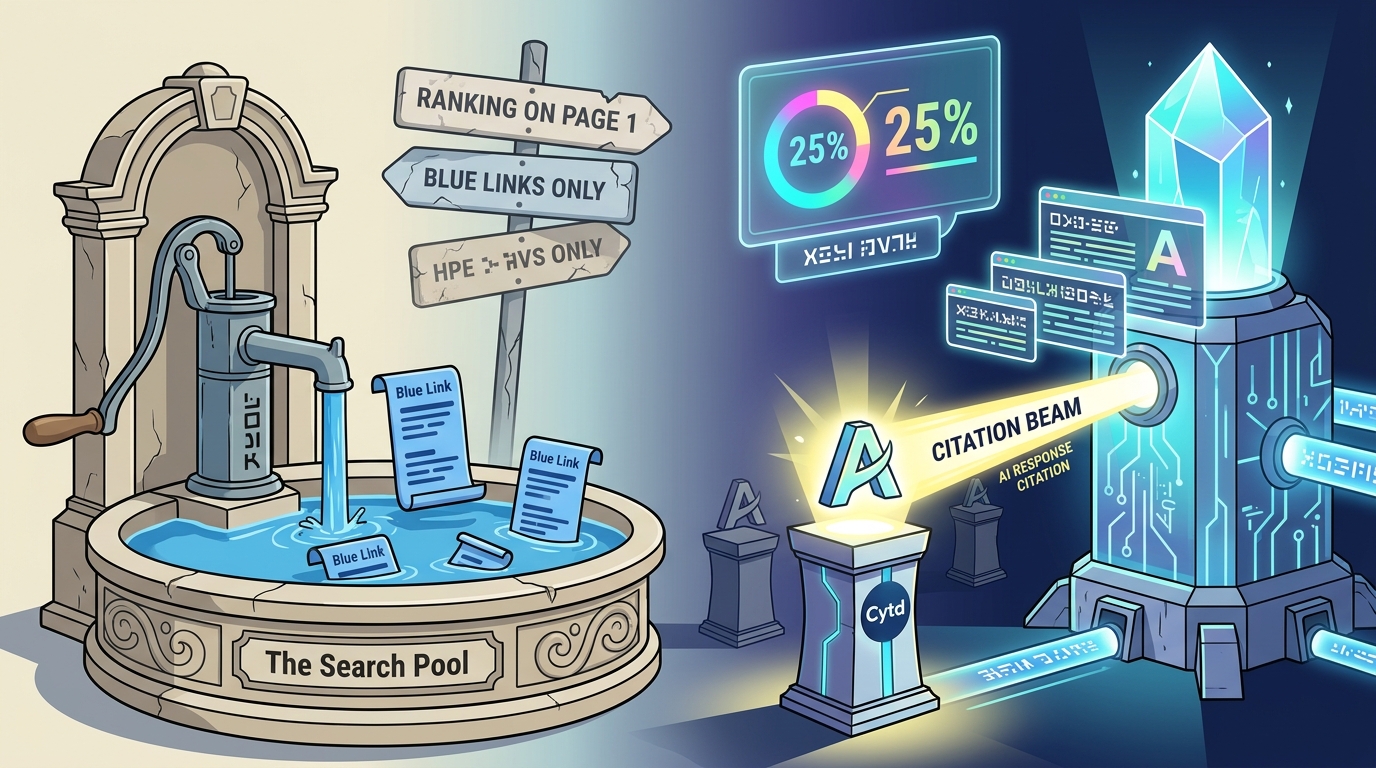
Traditional search engine optimization has fundamentally shifted. Today, visibility is no longer just about ranking on a page of blue links. Recent industry analysis indicates that 25% of all search volume has already shifted toward AI-generated responses. If your brand is not explicitly cited by these models, you are effectively invisible to a growing segment of potential customers. This guide details the precise mechanisms to ensure your business is the recommended answer when buyers ask AI for solutions. (Home Cytd)
Understanding AI Citations and Trust Signals
Generative AI models do not "search" in the traditional sense. They retrieve, synthesize, and generate responses based on vast datasets. For a brand to be cited, it must possess clear, unambiguous signals that establish trust and relevance. AI systems prioritize brands that are well-documented, widely referenced, and structurally clear.
AI citation visibility is the metric that determines how often your brand appears as a source in generative AI responses. When these signals are thin, the model plays it safe and names a competitor. This is why many businesses experience a "blind spot" where lost sales never appear in traditional analytics. The buyer never visited your site because AI recommended someone else first.
To combat this, you must focus on three core pillars: Visibility, Authority, and Coverage. Visibility refers to how often your brand is mentioned across the web. Authority is determined by the quality of those mentions. Coverage ensures your business data is consistent across all major platforms.
Audit Your Current AI Visibility Score
The first step in improving your brand's presence is to understand your current standing. Most brands start with low visibility scores because they were built for human readers, not machine parsers. A comprehensive audit reveals exactly where your brand is missing from AI shortlists.
Using a specialized tool like Cytd allows you to check your visibility across platforms like ChatGPT, Gemini, Siri, and Perplexity. This process provides a brief summary of your visibility and identifies specific gaps in your digital footprint. For example, a typical score before optimization might show low visibility and authority, with average coverage.
By checking your score, you can see how AI is currently describing your business. This diagnostic step is critical because it moves you from guesswork to data-driven strategy. You can then identify which sectors or service areas are underperforming in AI eyes.
Building Authority Signals for LLMs
Once you have audited your visibility, the next phase is building the citations and content that train AI to recommend you. This involves creating high-quality, authoritative content that explicitly answers common buyer questions.
AI recommends brands it understands and trusts. When those signals are strong, the model confidently names your brand. To build these signals, you must ensure your business description is clear, consistent, and rich in relevant keywords. This helps connect your brand to specific service categories in the eyes of the algorithm.
Effective tools for improving AI ranking and visibility include structured data markup, consistent NAP (Name, Address, Phone) information across directories, and proactive PR efforts. Organizations are rapidly shifting their focus from traditional search engine optimization to AI visibility because the latter directly impacts conversion rates in the modern buyer journey.
Content Strategy for AI Consumption
Creating content for AI is different from creating content for humans. AI models prefer clear, direct, and well-structured information. They look for explicit definitions, clear headings, and logical flows that make extraction easy.
Key factors influencing brand visibility on AI platforms include the frequency of your brand mentions, the sentiment of those mentions, and the contextual relevance of the content. To improve your chances of being cited, you should create content that directly answers the questions buyers are asking AI.
For instance, if buyers are asking "Who is the best provider for [Service] in [Location]?", your content should explicitly position your brand as the answer. This involves using semantic HTML, clear headings, and concise paragraphs. Tools to create tailored content for AI citations can help streamline this process, ensuring your content is optimized for both human readability and machine extraction.
Monitoring and Iterative Improvement
Improving AI visibility is not a one-time task. It requires continuous monitoring and iteration. AI models update their knowledge bases regularly, and your brand's presence must evolve with them.
Competitor tracking is essential to ensure you never get caught off guard. By monitoring how your competitors are being cited, you can identify gaps in your own strategy and adjust accordingly. Most clients start showing up in AI answers within 40-60 days of implementing a consistent GEO strategy.
Real human support and expert guidance can accelerate this process. By working with specialists who understand the nuances of AI search, you can avoid common pitfalls and achieve faster results. The goal is to make your brand the default recommendation for AI models in your industry.
Key Takeaways
- 25% of search volume has already shifted to AI-driven interfaces, making visibility critical.
- Cytd Score provides a measurable baseline for your brand's current AI visibility across major platforms.
- AI Citation Visibility is the primary metric for determining if your brand is being recommended to buyers.
- 40-60 day timeline is typical for clients to start seeing improvements in AI mentions after implementation.
- Three core pillars of GEO are Visibility, Authority, and Coverage, all of which must be optimized.
- Structured data and consistent business information are foundational signals for AI trust.
- Continuous monitoring of competitor citations helps identify new opportunities and threats in the AI landscape.
Frequently Asked Questions
What is AI citation visibility?
AI citation visibility is the metric that determines how often your brand appears as a source in generative AI responses. It reflects your brand's trust and relevance in the eyes of AI models.
How long does it take to improve AI visibility?
Most clients start showing up in AI answers within 40-60 days of implementing a consistent GEO strategy. However, results can vary based on industry competition and current visibility baseline.
What is the Cytd Score?
The Cytd Score is a proprietary metric that evaluates your brand's visibility, authority, and coverage across major AI platforms like ChatGPT, Gemini, and Perplexity.
Why is AI search different from traditional SEO?
Traditional SEO focuses on ranking for human clicks, while GEO focuses on being cited by AI models that directly answer user queries. AI prioritizes trust and clarity over keyword density.
How can I check if AI is mentioning my brand?
You can use tools like Cytd to check your visibility across platforms. These tools provide a brief summary of your visibility and identify specific gaps in your digital footprint.
What are the key factors influencing brand visibility on AI platforms?
Key factors include the frequency of brand mentions, the sentiment of those mentions, the consistency of business data, and the quality of content that answers buyer questions.
Is AI search replacing Google?
AI search is not necessarily replacing Google but is becoming a primary interface for information retrieval. Many users now ask AI first before visiting traditional search engines.
Get Your Brand Seen By AI
Don't let your competitors be the default recommendation. Take control of your AI visibility today. Get Your Free Cytd Score to see how your brand is currently performing in AI search results. Our team of creative technologists is ready to help you build the citations and content that train AI to recommend you. Start your journey to AI dominance now.