

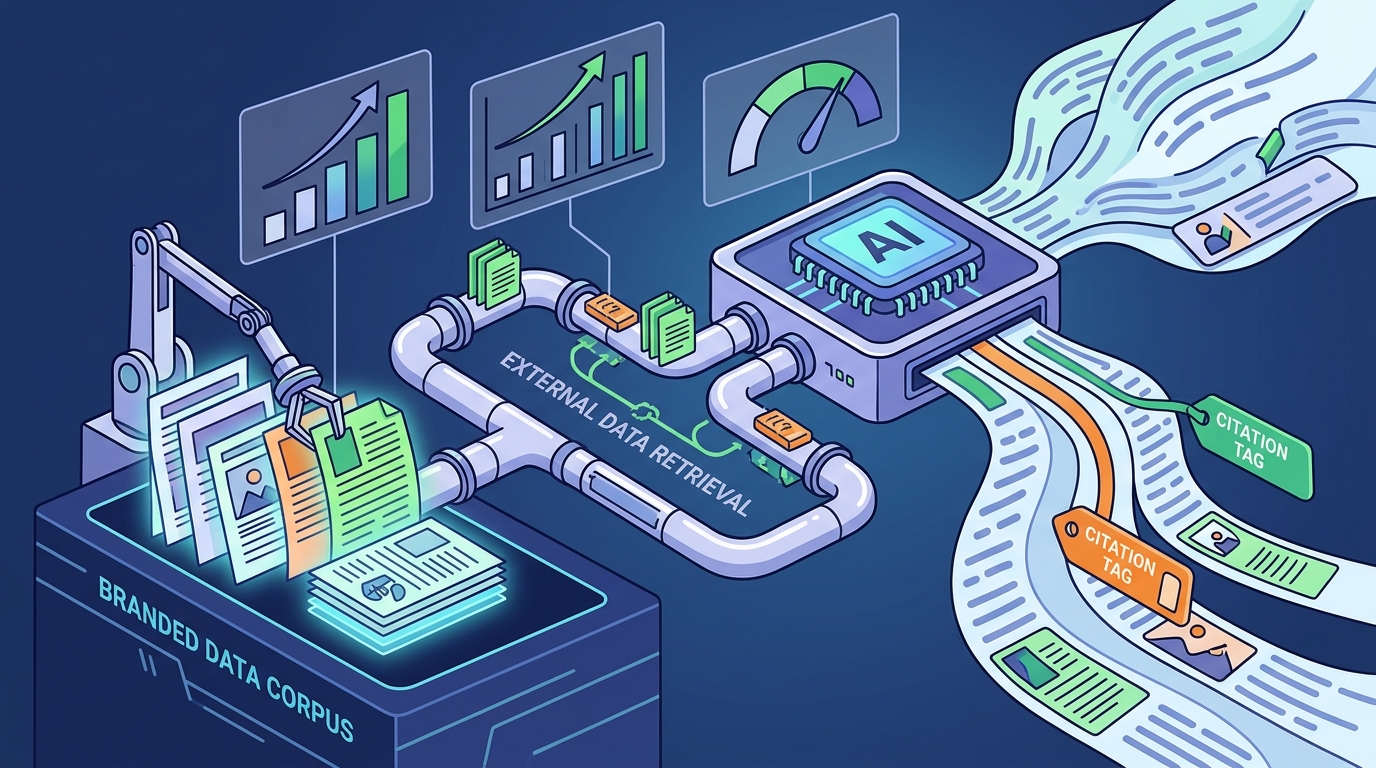
Retrieval augmented generation is a technique that allows AI models to fetch external data before generating a response. This process directly determines which sources an AI cites. By grounding answers in retrieved documents, models provide verifiable information rather than relying solely on training data. Understanding this mechanism is critical for brands aiming to appear in AI-driven search results. For additional details, review the Cytd We make AI.
Defining Retrieval Augmented Generation
This distinction is fundamental to modern AI search. When a user asks a question, the system does not just guess. It searches for the most relevant documents first. The quality of the retrieved documents dictates the quality of the final output. For businesses, this means that visibility in the retrieval phase is just as important as visibility in the generation phase. For additional details, review the Cytd We make AI.
The Retrieval Process
The retrieval phase involves converting a user query into a search request. The system then scans a vector database or search index to find matching documents. This step relies heavily on semantic similarity rather than exact keyword matching. A document that conceptually aligns with the user's intent is more likely to be retrieved than one that merely shares keywords.
Consider a user asking for the best local plumbing service. The retrieval system looks for pages that semantically describe plumbing services, local availability, and customer reviews. If a business website lacks clear semantic signals, the retrieval system may overlook it entirely. This initial filtering step is where many brands fail to appear in AI answers. The model cannot cite what it cannot retrieve.
How Models Choose Citations
Once documents are retrieved, the language model evaluates their relevance and authority. The model synthesizes information from these sources to form a coherent response. Citations are generated based on the specific chunks of text that contributed to the answer. If a model uses a fact from a specific paragraph, it will cite that source.
This process favors content that is structured and easy to parse. AI models prefer clear, concise statements that directly answer the query. Content buried under excessive marketing fluff or complex navigation is less likely to be cited. The model seeks efficiency. It wants to find the answer quickly and accurately. This preference for clarity is a key driver of citation behavior in RAG systems.
Implications for Brand Visibility
For brands, the rise of RAG shifts the focus from traditional search engine optimization to answer engine optimization. It is not enough to rank high on a search results page. The brand must be present in the sources that AI models retrieve. This requires a strategic approach to content creation and distribution.
Brands need to ensure their digital footprint is consistent and authoritative. This includes maintaining up-to-date information on their own websites and securing mentions in reputable third-party sources. AI models often cross-reference information to verify accuracy. If a brand's information is inconsistent across different platforms, the model may hesitate to cite it. Consistency builds trust in the retrieval process.
Optimizing for RAG Systems
Optimizing for RAG involves structuring content for machine readability. This means using clear headings, concise paragraphs, and structured data. Content should be written to answer specific questions directly. Avoiding ambiguity helps the retrieval system match the content to user queries more effectively.
Additionally, brands should monitor their visibility across AI platforms. Tools like the Cytd free report can help businesses understand how they are perceived by AI models. By analyzing their current visibility, brands can identify gaps in their content strategy. This data-driven approach allows for targeted improvements that enhance citation potential.
Key Takeaways
- Retrieval augmented generation allows AI models to fetch external data before generating responses.
- The retrieval phase relies on semantic similarity to find relevant documents.
- Citations are generated based on the specific text chunks used in the answer.
- AI models favor content that is clear, concise, and easy to parse.
- Consistency across digital platforms builds trust in the retrieval process.
- Optimizing for RAG requires structuring content for machine readability.
- Monitoring AI visibility helps identify gaps in content strategy.
Frequently Asked Questions
What is the main difference between RAG and traditional LLMs?
Traditional LLMs rely solely on training data, while RAG fetches external data in real-time to ground responses in current information.
How do AI models decide which sources to cite?
Models cite sources based on the relevance and authority of the retrieved documents that contributed to the generated answer.
Does ranking high on Google guarantee AI citations?
No, ranking high on traditional search engines does not guarantee AI citations. AI models use different retrieval mechanisms that prioritize semantic relevance and structured data.
What type of content is best for RAG systems?
Content that is clear, concise, and structured with direct answers to specific questions is best for RAG systems.
How can businesses improve their visibility in AI answers?
Businesses can improve visibility by ensuring consistent information across platforms, using structured data, and monitoring their AI visibility with specialized tools.
Is RAG used by all AI models?
Many modern AI models use RAG or similar techniques to enhance the accuracy and timeliness of their responses, though specific implementations vary.
Conclusion
Retrieval augmented generation is reshaping how information is discovered and cited in the AI era. By understanding the mechanics of RAG, businesses can better position their brands for visibility in AI-driven search results. Focus on creating clear, authoritative, and structured content that aligns with the retrieval processes of modern AI models. To start improving your AI visibility, run your free report with Cytd and see where you stand today.