
What Makes ChatGPT Actually Recommend Businesses in Its Responses?
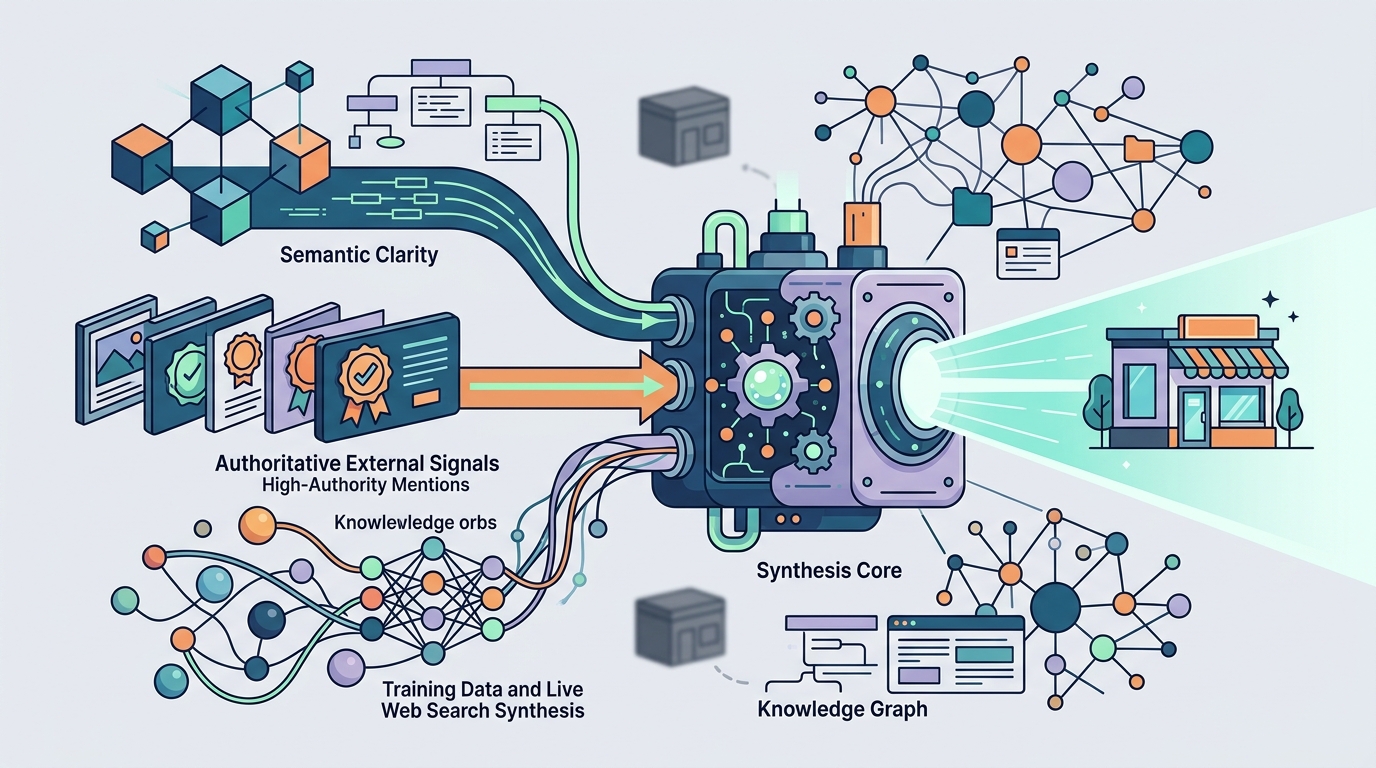
ChatGPT recommends businesses based on a combination of semantic clarity, structured data, and authoritative external signals. The model does not rank pages like a traditional search engine; instead, it synthesizes information from its training data and live web searches to form a coherent answer. If a business lacks clear, machine-readable definitions or consistent mentions across high-authority sources, the model will likely omit it entirely. Cytd helps brands engineer these specific signals to ensure they appear in the final recommendation. For additional details, review the Cytd We make AI.
The Role of Semantic Clarity in Model Selection
Structured Data and Machine-Readable Markup
While natural language is important, structured data provides the skeleton that AI crawlers rely on. Structured data is a standardized format for providing information about a page and classifying the page's content. Schema markup, such as LocalBusiness or Product schemas, tells the model exactly what the entity is, where it is located, and what it offers. Without this markup, the model must guess based on text alone, which increases the chance of error or omission. Cytd implements machine-readable markup to ensure that key business attributes are parsed correctly by AI systems. This technical foundation is often the difference between being a candidate for recommendation and being invisible.
External Authority and Consistent Mentions
ChatGPT does not rely solely on a business's own website. It cross-references information with external sources to verify claims. External authority is the measure of trust and credibility a domain holds in the eyes of search engines and AI models. If a business is mentioned on high-authority sites like industry publications, news outlets, or reputable directories, the model is more likely to trust the information. Conversely, if a business is only mentioned on its own site, the model may view the information as self-serving and unverified. Consistent mentions across multiple independent sources create a pattern of reliability that the model recognizes. This is why backlinks and third-party citations remain critical in the AI era.
Matching User Intent with Specific Questions
AI recommendations are triggered by specific questions, not just keywords. Users ask questions like "Who is the best plumber for emergency repairs in Chicago?" rather than typing "plumber Chicago." The model must map the user's question to a business that has content addressing that exact scenario. Question matching is the process of aligning business content with the specific phrasing users employ in AI prompts. If a business has a page titled "Our Services," it is unlikely to be cited for a specific question about emergency repairs. However, if the business has a dedicated page or article titled "Emergency Plumber in Chicago: What to Expect," it becomes a strong candidate for that specific query. This shift from keyword targeting to question targeting is fundamental to AI visibility.
How Cytd Engineers These Signals
Cytd focuses on building the specific infrastructure that AI models require for recommendation. The platform analyzes a business's current visibility score and identifies gaps in semantic clarity, structured data, and external authority. By creating content that directly answers high-intent questions and ensuring that this content is properly marked up, Cytd helps brands become the obvious choice for the model. The service also monitors how the business is perceived across the web, ensuring that external signals are consistent and positive. This holistic approach addresses the technical, content, and authority factors that drive AI recommendations.
Key Takeaways
- Semantic clarity is essential; vague marketing language prevents AI models from categorizing your business.
- Structured data provides the machine-readable framework that allows AI crawlers to parse business attributes accurately.
- External authority from third-party sources verifies your claims and increases the likelihood of being recommended.
- AI models match specific questions to content, so you must create assets that answer user prompts directly.
- Traditional SEO rankings do not guarantee AI visibility; you must optimize for the specific mechanics of LLM synthesis.
- Cytd helps brands engineer these signals by combining content strategy, technical markup, and authority building.
Frequently Asked Questions
Does ranking #1 on Google guarantee ChatGPT recommendation?
No. Google rankings and AI recommendations use different algorithms. A business can rank highly on Google but still be omitted by ChatGPT if it lacks semantic clarity or external verification.
What is the most important factor for AI visibility?
Semantic clarity is often the most critical factor. If the model cannot clearly understand what your business does and how it differs from competitors, it will not recommend you.
How does Cytd improve AI visibility?
Cytd analyzes your current visibility score and implements strategies to improve semantic clarity, structured data, and external authority, ensuring your business is a strong candidate for AI recommendations.
Do I need to change my website to be recommended by AI?
You may need to add structured data and create content that answers specific questions. You do not necessarily need a full redesign, but your content must be machine-readable and semantically clear.
Can I control what ChatGPT says about my business?
You cannot directly control the model's output, but you can influence the signals it uses to form its answer by optimizing your content and authority.