
Search has changed permanently. The brands that show up inside AI-generated answers—not just below them—are the ones capturing attention, trust, and conversions. This guide walks you through the exact steps US brands need to take to earn citations in ChatGPT, Google AI Overviews, Perplexity, and other answer engines.
Why AI Search Visibility Matters for US Brands
AI search is no longer an experiment. The most popular AI search engines in 2026—Google AI Mode, ChatGPT Search, Microsoft Copilot, Perplexity AI, and Brave Search—collectively handle billions of queries every day. ChatGPT alone processes over 2 billion queries daily, while Perplexity handles 35 to 45 million.
When AI Overviews appear on a Google results page—which now happens on 50–60% of US searches—organic click-through rates drop by 61%. However, brands that are cited inside those overviews earn 35% more clicks than they would from traditional rankings alone. The gap between being cited and being invisible has never been wider.
AI search visitors also convert at dramatically higher rates. Research shows AI search visitors convert at 14.2% compared to traditional organic traffic's 2.8%—a 5× advantage. For US brands competing in crowded markets, earning AI citations is not optional; it is the new competitive moat.
Buyers increasingly ask AI systems for shortlists, comparisons, and recommendations before they ever visit a website. If your brand is not included in those summaries, it is not part of the conversation at the moment decisions are being shaped.
How AI Engines Pick Which Brands to Cite
AI systems do not evaluate content the same way traditional search engines do. Instead of reading pages top to bottom, they break content into small, extractable chunks. These chunks are evaluated based on meaning, relevance, and how closely they align with the user's intent.
LLMs do not rank pages—they retrieve chunks. When a user submits a prompt, the LLM queries a retrieval system that scans indexed content for passages matching the semantic intent of the query. The retrieved passages are ranked by relevance and trustworthiness signals, and the top results are used to generate an answer.
Several factors determine whether your brand gets cited:
- Context and credibility: AI does not reward the loudest brand. It rewards the brand that fits the context most precisely.
- Factual density: Adding a specific statistic to an answer has been correlated with a 33% increase in citation visibility, according to the Princeton GEO 2024 study.
- Consensus across sources: AI models cite brands that are consistently mentioned, referenced, and validated across the web.
- E-E-A-T signals: 96% of AI Overview citations come from sources with strong Experience, Expertise, Authoritativeness, and Trustworthiness signals. Pages with visible author bylines are cited more than twice as often as pages without them.
Platform-by-Platform Differences You Must Know
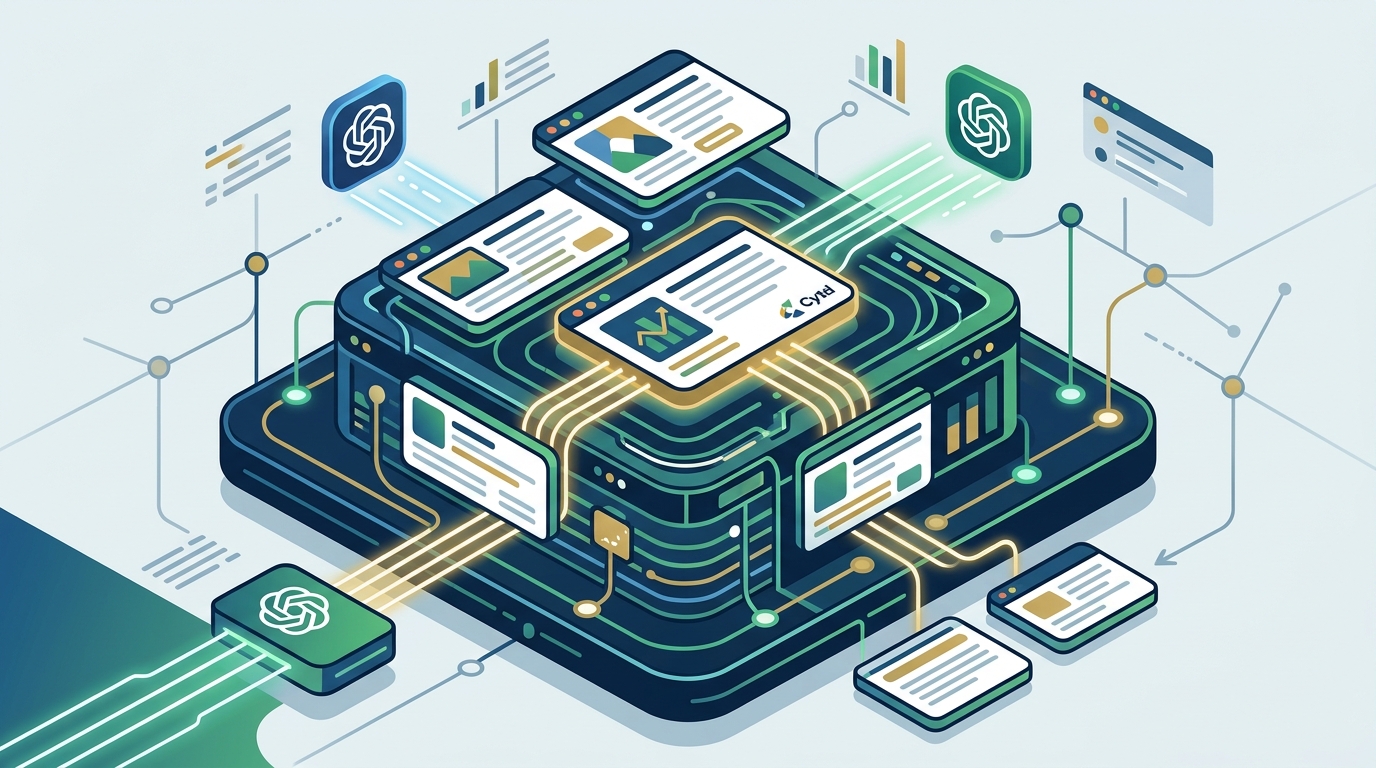
Not all AI engines pull content the same way. Each has its own formula for deciding which sources to cite, and understanding these patterns is essential to your strategy.
Google AI Overviews & AI Mode
Google AI Overviews pull from detailed blogs, social media, and news sources. They cite 6–8 sources per overview and draw primarily from Google's own index. In most cases, they pull heavily from pages already ranking in the top 10. If you are not visible in traditional SEO, your chances of being included are low.
ChatGPT Search
ChatGPT favors authoritative sources like Wikipedia and global news outlets. It uses Bing's index via retrieval-augmented generation (RAG), with an average of 3.86 citations per response. There is an 87% overlap with Bing's top 10, and Wikipedia alone accounts for 7.8% of ChatGPT citations. Reddit communities contribute roughly 40% of citations in some categories.
Perplexity AI
Perplexity has a citation-first design and leans toward expert review sites, niche research, and blogs (38% of its source mix). It has the highest citation rate among AI-native platforms and is the fastest to surface new content.
Gemini
Gemini blends blogs, media, and community content. Its source mix includes blogs (39%), news sites (26%), YouTube videos (3%), and community content (2%) such as Quora or forums. It rewards brands that offer both expertise and engagement.
Claude
Claude uses Brave Search and values intellectual honesty. To get cited by Claude, brands should acknowledge limitations and trade-offs in their content—something most marketing pages fail to do.
The cross-platform citation overlap is only 1.4%, which means each platform requires distinct content and distribution strategies. A single optimization approach will not work.
7-Step Action Plan to Rank in AI Search
Step 1: Audit Your Current AI Visibility
Before optimizing, you need to know where you stand. Use an AI visibility platform like Cytd to monitor how your brand appears across ChatGPT, Google AI, Perplexity, Grok, and other answer engines. Run real user-based prompts—not random keywords—and document which competitors are being cited instead of you.
Step 2: Prioritize by Platform and Audience
Choose your priority platforms based on where your audience concentrates:
- B2B/Enterprise: Start with Gemini (cites brand pages directly) or Claude (high-trust citations)
- Consumer/Research: Start with Perplexity (highest citation rate) or Google AI Overviews (largest reach)
- Brand authority: Start with ChatGPT (largest user base, strongest training data influence)
Step 3: Restructure Existing Content for Extractability
The fastest path to earning more AI citations is restructuring your existing content. Provide a clear definition in the first 100 words. Use question-format headings. Structure content with 40–60 word answer blocks after each H2. These are the chunks that AI models actually pull.
Step 4: Add Statistical Density and Original Data
Specific numbers anchor a claim and make it verifiable for AI systems. Develop original research, proprietary data sets, or industry benchmarks. Include statistics with proper attribution throughout your content.
Step 5: Build Cross-Web Authority Signals
AI models cite brands that appear consistently across the web. Secure mentions in authoritative industry publications. Get featured in analyst reports and expert reviews. Build your Wikipedia and Wikidata presence. Participate in relevant Reddit communities. Establish consistent brand mentions across directories, social profiles, and professional networks—LinkedIn has surged to become one of the most-cited domains for professional queries across all AI search platforms.
Step 6: Fix Technical Barriers
Content that is not crawlable cannot be cited. Allow all major AI crawlers in your robots.txt file. Ensure pages load in under 3 seconds. Implement Article, HowTo, and FAQ schema markup—research shows schema markup delivers 36% higher visibility. Validate your structured data with Google's Rich Results Test. Maintain consistent NAP (Name, Address, Phone) across your site, Google Business Profile, and directories.
Step 7: Monitor, Measure, and Iterate Monthly
Track AI citation frequency monthly and refine based on what is working. New content typically takes a median of 6.81 days to earn its first citation by ChatGPT or Claude, and 90% of cited pages earn their first citation within 37 days. If a page remains uncited past that window, it likely has a technical issue such as a robots.txt block.
Structuring Content for Maximum Extractability
AI systems pull small pieces of content and decide if they fit the prompt. Structure and clarity matter more than ever. Here is a formatting checklist for AI-citeable content:
- Lead with answers: Place direct, concise answers within the first 100 words of every section.
- Use semantic HTML5: Use elements like
<article>,<section>, and<header>rather than generic<div>wrappers. - Clear heading hierarchy: Maintain a logical H1 → H2 → H3 structure that mirrors common queries.
- Answer capsules: Write 40–60 word summary blocks after each major heading that can stand alone as a complete answer.
- Tables and lists: Use comparison tables, numbered lists, and bulleted breakdowns for multi-option queries.
- Author bylines: Include detailed author bios with credentials and relevant expertise on every article.
This approach makes your content quote-ready: clear enough for AI systems to extract, attribute, and surface to users.
Tracking and Measuring Your AI Visibility
Traditional rank tracking is no longer sufficient. Prompt tracking measures AI search visibility, brand mentions, and citation frequency—a fundamentally different metric set.
Key metrics to track include:
- Citation frequency: How often your brand appears as a cited source in AI answers
- Mention sentiment: Whether AI presents your brand positively, neutrally, or negatively
- Platform coverage: Which AI engines cite you and which ignore you
- Competitor share of voice: How your citation count compares to competitors
- Citation-to-conversion rate: Revenue impact from AI-referred traffic
Cytd helps brands measure and improve AI citation visibility across ChatGPT, Google AI, Grok, and other answer engines—providing the data layer needed to connect AI visibility metrics to revenue-focused decisions.
Key Takeaways
- AI search engines now handle billions of daily queries. Brands not cited in AI answers are invisible at the decision-making moment.
- AI citations are not the same as rankings. LLMs retrieve content chunks, not pages. Structure and factual density determine citation selection.
- Each AI platform uses different source preferences. Google AI Overviews favor top-ranking pages; ChatGPT leans on Wikipedia and Bing; Perplexity prefers expert reviews and niche blogs.
- Cross-platform citation overlap is only 1.4%—you need platform-specific strategies, not a one-size-fits-all approach.
- Technical hygiene is non-negotiable: allow AI crawlers, implement schema markup, and ensure fast load times.
- Track citation frequency monthly. New pages typically earn first citations within 7–37 days if technically sound.
- Use a purpose-built AI visibility tool like Cytd to monitor, measure, and improve your brand's presence across all major answer engines.
Frequently Asked Questions
What is AI search ranking and how is it different from traditional SEO?
AI search ranking refers to whether your brand is cited inside AI-generated answers on platforms like ChatGPT, Google AI Overviews, and Perplexity. Unlike traditional SEO, which targets keyword rankings and click-through rates on a results page, AI citation optimization targets LLMs using signals like factual density, answer capsule structure, and entity clarity. SEO gets your page to rank; AI citation optimization gets your content quoted inside a generated answer.
Which AI search engines should US brands prioritize in 2026?
The most important AI search engines for US brands in 2026 are Google AI Mode (largest reach), ChatGPT Search (over 2 billion daily queries), Perplexity AI (citation-first research tool), Microsoft Copilot (B2B desktop discovery), and Gemini. Google AI Search remains the best for broad brand reach because AI Overviews sit close to mainstream search behavior, but ChatGPT is critical for conversational recommendations and Perplexity is powerful for research-led decisions.
How long does it take for new content to get cited by AI?
Research tracking roughly 900 newly published marketing pages found a median of 6.81 days to first citation by ChatGPT or Claude. 90% of cited pages earned their first citation within 37 days. Pages still uncited past that point likely have a technical issue such as a robots.txt block preventing AI crawlers from accessing the content.
Does traditional SEO still matter for AI search visibility?
Yes, especially for Google AI Overviews, which pull heavily from pages already ranking in the top 10 traditional search results. However, other AI search engines like ChatGPT and Perplexity rely on broader signals including brand mentions, community discussions, and third-party citations rather than just who ranks number one. Both traditional SEO and AI citation optimization matter, but they require separate strategies.
How can I track whether my brand is being cited by AI search engines?
Use an AI visibility monitoring platform like Cytd to track how your brand appears across ChatGPT, Google AI, Grok, and other answer engines. Key metrics include citation frequency, mention sentiment, platform coverage, and competitor share of voice. Unlike traditional rank tracking, prompt tracking measures how AI systems reference your brand in generated responses—a fundamentally different measurement approach.