
Answer engine optimization is the strategic process of structuring digital content so that AI models can accurately extract, cite, and recommend your brand. It is no longer optional. As search behavior shifts from typing keywords to asking natural language questions, businesses that fail to optimize for these new answer engines risk becoming invisible to their customers. Cytd helps brands bridge this gap by ensuring their digital footprint is readable and trustworthy to the AI systems your customers rely on daily.
The Shift from Keywords to Conversations
Traditional search engines operated on a keyword matching model. Users typed short phrases, and the engine returned a list of ten blue links. That model is rapidly fading. Modern users now ask complex, conversational questions to AI assistants. They want a direct answer, not a list of links to sift through. This shift changes how information is discovered and consumed. The user no longer clicks through to a website; they read the AI's synthesized response. If your business is not part of that synthesis, you do not exist in that moment of decision.
This behavioral change is driven by the convenience of natural language processing. People are more comfortable asking, "Who is the best plumber in Austin for a burst pipe?" than typing "plumber Austin burst pipe." The AI engine processes the intent, searches its training data and live web sources, and generates a recommendation. This process requires the AI to find clear, authoritative, and well-structured information. If your website is cluttered, vague, or poorly formatted, the AI cannot extract the necessary facts to recommend you. The implication is clear: content must be written for the machine first, and the human second.
How AI Models Select Recommendations
Large language models do not browse the web like a human does. They rely on pre-trained data and real-time retrieval from indexed sources. When a user asks a question, the model looks for specific signals. It seeks clear definitions, structured data, and consistent brand mentions across multiple authoritative sources. This is where answer engine optimization becomes critical. It involves aligning your digital assets with the specific parsing logic of these models. You are not trying to trick the AI; you are making your information accessible and verifiable.
One concrete example of this is the use of schema markup. When a business publishes a service page with clean, semantic HTML and structured data, it gives the AI a clear map of the content. For instance, a dental practice in Laguna Beach that structures its "Family Dentistry" page with clear headings and FAQ sections provides the AI with easy-to-extract facts. The AI can then confidently state, "For family dentistry in Laguna Beach, [Practice Name] offers..." without ambiguity. This precision is what separates brands that get cited from those that are ignored. The model prefers clarity over volume. A single, well-structured page that answers a specific question is often more valuable than ten vague blog posts.
The Risk of Digital Erasure
There is a growing phenomenon known as digital erasure. This occurs when a business is completely absent from AI-generated answers. It is not just about ranking lower; it is about being invisible. In many local service categories, AI models recommend only a handful of businesses. If you are not in that small group, you are effectively erased from the digital landscape for that specific query. This is a significant risk for small and medium-sized businesses that rely on local discovery. The AI does not have a "page two" to scroll to. It gives one answer, or a very short list. If you are not on it, you lose the customer before they ever see your name.
This risk is compounded by the fact that AI models tend to favor established, well-documented brands. They look for consistency. If your business information is contradictory across your website, social media, and directories, the AI may discard it as unreliable. Cytd addresses this by monitoring visibility scores across multiple AI platforms. We track how your brand appears in answers from ChatGPT, Gemini, and other engines. This monitoring reveals gaps in your digital footprint. It shows you exactly where you are missing from the conversation. By identifying these gaps, you can take targeted action to fill them. You cannot fix what you do not know is broken.
Building a Machine-Readable Brand
Optimizing for answer engines requires a fundamental shift in how you view your website. Your site is no longer just a brochure for humans; it is a data source for machines. This means prioritizing answer-first formatting. When you write a blog post or a service page, you should lead with the direct answer. Then, you provide the supporting details. This structure allows AI crawlers to quickly identify the core information. It also improves the user experience for humans who want quick answers. This dual benefit makes answer-first formatting a cornerstone of modern content strategy.
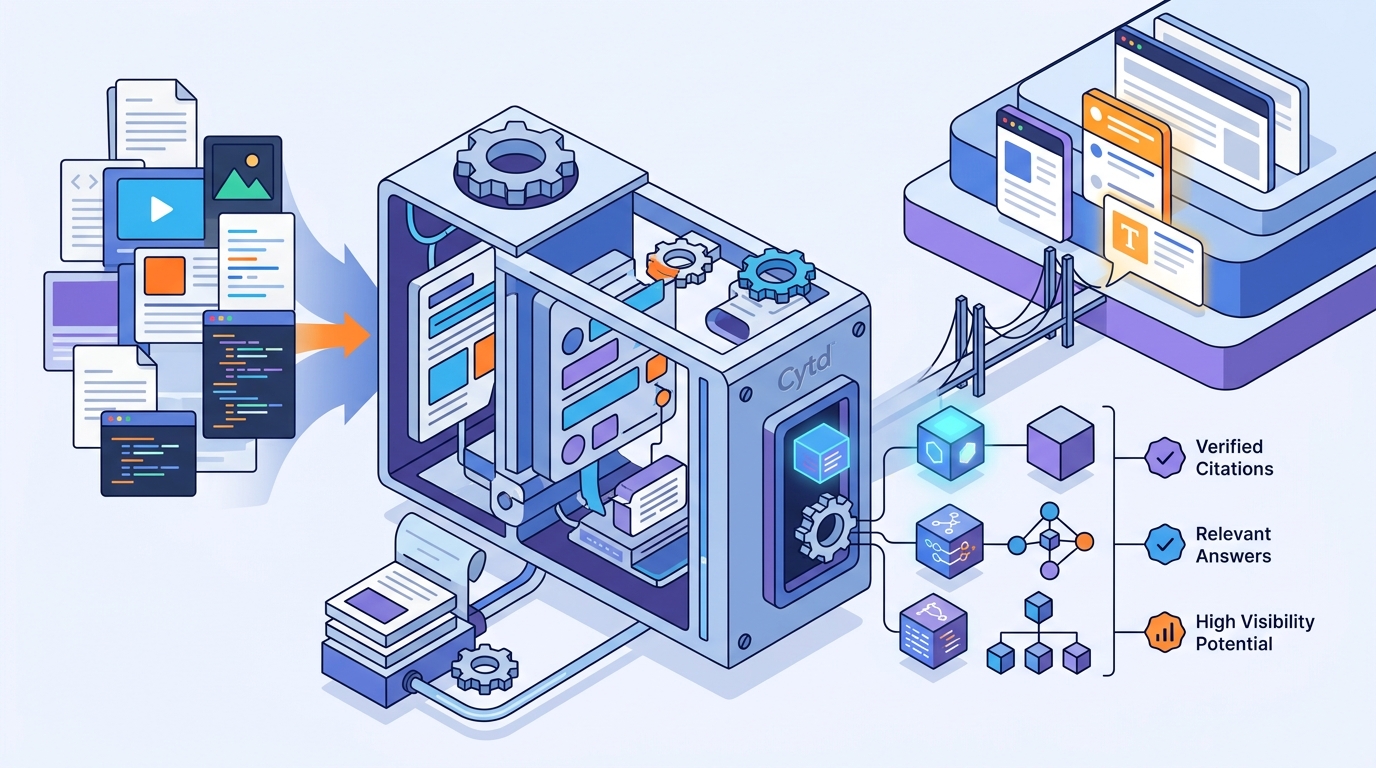
Another key component is topical authority. AI models are more likely to cite a source that demonstrates deep expertise on a subject. This is achieved by covering a topic in depth across multiple linked pages. Instead of one thin article on "plumbing," you create a hub of content that covers specific issues, maintenance tips, and local regulations. This network of content signals to the AI that your brand is a definitive source on the topic. Cytd helps businesses build this topical authority by creating AI-optimized articles and videos. We ensure that your content is not just present, but structured in a way that AI engines can parse and cite. This approach builds a durable digital presence that withstands the rapid changes in AI technology.
Measuring Success in the AI Era
Traditional SEO metrics like keyword rankings are no longer sufficient. You need to measure your visibility in AI answers. This involves tracking citations and mentions. A citation occurs when the AI explicitly names your brand and links to your website. A mention occurs when the AI refers to your brand without a direct link. Both are valuable, but citations are the gold standard. They drive direct traffic and establish trust. Measuring these metrics requires specialized tools that can query AI engines and analyze their responses. This is a new discipline that requires a new set of skills and tools.
Cytd provides a dedicated dashboard that tracks these metrics in real-time. We monitor your visibility score across multiple AI platforms. This score reflects how often and how prominently your brand appears in relevant answers. By tracking this over time, you can see the impact of your optimization efforts. You can identify which content pieces are driving citations and which are not. This data-driven approach allows you to refine your strategy continuously. It moves you away from guesswork and toward measurable results. In the AI era, visibility is the new currency. You need to know exactly where you stand.
Key Takeaways
- Answer engine optimization is the process of structuring content for AI extraction and citation.
- Users are shifting from keyword searches to natural language questions, changing discovery behavior.
- Digital erasure is a real risk; if you are not in the AI's short list, you are invisible.
- AI models favor clear, structured, and consistent information over vague or contradictory data.
- Answer-first formatting and topical authority are critical for earning AI citations.
- Traditional SEO metrics are insufficient; you must track AI-specific visibility scores.
- Cytd provides the tools and expertise to monitor and improve your AI visibility.
Frequently Asked Questions
What is the difference between SEO and answer engine optimization?
SEO focuses on ranking for specific keywords in traditional search engines. Answer engine optimization focuses on being cited and recommended by AI models in response to natural language questions. The goal shifts from page ranking to answer inclusion.
Do I need to change my existing website for answer engine optimization?
You may need to restructure your content. This often involves adding clear headings, using schema markup, and adopting answer-first formatting. You do not necessarily need a new website, but you do need to make your existing content more machine-readable.
How long does it take to see results from answer engine optimization?
Results vary. AI models update their training data periodically. It can take weeks or months for new content to be fully indexed and cited. Consistency and quality are key. You should expect gradual improvements rather than overnight changes.
Can I control what the AI says about my business?
You cannot directly control the AI's output. However, you can influence it by providing clear, accurate, and well-structured information. By optimizing your digital footprint, you increase the likelihood that the AI will cite your preferred facts and recommendations.
Which AI platforms should I focus on?
You should focus on the platforms your customers use. This may include ChatGPT, Gemini, Perplexity, and others. Cytd helps you monitor visibility across multiple platforms to ensure you are not missing out on any significant channel.
Is answer engine optimization a one-time task?
No, it is an ongoing process. AI models and user behavior continue to evolve. You must continuously monitor your visibility, update your content, and refine your strategy to stay relevant. It is a long-term investment in your digital presence.
Start Your AI Visibility Journey
The future of search is conversational. Your business must be ready to answer. Cytd is here to help you navigate this new landscape. We provide the tools, the data, and the expertise you need to become a recommended answer. Do not let your business be erased from the digital conversation. Take the first step today.
Run your free AI visibility report