
AI chatbots find websites by crawling public URLs, parsing HTML, and extracting structured data. To make your site easier for AI to find, you must ensure your content is accessible to bots, uses clean semantic markup, and provides clear, answer-first information. Cytd helps businesses monitor this visibility across major AI engines.
Understanding How AI Crawlers Discover Content
AI crawlers are automated programs that scan the web to collect data for training and retrieval. Unlike traditional search engines that index pages for ranking, AI systems often look for specific, high-quality answers to user queries. If a bot cannot access your page, it cannot cite it. This means technical accessibility is the first barrier to AI visibility. You must ensure that your site does not block these agents in your robots.txt file or through paywalls that prevent initial parsing.
The distinction between indexing and retrieval is critical. Traditional SEO focuses on ranking for keywords, while AI visibility focuses on being the source of a direct answer. For example, a business with a well-structured FAQ page is more likely to be cited by an AI assistant than a business with a dense, unstructured blog post. This shift requires a different approach to how you present information on your site.
Optimizing Technical Accessibility for Bots
Technical accessibility ensures that AI agents can reach and read your content. The most common mistake is inadvertently blocking AI crawlers. While you may want to block scrapers that steal data, you must allow legitimate AI agents to access your public content. Review your robots.txt file to ensure you are not using broad exclusion rules that catch AI bots. Additionally, ensure your site loads quickly and renders content without requiring complex JavaScript interactions that bots might not execute.
Server response times and status codes also matter. If your site returns a 403 or 404 error to a bot, it will not index the page. Use tools to test how your site appears to different user agents. This technical foundation is what allows platforms like Cytd's platform to analyze your current visibility score and identify gaps in accessibility.
Using Semantic HTML and Structured Data
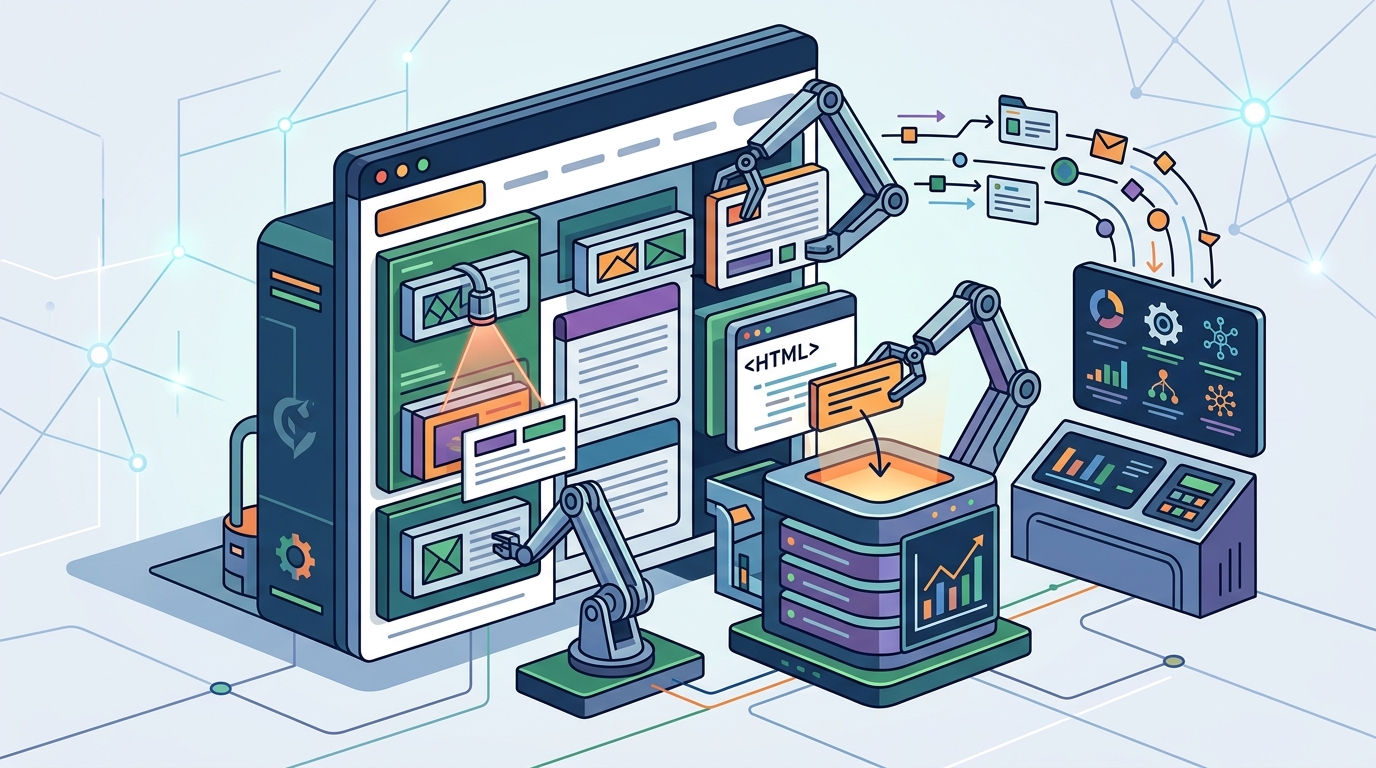
Semantic HTML is code that uses tags to describe the meaning of content, such as <article>, <header>, and <table>. AI systems rely on this structure to understand the hierarchy and context of your information. If your site uses generic <div> tags for everything, the AI has to guess what is a title and what is body text. Using proper headers (H1, H2, H3) helps the AI map the topic structure of your page.
Structured data, such as JSON-LD schema, provides explicit clues about your content. For instance, marking up a product with schema tells the AI exactly what the item is, its price, and its availability. This reduces ambiguity and increases the likelihood of citation. A concrete example is a local service business that uses LocalBusiness schema to clearly define its service area and hours, making it easier for AI to recommend it for local queries.
Writing for Answer-First Extraction
Answer-first writing is a technique where the direct answer to a question is provided in the first sentence or paragraph. AI models are trained to extract concise, direct responses. If you bury the answer under three paragraphs of introduction, the AI may skip your content. Start with the core fact, then provide supporting details. This structure aligns with how AI assistants format their responses to users.
Clarity and conciseness are key. Avoid jargon and complex sentence structures that might confuse the extraction process. For example, instead of saying "We have been in the business of providing solutions for...", say "We provide X service in Y location." This directness makes your content a prime candidate for citation. Cytd's blog offers further insights on how to structure content for AI consumption.
Monitoring and Measuring AI Visibility
Monitoring AI visibility is the process of tracking how often and where your brand is cited by AI engines. You cannot improve what you do not measure. Traditional analytics tools do not track AI citations, so you need specialized tools. These tools query AI engines with relevant questions and check if your brand appears in the response. This data helps you understand which topics and pages are performing well.
Regular monitoring allows you to identify gaps where competitors are being cited but you are not. It also helps you track the impact of your technical and content optimizations. By using a dedicated visibility score, you can set benchmarks and measure progress over time. This data-driven approach ensures your efforts are focused on the areas that matter most for AI discovery.
Key Takeaways
- Ensure your robots.txt file allows AI crawlers to access your public content.
- Use semantic HTML and structured data to help AI understand your page structure.
- Adopt answer-first writing to make your content easy for AI to extract.
- Monitor your AI visibility with specialized tools to track citations.
- Focus on clarity and conciseness to reduce ambiguity for AI models.
- Regularly test your site's accessibility to different user agents.
Frequently Asked Questions
Do I need to allow all AI bots in my robots.txt?
You should allow legitimate AI agents that provide value, such as those from major AI platforms. You can block specific scrapers that do not provide attribution or value. The goal is to be accessible to the engines that actually cite your content.
What is the difference between SEO and AI visibility?
SEO focuses on ranking for keywords in search results, while AI visibility focuses on being cited as a source in AI-generated answers. AI visibility relies more on content clarity and structure than on backlinks or keyword density.
How long does it take for AI to index my site?
There is no fixed timeline. AI crawlers operate on their own schedules. However, ensuring technical accessibility and using structured data can speed up the process. Regular monitoring helps you track when your content starts appearing in AI responses.
Can I control which AI engines cite my site?
You cannot directly control which engines cite you, but you can influence the likelihood by making your content accessible and clear. Different engines may have different crawling frequencies and preferences, so broad accessibility is key.
Is structured data necessary for AI visibility?
Structured data is highly recommended. It provides explicit context that helps AI models understand your content without guessing. While not strictly mandatory, it significantly improves the chances of accurate citation.