

7 Critical Mistakes Local Businesses Make When Optimizing for Answer Engines
Local businesses often fail to appear in AI-generated answers because they rely on outdated search engine optimization tactics. Answer engines like ChatGPT and Gemini require consistent, structured, and authoritative data to recommend a brand. Cytd helps brands identify these gaps and build the digital trust signals that modern AI systems need to cite them confidently.
1. Relying Solely on Traditional SEO Keywords
Keyword density does not equal AI citation likelihood. Traditional search engine optimization focuses on ranking for short search strings, but AI answer engines process full, conversational questions. When a customer asks a complex query, the AI breaks it into multiple sub-queries to find the best answer. If your content is not structured to answer these specific questions directly, the AI has nothing to retrieve.
2. Inconsistent Business Information Across the Web
Fragmented data creates algorithmic distrust. AI models cross-reference your Name, Address, and Phone number (NAP) across multiple platforms to verify legitimacy. If your details vary between your website, social profiles, and directories, the AI perceives your brand as unreliable. This inconsistency is a primary reason why many local businesses are excluded from AI recommendations.
3. Ignoring Structured Data Markup
Without schema, AI cannot understand your business context. Structured data is a standardized format that helps machines understand the meaning of web content. Implementing Organization, LocalBusiness, and Service schemas provides explicit clues about your attributes and relationships. Without this technical foundation, AI systems may misinterpret your services or omit your brand entirely from relevant answers.
4. Failing to Build Third-Party Authority Signals
AI trusts corroborating sources over self-promotion. Large language models evaluate authority based on how other credible sources describe your brand. If your business is only mentioned on your own website, the AI lacks the external validation needed to recommend you with confidence. Building a presence in industry publications and community discussions helps establish the semantic trust required for citations.
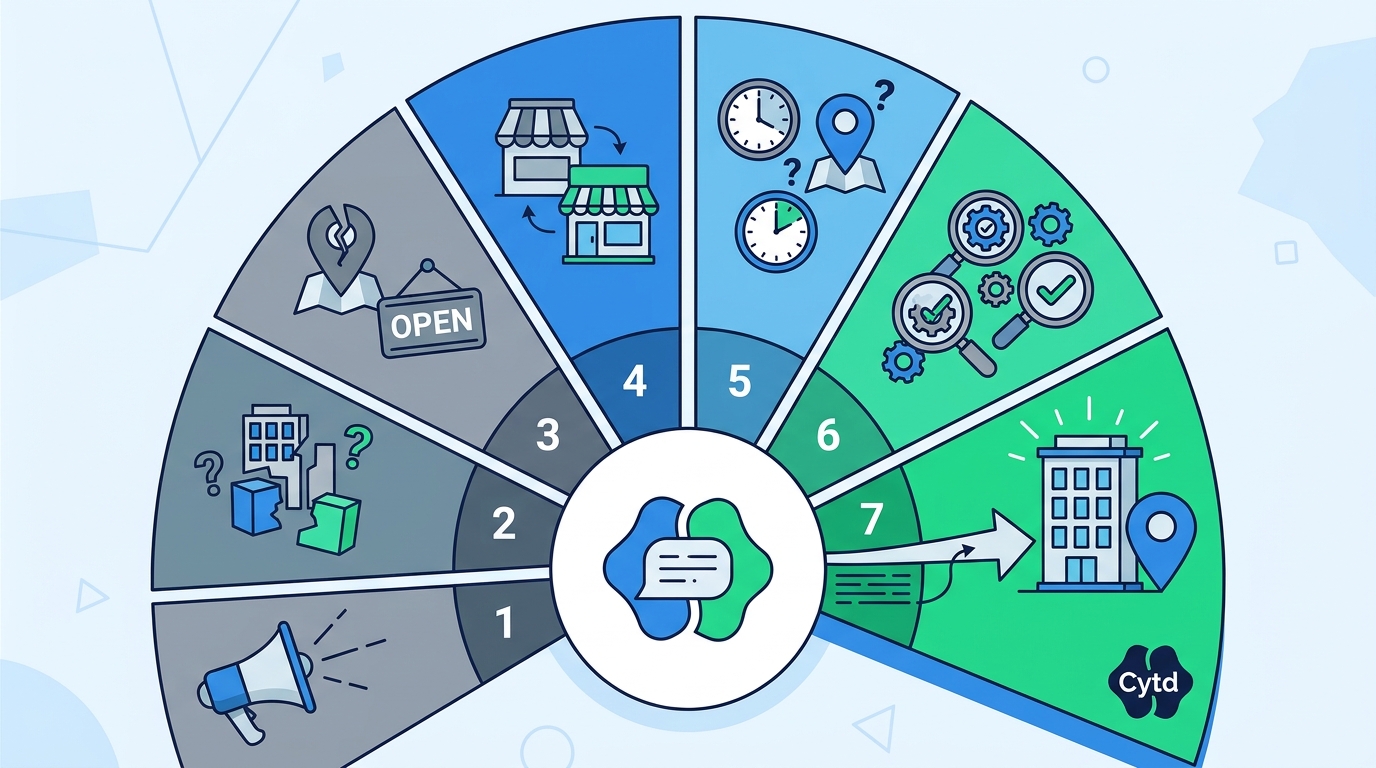
5. Neglecting the AI Visibility Blind Spot
Invisible losses do not appear in standard analytics. When an AI recommends a competitor instead of you, the lost sale leaves no digital footprint in your website traffic data. This creates a dangerous blind spot where businesses assume they are visible because their site is online. Measuring your specific AI visibility score is the only way to detect when you are being bypassed by answer engines.
6. Treating AI Optimization as a One-Time Task
AI models require continuous signal reinforcement. The digital landscape shifts rapidly, and AI training data updates frequently. A one-time content push is insufficient because AI systems constantly re-evaluate brand authority based on current signals. Ongoing monitoring and content updates ensure that your brand remains relevant and cited as new questions emerge.
7. Overlooking the Difference Between Visibility and Coverage
Appearing in one platform is not the same as total market presence. Visibility is the frequency with which your brand appears in AI training data, while coverage is the breadth of your footprint across different platforms. A business might be cited by one AI assistant but ignored by another. Comprehensive optimization requires ensuring your brand is recognized across the entire ecosystem of answer engines your customers use.
Choosing the Right Optimization Strategy
To avoid these mistakes, local businesses should prioritize data consistency and structured content over generic keyword targeting. Start by auditing your current AI visibility to identify specific gaps in authority and coverage. Focusing on building a coherent digital footprint ensures that AI systems have the confidence to recommend your business when it matters most.
Frequently Asked Questions
Why does AI recommend competitors instead of my business?
AI recommends brands it understands and trusts. If your digital signals are thin or inconsistent, the AI plays it safe and names a competitor with a stronger, more documented digital footprint.
What is the difference between SEO and GEO?
Search engine optimization targets ranked blue links on a results page, while Generative Engine Optimization targets the direct response box in AI answers. GEO focuses on citation likelihood rather than click-through rates.
How often should I update my content for AI search?
It is best to update your content every 30 to 90 days to maintain AI search visibility. Regular updates ensure that AI models have access to current information about your services and business details.
Can I control what AI models say about my brand?
You cannot directly control AI outputs, but you can influence them by providing consistent, high-quality, and structured data. By optimizing your digital footprint, you increase the likelihood that AI systems will cite your brand accurately.
What is a Cytd Score?
A Cytd Score is a metric from 0 to 100 that shows how likely AI systems are to cite your business. It breaks down performance into visibility, authority, and coverage to help you identify specific areas for improvement.