
AI search means your local business is either the recommended answer or invisible. When customers ask ChatGPT or Gemini for a service near them, the AI picks a few names. If your brand is not in that shortlist, you lose the customer before they ever see your website. This shift changes how local discovery works.
Why AI Search Changes Local Discovery
Traditional search relied on a list of ten blue links. Users had to click through multiple sites to compare options. AI search collapses this process into a single, synthesized answer. Generative Engine Optimization (GEO) is the practice of structuring your digital presence so AI models can easily find, understand, and cite your business. This is different from traditional SEO because the goal is not just to rank high, but to be the specific entity the AI chooses to name.
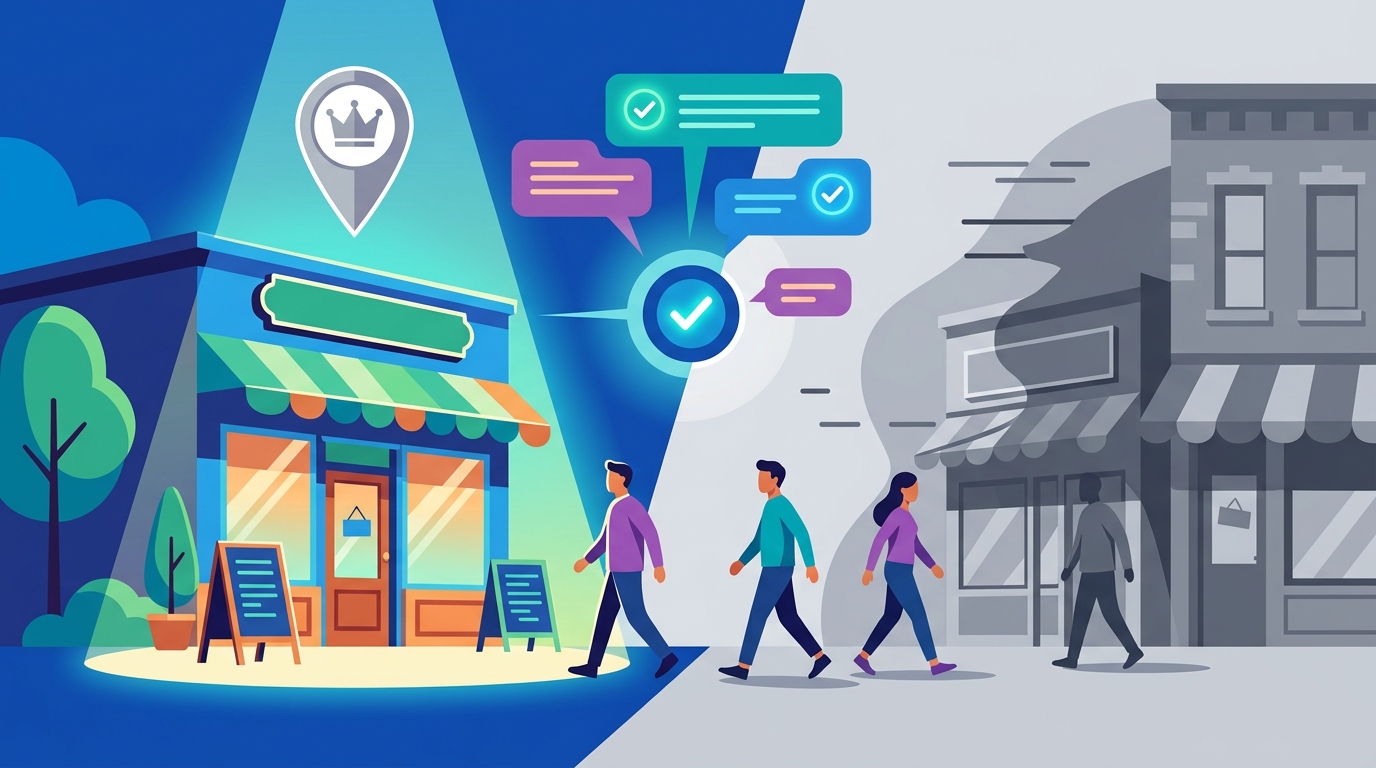
For a local business, this is a high-stakes environment. If an AI assistant recommends a competitor, your business is effectively erased from that conversation. The user does not see a second page of results. They see the AI's choice. This creates a winner-take-most dynamic where visibility is binary. You are either the recommended answer, or you are not there at all.
How AI Engines Choose Local Recommendations
AI models do not guess. They synthesize data from the web to form an answer. To be recommended, your business needs a clear, consistent, and machine-readable digital footprint. Topical authority is the depth of your content on specific subjects. If you are a dentist, you need content that clearly explains your services, your location, and your unique value proposition in a way that AI crawlers can parse.
Consider a local gym in Denver. If the gym has a clear page explaining that it offers small-group coaching and Hyrox prep, and that information is consistent across its website and social profiles, AI engines are more likely to cite it for those specific queries. The AI looks for signals that confirm the business exists, is active, and is relevant to the specific question asked. Vague or outdated information leads to exclusion.
The Impact on Specific Local Business Types
Not all local businesses are affected equally. The impact depends on how customers discover you. High-consideration services, such as legal firms, medical practices, and financial advisors, are heavily impacted. Customers in these sectors often ask AI for advice before making a decision. If the AI recommends a competitor, you lose the lead before it starts.
For a sports medicine practice in Lubbock, Texas, the AI answer is the first point of contact. If the practice is not cited, the patient goes to the competitor. On the other hand, impulse-driven businesses, like restaurants or retail stores, may see less immediate impact. However, as AI assistants become more integrated into daily life, even these businesses will need to be visible in AI answers to remain relevant. The key is to understand where your customers are asking their questions.
Building Your AI Visibility Foundation
To improve your chances of being recommended, you need to build a foundation that AI engines can trust. This starts with clean, semantic HTML on your website. Machine-readable markup is the use of structured data, such as schema, to help AI understand what your pages are about. This includes proper headers, tables, and clear definitions of your services.
Content must be answer-first. Instead of burying the key information in a long paragraph, put the direct answer at the top. For example, if a page is about