
The best strategy for optimizing brand visibility across answer engines is to build a structured, machine-readable content ecosystem that directly answers high-intent questions. This approach ensures that large language models can easily extract and cite your brand as the authoritative source. By aligning your digital footprint with how AI systems process information, you move from being invisible to being the recommended answer.
Understanding How AI Engines Cite Brands
Answer engine optimization is the practice of structuring digital content so that AI models can accurately extract and cite it in their responses. Unlike traditional search engines that rank pages based on backlinks and keywords, AI models rely on semantic clarity and structured data. When a user asks a question, the model scans its training data and real-time web sources for the most direct and factual answer.
If your content is buried under marketing fluff or complex navigation, the AI may skip it entirely. The model needs to find the answer in the first few sentences of a page. This shift means that traditional SEO tactics, such as keyword stuffing, are no longer sufficient. You must prioritize clarity and directness. The goal is to make your brand the easiest source for the AI to quote.
Cytd focuses on this exact mechanism by analyzing how different AI platforms, such as ChatGPT and Gemini, interpret your existing content. By understanding the specific signals these models look for, you can tailor your content to meet their extraction criteria. This is not about manipulating the AI, but about making your information accessible and verifiable.
Building Question-First Content
Keywords were built for a search box, but AI answers come from questions. To optimize for answer engines, you must create content that mirrors the natural language of your customers. Instead of writing a broad article about "plumbing services," you should write a specific guide titled "How to fix a leaking faucet in a 1950s house." This specificity allows the AI to match the user's query with your content more accurately.
Answer-first formatting is a critical component of this strategy. This technique involves front-loading the direct answer before providing supporting details. For example, if the question is "What is the best CRM for small agencies?", the first sentence of your article should state the recommendation clearly. The AI can then extract that sentence and use it in its response. This structure reduces the cognitive load on the model and increases the likelihood of citation.
At Cytd, we use a dedicated subdomain for AI-optimized content. This allows us to test and iterate on answer-first formatting without disrupting your core website. By isolating this content, we can ensure that the AI crawlers see a clean, structured version of your brand's expertise. This separation helps maintain your main site's design while optimizing for machine readability.
Implementing Machine-Readable Markup
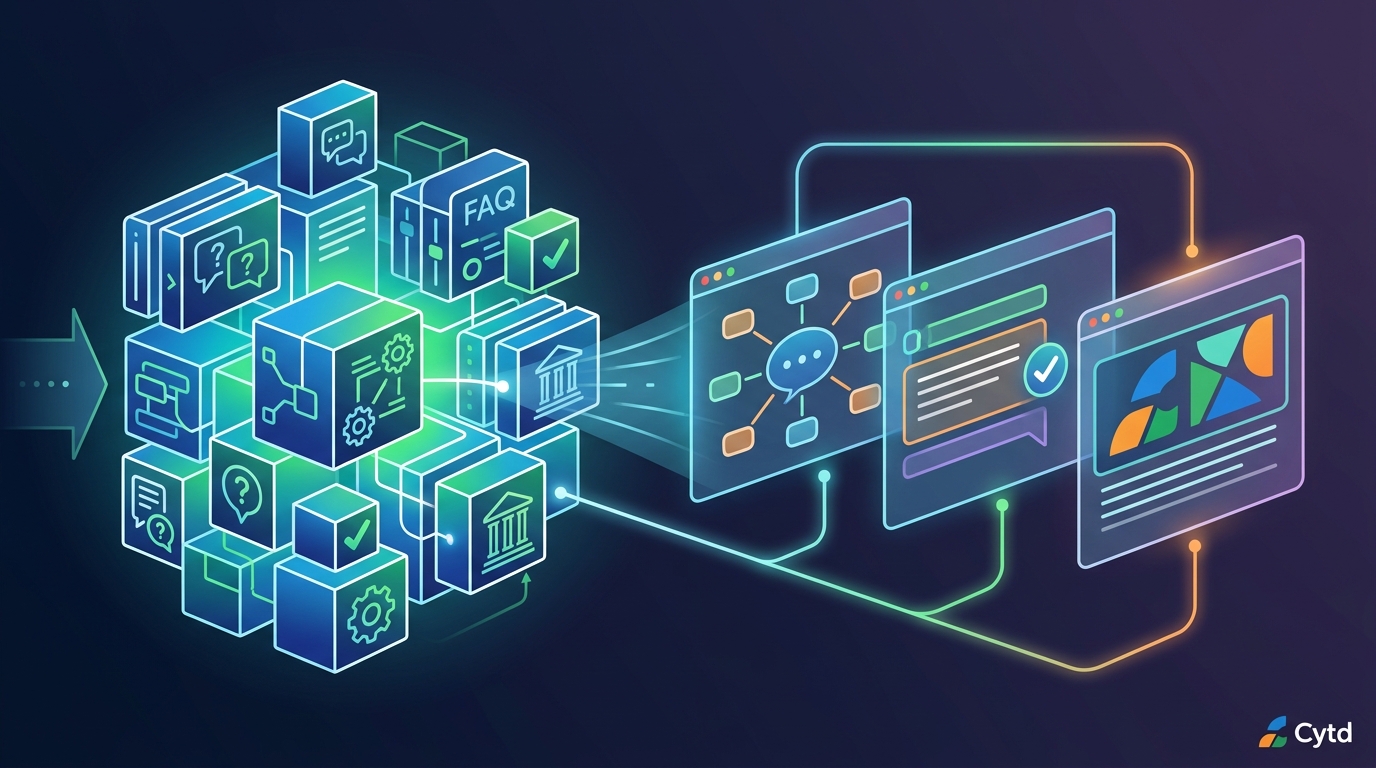
Machine-readable markup is the use of semantic HTML and schema to help AI crawlers parse your content without guesswork. Clean headers, tables, and structured data allow the model to understand the hierarchy of your information. For instance, using H2 and H3 tags to break down complex topics helps the AI identify which section contains the direct answer.
Schema markup is particularly effective for this purpose. By adding structured data to your pages, you provide the AI with explicit context about your business, services, and location. This reduces the chance of misinterpretation. When the AI sees a clear schema definition, it is more likely to trust your content as a factual source. This trust is essential for earning citations in AI-generated answers.
Cytd integrates machine-readable markup into every piece of content we produce. We ensure that your pages are not only readable by humans but also easily parsed by AI scrapers. This technical foundation is what allows your brand to appear in the answer layer. Without it, your content may be ignored, regardless of its quality.
Establishing Topical Authority
Topical authority is the depth and breadth of your content on a specific subject. AI models prefer sources that cover a topic comprehensively rather than those with a single, isolated article. By creating a network of linked pages that explore different aspects of your niche, you signal to the AI that you are an expert. This interconnected structure helps the model build a complete picture of your brand's expertise.
For example, a sports medicine practice might have articles on injury prevention, rehabilitation techniques, and athlete nutrition. When these pages are linked together, the AI can see that the practice has deep knowledge in the field. This depth increases the likelihood that the model will cite your brand when answering related questions. It moves your brand from being a generic option to a specialized authority.
Cytd helps you build this topical authority by creating a library of AI-optimized articles. We cover your subject in depth across multiple pages, ensuring that the AI sees a consistent and comprehensive voice. This approach is more effective than publishing a single, broad article. It allows you to own specific questions within your niche, making you the go-to source for those topics.
Monitoring Your AI Visibility Score
Monitoring your AI visibility score is the process of tracking how often and where your brand is cited by AI models. This metric provides a clear picture of your performance in the answer layer. By regularly checking your visibility, you can identify which questions you are winning and where you are losing ground. This data-driven approach allows you to refine your strategy over time.
Cytd provides a dashboard that shows your visibility across multiple AI platforms, including ChatGPT, Gemini, and Perplexity. This multi-platform view is crucial because different models may cite your brand for different reasons. By tracking your performance across these platforms, you can ensure that your strategy is robust and not dependent on a single AI system. This comprehensive monitoring helps you stay ahead of changes in AI behavior.
The Cytd Score is a composite metric that reflects your overall visibility. It takes into account the number of citations, mentions, and the quality of the sources citing you. By focusing on improving this score, you can measure the impact of your optimization efforts. This metric gives you a clear target to work toward, making it easier to justify your investment in answer engine optimization.
Key Takeaways
- Answer engine optimization is the practice of structuring content for AI extraction and citation.
- Question-first content mirrors natural language and improves AI matching accuracy.
- Answer-first formatting front-loads direct answers to reduce AI cognitive load.
- Machine-readable markup, including schema, helps AI crawlers parse content accurately.
- Topical authority is built through deep, interconnected content on specific subjects.
- Monitoring your AI visibility score across multiple platforms ensures a robust strategy.
Frequently Asked Questions
What is the difference between SEO and answer engine optimization?
SEO focuses on ranking pages in traditional search results, while answer engine optimization focuses on getting cited in AI-generated answers. AI models prioritize semantic clarity and structured data over backlinks and keywords.
How long does it take to see results from answer engine optimization?
Results vary, but most businesses see initial improvements in their AI visibility score within the first 90 days. Consistent content creation and monitoring are key to sustained growth.
Do I need to change my existing website?
No, you do not need to change your existing website. Cytd uses a dedicated subdomain for AI-optimized content, allowing you to test and iterate without disrupting your core site.
Which AI platforms does Cytd monitor?
Cytd monitors visibility across major AI platforms, including ChatGPT, Gemini, Perplexity, Copilot, Claude, and Google AI Overviews.
Can I control what the AI models say about my brand?
You cannot directly control what AI models say, but you can influence it by providing clear, structured, and authoritative content. The more accessible your information is, the more likely it is to be cited.
Start Optimizing Your Brand Today
Optimizing your brand for answer engines is no longer optional. It is a critical component of modern digital marketing. By focusing on question-first content, machine-readable markup, and topical authority, you can position your brand as the recommended answer in AI conversations. Cytd provides the tools and expertise to help you achieve this. To see where your brand stands today, run your free AI visibility report. Learn more: Cytd We make AI.